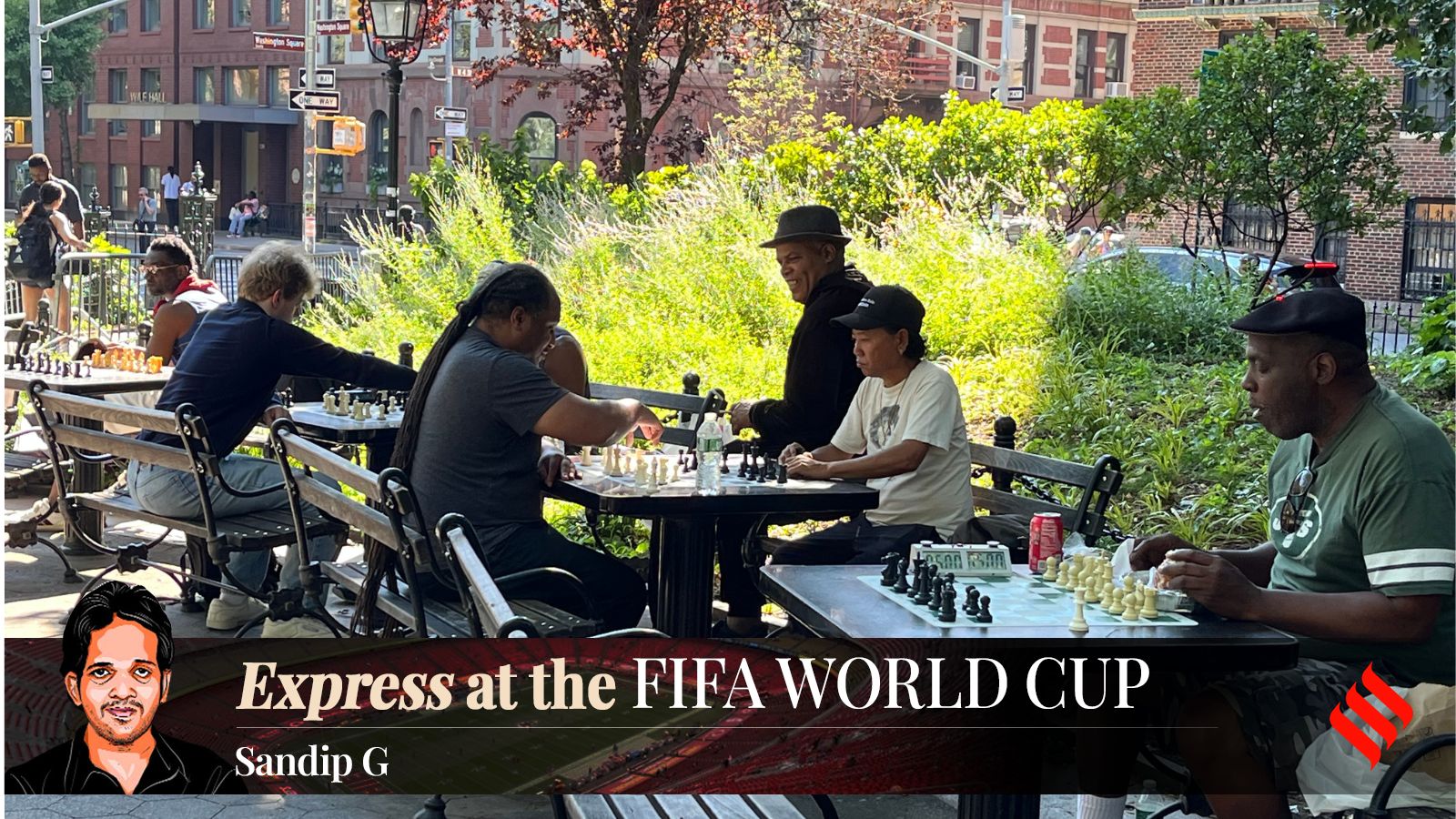
In New York’s Washington Square Park, chess hustlers still turn the game into a livelihood. Bobby Haywood, credited with starting the hustling tradition in the 1970s, vanished without a trace, leaving a lingering mystery.
मुख्य बिंदु (Key Takeaways)
- Chess hustling in Washington Square Park dates back to the 1970s.
- Bobby Haywood pioneered the tradition but his fate remains unknown.
- Today’s hustlers combine teaching, competition, and income generation through chess.
Under a century‑old elm in New York’s Washington Square Park, Marcel Anderson—known as Marty—holds a cigarette and a queen piece while muttering, “If you lose the queen, you lose the battle, on the board and in life.” This pithy remark captures the gritty reality faced by the park’s chess hustlers, who have turned a pastime into a daily bread‑winning craft.
Origins of Chess Hustling
The hustling culture took root in the 1970s, and its founding figure is widely regarded as Bobby Haywood. According to legend, Haywood set up a board atop a trash can and invited passersby to play for a mere ten cents. Initially dismissed as madness, the novelty attracted a steady stream of challengers, and the concept spread rapidly amid Cold War rivalries between American prodigy Bobby Fischer and Soviet grandmasters.
Modern Day Hustlers
Today roughly a dozen players earn a living teaching and betting on chess in the park. A blitz game costs $10, while a private lesson runs $30 an hour. Veteran hustler Marty can make up to $1,000 on a good day, though most days yield $200‑$300. The COVID‑19 pandemic briefly shifted interest to online platforms, reducing tourist traffic, but the park’s regulars have kept the tradition alive.
Cultural and Historical Significance
Beyond chess, the park has long served as a gathering spot for the LGBTQIA+ community and gained global fame after the 1993 film “Searching for Bobby Fischer.” The venue was a favorite haunt of the legendary Bobby Fischer, located just three blocks from his alma mater, the Marshall Chess Club. Even filmmaker Stanley Kubrick, as a teenager, hustled here to fund early photography gigs, weaving chess motifs into classics like “2001: A Space Odyssey” and “A Clockwork Orange.”
The Mystery of Bobby Haywood
Haywood’s ultimate disappearance remains the most tantalizing chapter of this subculture. No definitive records pinpoint when or why he vanished, turning his legacy into a myth that fuels curiosity among new‑generation players and historians alike.
Chess hustling in Washington Square Park is more than a side‑hustle; it is a living narrative of resilience, community, and the perpetual dance between chance and strategy.