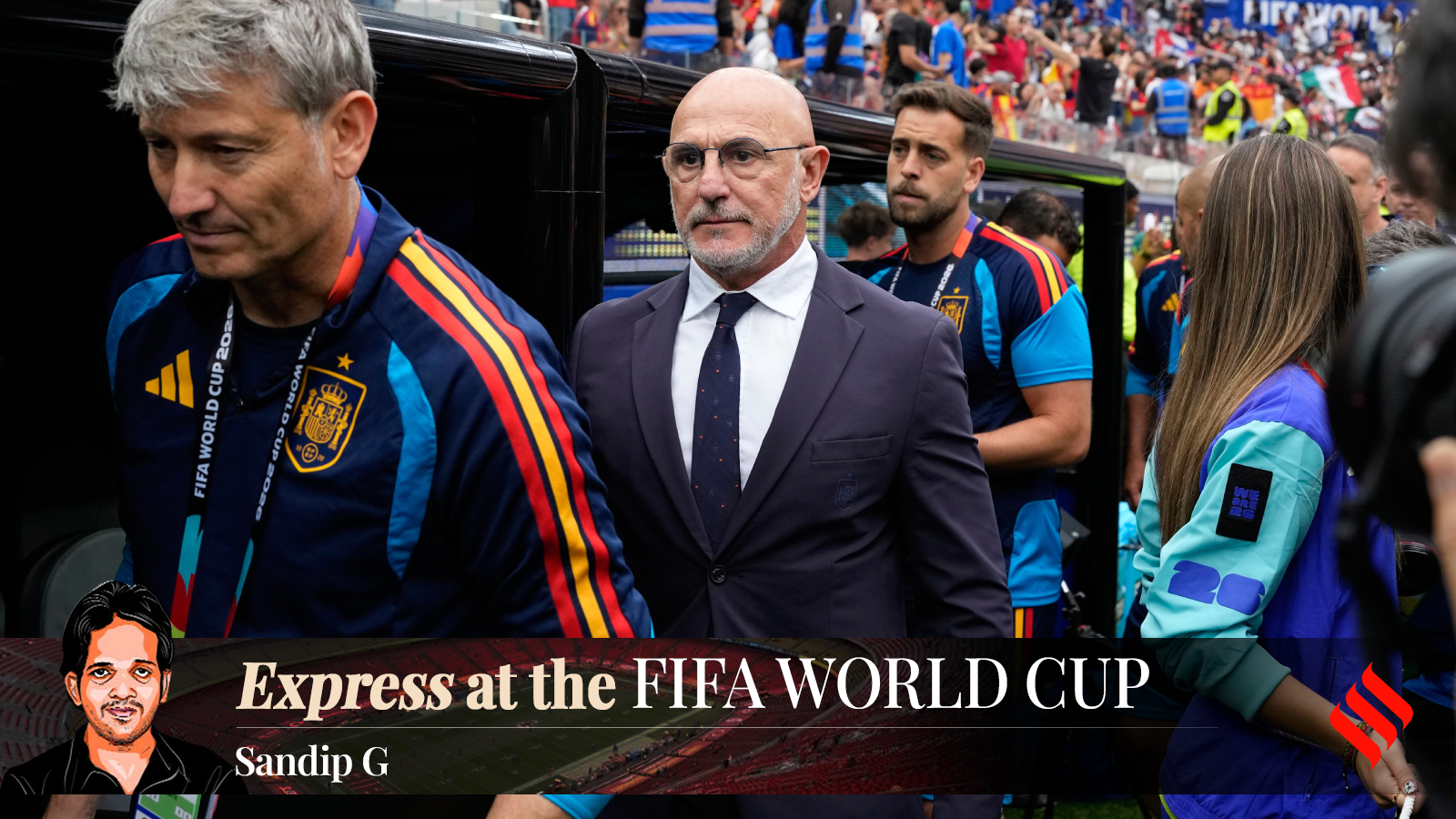
Spain’s head coach Luis de la Fuente likens his managerial approach to a bullfight, using flexibility and emotional intelligence to outmaneuver opponents. His bold tactical switches propelled Spain to a World Cup semi‑final, the nation’s first since 2010.
Key Takeaways
- De la Fuente’s tactical flexibility has revived Spain on the European and world stage.
- His bullfight metaphor reveals a fearless, adaptive coaching mindset.
- Prioritising players’ emotional intelligence creates a balanced, resilient squad.
Spain’s national team boss Luis de la Fuente proudly calls himself a “taurino,” a bullfighter, and every year he attends the iconic Plaza de Toros de Las Ventas to absorb the drama of Spain’s oldest sport. When he took over “La Roja” three years ago, he admitted, “I’ve been handed a big bull.” Four years later, that bull is under his control – he has guided Spain to a Euro triumph and, more importantly, to a World Cup semi‑final for the first time since their 2010 victory.
Blood‑Free Bullfighting: Tactical Fluidity in Knock‑out Football
Each knockout win under de la Fuente resembles a bullfight without bloodshed. Just as a matador circles his opponent, Spain’s side circles the opposition with relentless pressing, swift passing triangles and constant positional swaps. Unlike the 2010 side whose philosophy proved unsustainable, de la Fuente’s squad is a study in tactical elasticity – he molds formations like wax, reacting to player form, fitness, opponent weaknesses and match context.
Bold Switches Against Belgium
In the 2026 World Cup quarter‑final versus Belgium, de la Fuente made a daring move: he replaced the midfield lynchpin Pedri with the physically imposing Fabian Ruiz. Ruiz’s aggressive press forced Belgium into turnovers, and he even netted the opening goal from a rebound. When Belgium equalised and Spain’s press waned, de la Fuente re‑inserted Pedri, instantly tightening the midfield, pulling the full‑backs higher and compressing the game into a compact zone near the Belgian goal. The result was a seamless blend of attack and defence – a hallmark of his “all 11 attack, all 11 defend” philosophy, echoed by Dani Olmo.
Emotional Intelligence Over Pure Technique
De la Fuente stresses that a footballer’s value extends beyond technical skill. “There are a thousand other elements,” he says. “Emotional control in pressure situations makes the real difference.” Having coached most of his current pool from youth levels, he can spot the intangible traits that complement raw talent. Players like Mikel Oyarzabal, Dani Olmo, Alex Baena and Lamine Yamal each bring distinct tactical profiles, yet all fit into a system that rewards intelligence and adaptability.
Looking Ahead: Challenges and Opportunities
If Spain can sustain this blend of flexibility and psychological resilience, the next Euro and World Cup could see them back at the summit. The real test will be managing player fatigue, injuries and the inevitable tactical innovations of rival nations. De la Fuente’s willingness to reinvent his lineup mid‑game may become the blueprint for future national team success.
