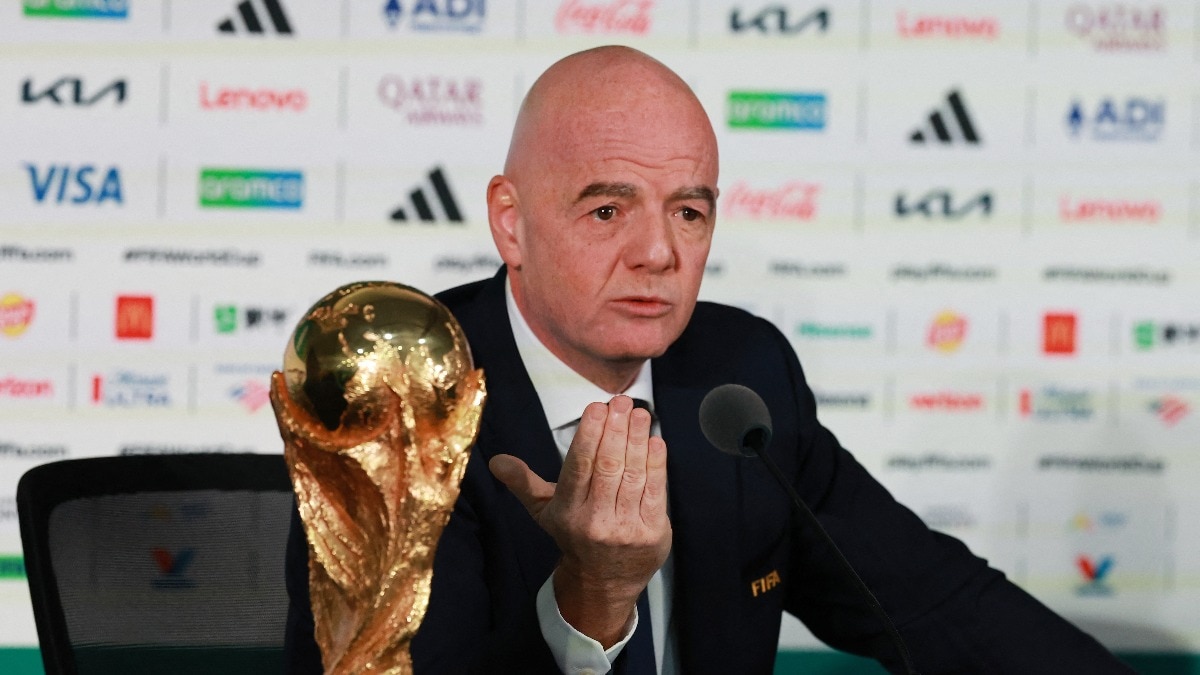
FIFA President Gianni Infantino announced that the governing body will examine a 64‑team format before the 2030 centenary World Cup. The move aims to make football more global and give emerging nations a realistic shot at the sport’s biggest stage.
Key Takeaways
- FIFA will study a 64‑team World Cup format before the 2030 edition.
- Infantino argues expansion will accelerate global football development.
- The new format would simplify the group stage to 16 groups of four.
FIFA President Gianni Infantino told Swiss outlet Bluewin that a 64‑team tournament will be evaluated ahead of the 2030 centenary World Cup. He hailed the current 48‑team experiment in North America as “100 per cent successful,” insisting that the sport’s flagship event must look beyond the traditional dominance of Europe and South America.
Why Expansion Matters
Speaking after the quarter‑finals of the 2026 World Cup, Infantino emphasized that giving smaller nations a realistic chance to qualify fuels their domestic development. “If you don’t give smaller countries a chance to participate in the World Cup, they’ll lack the incentive to keep improving,” he said, positioning the 64‑team idea as a catalyst for worldwide growth.
Possible Structure and Immediate Challenges
A 64‑team format would create 16 groups of four, with the top two advancing directly to a knockout round of 32, eliminating the complex “best third‑place” calculations currently in use. While this streamlines the competition, it would also inflate the total matches to roughly 128, raising concerns from UEFA, domestic leagues, and player unions about scheduling, travel fatigue, and player welfare.
Historical Context and Future Outlook
The 48‑team expansion, initially met with skepticism over quality dilution and logistical strain, has, according to Infantino, proven its worth by accelerating the rise of emerging football nations. The 2030 edition, slated to be hosted primarily by Spain, Portugal and Morocco with opening fixtures in Uruguay, Argentina and Paraguay, could become the sport’s most inclusive tournament if the 64‑team plan gains boardroom approval.
For now, FIFA’s immediate focus remains on delivering a successful 2026 tournament, but the groundwork for a larger, more representative World Cup has already been laid. The decision will test the balance between a truly global showcase and the practical realities of an ever‑crowded football calendar.