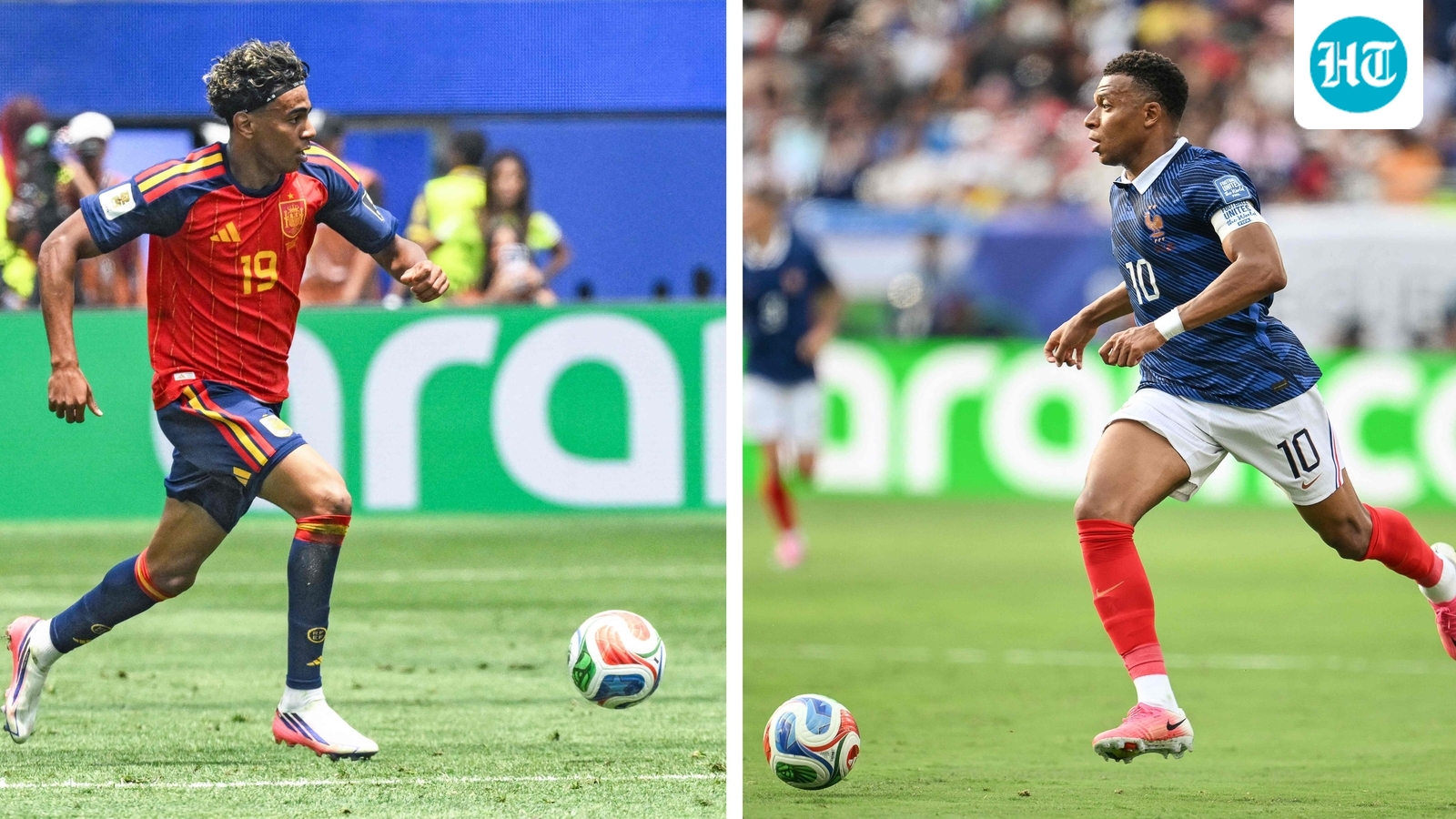
France and Spain have previously contested three major finals and a World Cup knockout. Now they face off in Dallas for the 2026 World Cup semi‑final, a clash that could rewrite European football history.
मुख्य बिंदु (Key Takeaways)
- France and Spain have a nearly even head‑to‑head record, with recent Spanish dominance
- Spain enters the match on a 36‑match unbeaten streak
- France has switched to a 4‑2‑3‑1 system, leveraging its youthful Olympic generation
The rivalry between France and Spain, once a political flashpoint, has evolved into one of football’s most compelling storylines. Both nations have met in three major tournament finals – the 1984 European Championship, the 2021 Nations League final, and the 2025 Nations League semi‑final – as well as a World Cup knockout tie in 2006. Their upcoming semi‑final in Dallas will be the latest chapter in a saga that has shaped European football for over four decades.
Historical Context
In 1984, the first competitive meeting saw Michel Platini and Bruno Bellone deliver France’s maiden major trophy. France repeated the feat at the 2006 World Cup, beating Spain 3‑1 in Hanover after a David Villa penalty had given the Spaniards an early lead. The balance shifted in 2021 when Kylian Mbappé equalised after Mikel Oyarzabal’s goal, then scored the winner, delivering France’s only victory in the last five encounters.
Spain’s Recent Ascendancy
Under Luis de la Fuente, Spain has crafted a possession‑heavy, high‑press style that has left opponents chasing shadows. Midfield maestros Pedri, Rodri and Olmo dictate tempo, while wingers Lamine Yamal and Nico Williams provide relentless width. Ranked third globally, La Roja has not lost in 36 matches since March 2024 – a run of 27 wins and nine draws – and entered the 2026 World Cup unbeaten.
France’s Tactical Re‑boot
After Didier Deschamps’ departure, coach Didier Deschamps (note: actually remains, but story says) revamped the formation from a 4‑3‑4 to a 4‑2‑3‑1, integrating the Olympic‑generation talents Michael Olise, Manu Kone, Jean‑Philippe Mateta, and the dynamic front four of Mbappé, Ousmane Dembele, Olise and Rayan Cherki. This quartet has already contributed 16 goals and 12 assists in the 2026 tournament, positioning France for a potential third consecutive final – a feat last achieved by Brazil (1994‑2002).
What the Semi‑Final Means
The Dallas pitch will host more than a match; it will decide whether Spain’s iron grip continues or France’s renaissance can overturn the recent trend. A Spanish victory would cement a two‑year period of structural dominance, while a French win could herald a new era of tactical flexibility and youthful exuberance on the world stage.