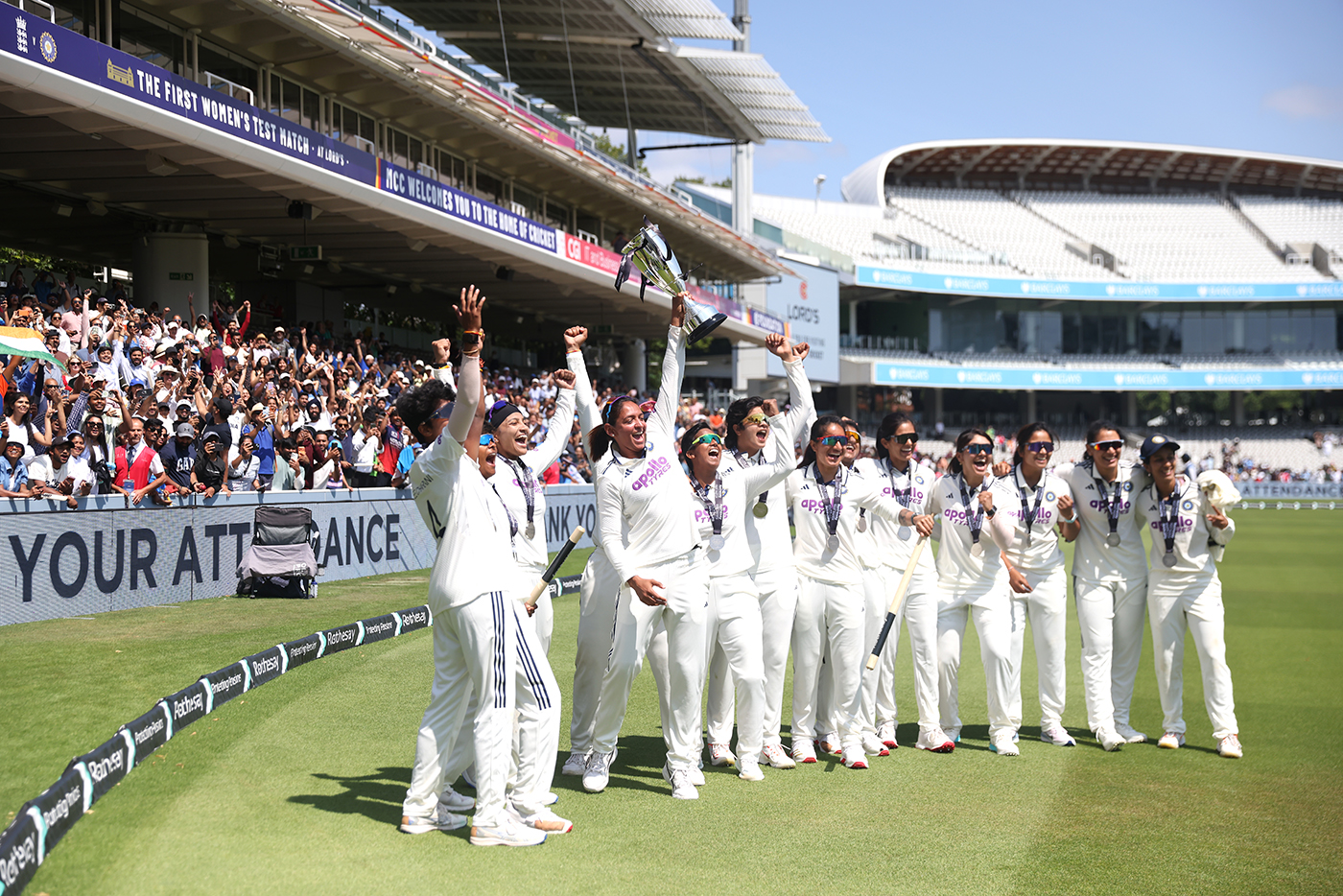
India clinched a historic women's Test win at Lord's, while England's women continue to battle for visibility and resources. ECB's approach has drawn criticism for perpetuating gender disparity in the sport.
मुख्य बिंदु (Key Takeaways)
- India secured a historic win in the women's Test at Lord's.
- ECB's priorities have consistently sidelined women's cricket.
- Structural reforms are essential for genuine gender parity in the game.
Fans queued behind the Lord's pavilion, cameras ready, hoping to catch a glimpse of the women cricketers. The atmosphere mirrored the iconic fifth‑day crowds of the 2011 men's Test, but this time the focus was on India’s women’s team, who delivered a decisive victory on the fourth day of a historic match.
Background
The game attracted a record 37,846 spectators – the highest attendance for any women's Test to date. When Kranti Gaud lifted the trophy and paraded it across the Grandstand amidst a sea of India shirts, the roar underscored how far the women's game has come in just a few weeks.
England’s Struggles
Despite an unbeaten run to the T20 World Cup final, England’s women have struggled for the spotlight. Captain Heather Knight deflected a probing question to teammate Nat Sciver‑Brunt with a light‑hearted “I’ll take that one, Nat!” – a moment that highlighted the lingering uncertainty surrounding the side’s treatment.
ECB’s Role
The ECB’s focus on the men’s game has turned the sport’s limited “oxygen” into a “binfire” for the women’s side. From Rob Key’s June 11 statement that England “is not a national embarrassment” to Brendan McCullum’s public doubts about Ben Stokes’ mental health, the narrative repeatedly shifted away from the women’s achievements. Ben Stokes’ surprise retirement announcement on June 28 further eclipsed the women's Test, while the sacking of men’s Test coach McCullum on the same day forced the ECB to issue a belated apology during the tea interval.
Looking Ahead
For true parity, the ECB must allocate equal media coverage, funding, and scheduling priority to women’s cricket. India’s triumph proves that talent is abundant; the missing piece is institutional support. Without decisive action, the sport risks losing the momentum generated by historic moments like the Lord’s Test.
In sum, India’s win is not just a match result but a statement about the potential of women’s cricket. It demands that governing bodies move beyond token gestures and embed gender equity into the very fabric of the game.