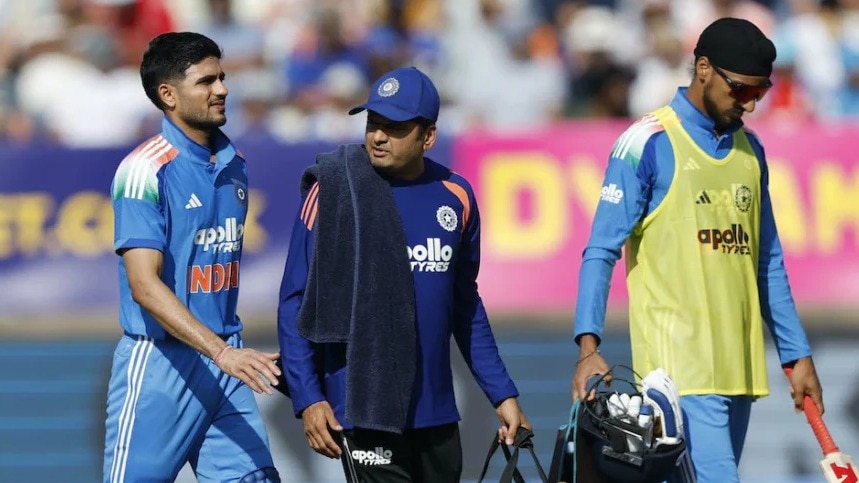
Captaining India against England, Shubman Gill scored a fluent 80 runs before retiring hurt in the 26th over due to a hamstring‑related pain. The incident raises questions about his fitness and the team's strategy for the remaining series matches.
Key Takeaways
- Shubman Gill retired hurt on 80 runs during the 26th over.
- The injury appeared to be a hamstring/cramp issue in his right rear leg.
- India will miss Gill for the next match, but he is expected to be fit for the July 16 game in Cardiff.
On July 14, 2026, the first ODI of the India‑England series unfolded at the historic Exeter ground in Birmingham. After winning the toss, India set an aggressive tone, and captain Shubman Gill quickly became the focal point of the innings. He compiled 80 runs off 75 balls, featuring eleven fours and a six, driving the scoreboard to a competitive total of 258.
Gill's Innings in Detail
Gill’s strike rate of 106.66 reflected a blend of controlled aggression and textbook shot selection. His ability to rotate the strike while finding boundaries at will kept the run‑rate steady, giving India a solid platform before the middle overs. The innings was especially valuable as India’s bowlers had already restricted England to 258, making his contribution pivotal for a potential chase.
The Injury Incident
During the 26th over, Gill suddenly winced and clutched the posterior part of his right leg. He was unable to stand upright and immediately dropped to the pitch. The team physiotherapist rushed onto the field, assessing the situation as a possible hamstring cramp or muscle strain. After a brief on‑field examination, the medical staff confirmed that Gill could not continue, prompting him to retire hurt.
Team Response and Other Highlights
India’s bowling unit kept the pressure on England, with Akshar Patel claiming four wickets, and Krishnan and Gurunoor Barar each taking two. Jasprit Bumrah also marked his 150th ODI wicket, underscoring the depth of India’s attack. The loss of Gill’s bat, however, forced a reshuffle in the batting order, offering a chance for younger players to step up.
Future Outlook
Experts suggest that a mild hamstring strain typically requires a recovery period of 10‑14 days, meaning Gill could be match‑fit for the next ODI in Cardiff on July 16. In the meantime, India will need to adapt its middle‑order strategy, potentially promoting a lower‑order batsman to fill the void. Gill’s swift comeback and the team’s adaptability will be crucial determinants of India’s chances in the remainder of the series.