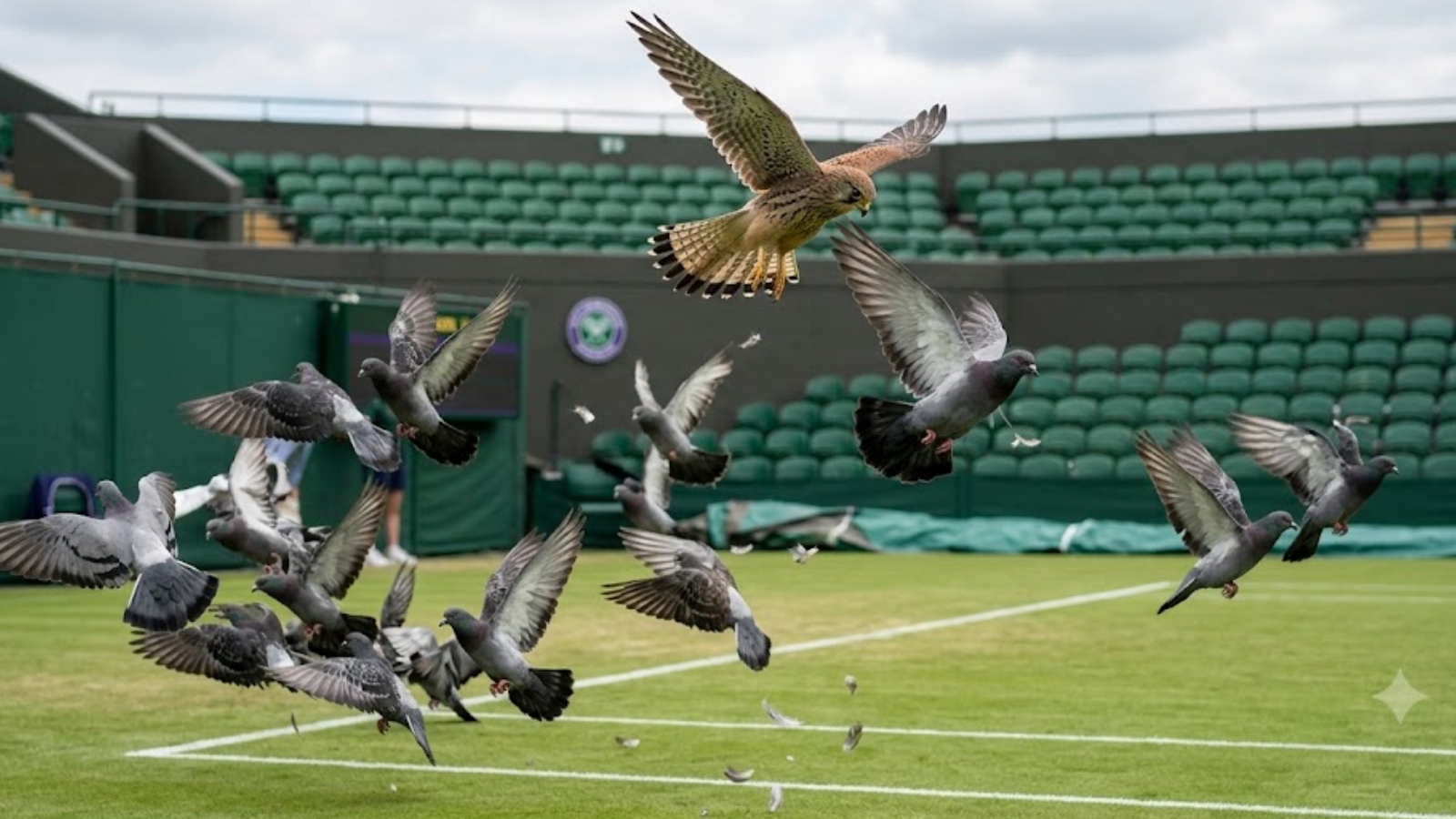
Each summer Wimbledon deploys Rufus, a Harris's hawk, to keep the grass courts free of pigeons. The tradition highlights urban raptor adaptability and offers a chemical‑free model for pest management in high‑profile sporting venues.
Key Takeaways
- Wimbledon has used a trained hawk since the late 1990s to protect its courts.
- Rufus demonstrates how raptors can thrive in dense urban environments.
- The hawk provides a natural, non‑lethal solution to pest control.
When the world's top tennis players arrive at the All England Club, a silent guardian rises before dawn – Rufus, a Harris's hawk. Unlike the athletes in crisp white, Rufus patrols the sky, scaring away pigeons and other birds that could damage the immaculate grass or interrupt play.
Historical Roots
In the late 1990s, persistent pigeon colonies began gnawing at the delicate turf, prompting organizers to revisit an age‑old practice: falconry. Since then, a trained hawk has become as iconic as strawberries and cream, arriving each year to patrol the grounds and keep the courts pristine.
Scientific Insight: Urban Adaptability
Environmental researcher Jasmit S. Arora notes that Rufus is more than a mascot; he is a living case study of raptor flexibility. “Observing a captive‑raised Harris’s hawk autonomously claiming a dense urban complex as its territory is highly significant,” Arora explains. Rufus’s self‑initiated patrols, rooftop puddle baths after rain, and keen spatial awareness illustrate how birds of prey can habituate to high‑traffic human settings while retaining core hunting instincts.
Why Cities Attract Raptors
Rapid urbanisation, habitat loss, and climate‑induced heat islands are reshaping raptor distribution. Skyscrapers mimic cliffs, offering nesting sites, while feral pigeons provide a reliable food source. Moreover, milder micro‑climates extend hunting seasons, rewarding predators that can modify their behavior.
Natural Pest Management
Rufus’s role underscores a growing trend toward sustainable, non‑chemical pest control. Pigeons instinctively avoid areas patrolled by a predator, eliminating the need for traps, poisons, or lethal culling. Arora emphasizes, “This case validates the efficacy of leveraging natural predatory presence for non‑lethal, behavior‑driven urban pest management, offering a welfare‑positive model for reducing human‑wildlife conflict.”
Beyond Wimbledon, the success of a trained hawk illustrates how ancient falconry can complement modern technology, providing a blueprint for cities worldwide seeking eco‑friendly solutions.