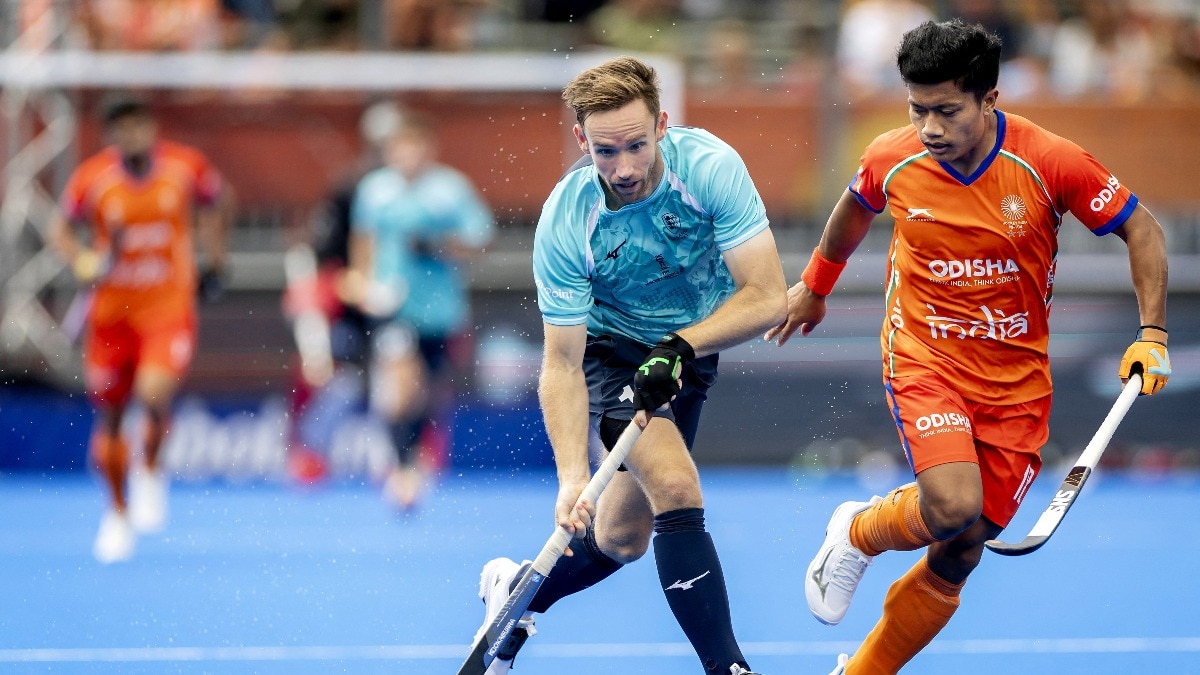
After a disappointing 4-2 loss to England in the Hockey World Cup, Coach Craig Fulton and captain Manpreet Singh have highlighted critical defensive lapses that must be corrected before the high-stakes encounter with arch-rivals Pakistan.
- India suffered a 4-2 defeat against England due to a collapse in defensive intensity during the third quarter.
- Coach Craig Fulton emphasized the need for better composure and ball control in the upcoming match against Pakistan.
- Despite the loss, India's forward line showed promise, though conversion rates remained a concern.
The Indian men's hockey team faced a sobering reality check in their second pool match of the Hockey World Cup, falling 4-2 to a disciplined England side. While the first half suggested a dominant Indian performance, the momentum shifted dramatically after the break, exposing vulnerabilities in the backline that proved fatal to their campaign.
Head coach Craig Fulton was candid about the team's shortcomings, specifically pointing to the third quarter as the turning point. India had entered the interval with confidence, having secured two goals and controlled the tempo through effective counter-attacks and penalty corner opportunities. However, the drop in defensive intensity allowed England, currently ranked world number three, to seize control and dismantle the Indian structure.
Why This Matters
BozokMedia analysis shows that India's struggle is not with offensive creativity but with sustained defensive discipline over a full 60-minute match. In elite international hockey, a single quarter of complacency can negate three quarters of brilliance. For India, the ability to maintain a high-press system without leaking goals is the difference between a podium finish and an early exit.
"Defensive stability is the bedrock of tournament success; you cannot rely solely on attacking flair when facing top-three global seeds."
Veteran player Manpreet Singh echoed these sentiments, noting that while the team adhered to their tactical structure and broke England's full press multiple times, the lack of clinical finishing and late-game lapses were costly. The struggle to convert penalty corner variations further highlighted a need for more innovative set-piece execution.
The focus now shifts entirely to the clash against Pakistan. This match is not merely about points but about psychological resilience. Fulton has urged his players to avoid dwelling on the England loss and instead focus on composure and pressure. The objective is clear: minimize the concession of penalty corners and maximize conversion opportunities.
Historical Background
The rivalry between India and Pakistan remains one of the most intense in global sports. Historically, these encounters are defined by high tension and tactical battles. In recent World Cup cycles, India has sought to modernize its game under foreign coaching staff to bridge the gap between Asian dominance and European tactical precision.
| Metric | First Half Performance | Second Half Performance |
|---|---|---|
| Defensive Intensity | High / Controlled | Low / Lapses |
| Attacking Flow | Strong Counter-attacks | Struggled to Convert |
| Ball Possession | Dominant | Contested |
Frequently Asked Questions
Q1: What was the primary reason for India's loss to England?
The primary reason was a significant drop in defensive intensity and several lapses during the third and fourth quarters.
Q2: Who is India's next opponent in the Hockey World Cup?
India will face their arch-rivals Pakistan in their final pool match on Wednesday.