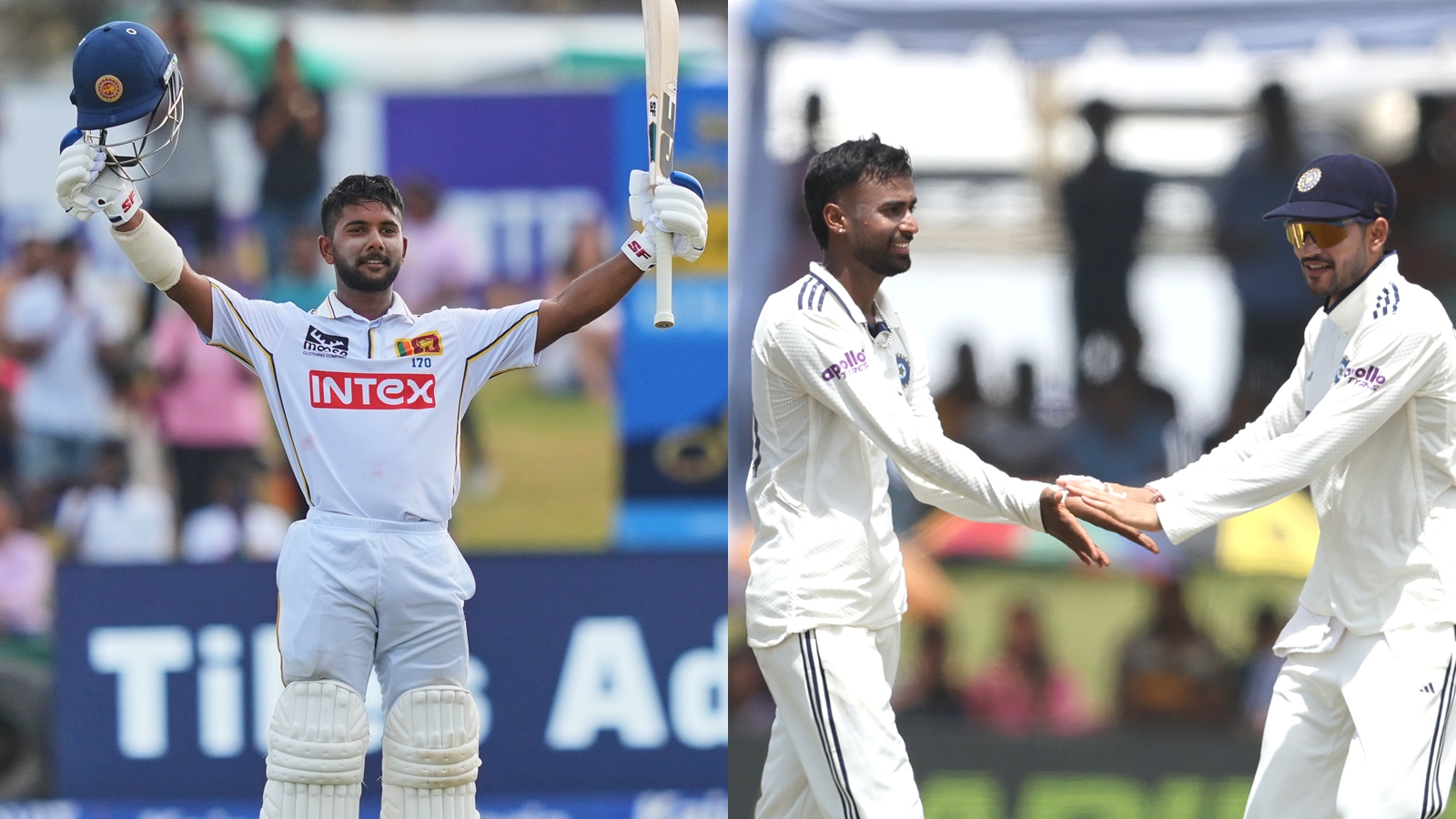
After reducing Sri Lanka to 90/5, India suffered a major setback as Sonal Dinusha and Niroshan Dickwella forged a massive partnership to avoid the follow-on. The match now hangs in the balance with weather threats looming over Galle.
- Sri Lanka recovered from a disastrous 90/5 to post a competitive 484 in their first innings.
- Sonal Dinusha scored his maiden Test century, while Niroshan Dickwella contributed a gritty 80.
- India's spinners, including Ravindra Jadeja and Kuldeep Yadav, struggled to contain the left-handers' sweep shots.
- Weather conditions and a docile pitch have shifted the momentum back to the home side.
The third day of the Test match at Galle proved to be a rollercoaster of emotions for the Indian team. Having posted a formidable 462 in their first innings, India started the day with absolute dominance. The bowling attack, led by Mohammed Siraj and the surprising impact of Manav Suthar, ripped through the Sri Lankan top order, leaving the hosts reeling at 90/5 by the 27th over.
For a brief window, an Indian victory seemed inevitable. The strategy was clear: bowl out Sri Lanka quickly, enforce the follow-on, and capitalize on the early morning movement. However, the game took a dramatic turn when Sonal Dinusha and Niroshan Dickwella joined forces. Their 146-run partnership for the sixth wicket not only saved Sri Lanka from an embarrassing collapse but also ensured they avoided the follow-on, finishing their innings at 484.
Why This Matters
BozokMedia analysis shows that India's selection strategy may have backfired. By opting for three left-arm/wrist spinners without a dedicated off-spinner, India lacked the necessary angle to trouble the left-handed pair of Dinusha and Dickwella. The liberal use of the sweep shot neutralized the threat of Kuldeep Yadav, who struggled with consistency, conceding runs at 4.64 per over.
"The failure to include an off-spinner on a pitch where left-handers are dominating is a tactical oversight that has cost India a commanding lead."
Niroshan Dickwella's return to the side was a point of contention before the match due to his inconsistent domestic record. However, his aggressive approach and mastery of the sweep shot disrupted the rhythm of the Indian attack. Meanwhile, Dinusha played the anchor role, meticulously building his maiden Test century with a disciplined approach, relying more on strike rotation than boundaries.
As the match progresses, Ravindra Jadeja reached a personal milestone, claiming his 350th Test wicket. Despite his relentless accuracy, the Kookaburra ball softened quickly, and the Galle strip became unusually docile, offering little assistance to the bowlers. This shift in pitch behavior has placed immense pressure on the Indian batting lineup for the second innings.
| Player | Role | Key Contribution | Impact |
|---|---|---|---|
| Sonal Dinusha | All-rounder | 100 Runs | Anchored the recovery |
| Niroshan Dickwella | Wicket-keeper/Bat | 80 Runs | Aggressive counter-attack |
| Ravindra Jadeja | Spinner | 350th Wicket | Maintained pressure |
With scattered thunderstorms predicted for the final two days, time has become the biggest enemy for the visitors. India now needs to bat with extreme caution and efficiency to build a lead of at least 350 runs to put themselves in a winning position.
Frequently Asked Questions
1. Who were the top performers for Sri Lanka in the first innings?
Sonal Dinusha scored a maiden century (100), and Niroshan Dickwella scored 80 runs to lead the recovery.
2. Why did the Indian spinners struggle in the middle session?
The left-handed batsmen used the sweep shot extensively to neutralize the lengths of the spinners, and the pitch lacked the expected turn.