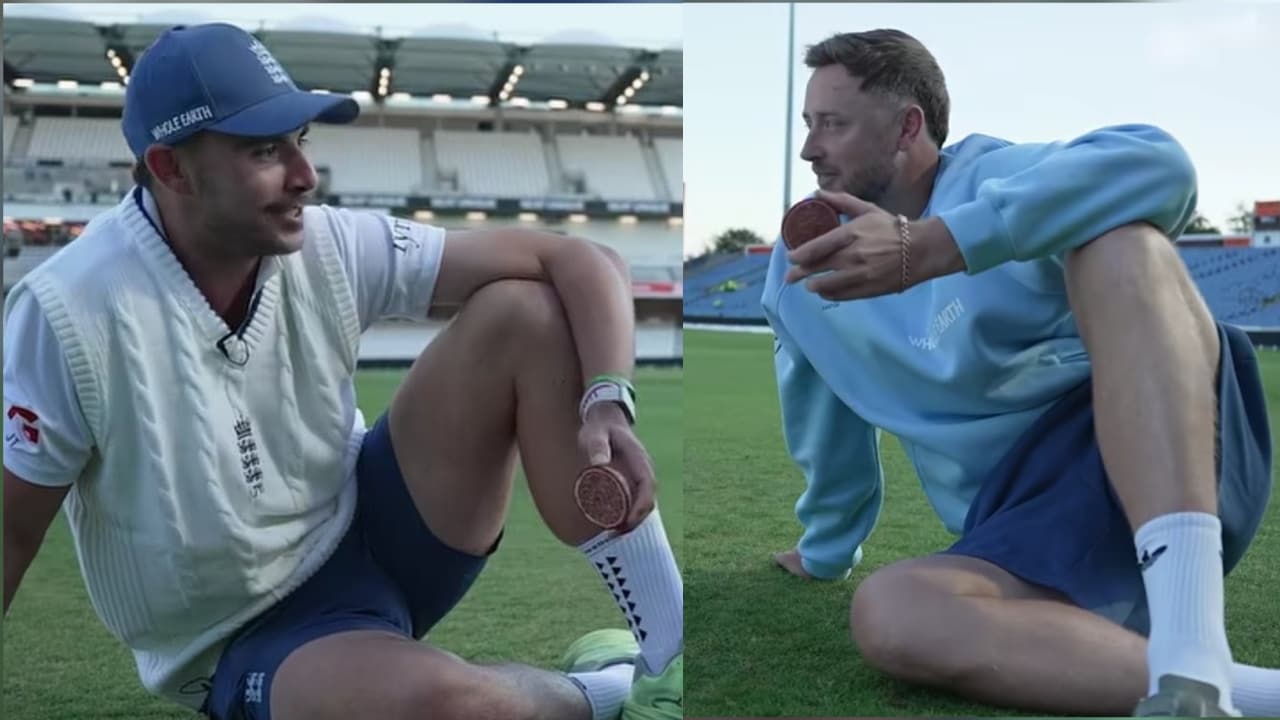
In an unprecedented moment during the first Test against Pakistan in Leeds, England pacers Ollie Robinson and Josh Tongue were allowed to split the match ball after each took five wickets. This rare feat marks a unique piece of cricket history.
- Ollie Robinson and Josh Tongue achieved a rare feat in the first Test against Pakistan.
- Both pacers took five wickets each on the opening day of the match in Leeds.
- As a special memento, the match ball was cut in half for them to keep.
In a moment that has captured the attention of the cricketing world, England's pace bowling duo, Ollie Robinson and Josh Tongue, have been granted a unique memento following their exceptional performance on the opening day of the first Test against Pakistan in Leeds. Both bowlers achieved the rare and celebrated feat of taking five wickets each in the same innings, a distinction that led to an even more unusual prize: the match ball itself was cut in half, allowing each bowler to keep a piece.
The incident occurred during a pivotal phase of the match, where Robinson and Tongue dismantled the Pakistani batting lineup. Their combined efforts were instrumental in restricting Pakistan's scoring and putting England in a commanding position early in the series. The umpires, recognizing the significance of two bowlers achieving such a milestone in the same innings of a Test match, agreed to the special request.
A Historic Occasion
While individual five-wicket hauls are a significant achievement for any bowler, it is exceptionally rare for two bowlers from the same team to accomplish this in the same Test innings. This shared success not only highlights the potent bowling attack of the England team but also creates a unique narrative for the ongoing Test series. The decision to halve the match ball is a testament to the sport's tradition of commemorating extraordinary individual and collective efforts.
The Significance of the Match Ball
The match ball in cricket is more than just a piece of equipment; it is central to the game's progression and often becomes a symbol of key moments. For bowlers, taking wickets is the ultimate goal, and the ball with which they achieve these feats holds immense sentimental value. In this instance, the ball represents not just one bowler's success, but a shared triumph, making the decision to divide it a fitting gesture.
Why This Matters
BozokMedia analysis shows that such moments, while seemingly minor, significantly boost player morale and fan engagement. They create memorable narratives that transcend the immediate match result, fostering a deeper connection with the sport's history and its stars. This act of commemoration underscores the importance of recognizing exceptional performances and celebrating the individuals who deliver them, potentially inspiring future generations of cricketers.
The shared five-wicket haul and the subsequent division of the match ball is a poignant reminder of the camaraderie and shared glory that cricket can foster, turning an individual achievement into a collective celebration.
Historical Background
While instances of bowlers keeping match balls after a five-wicket haul are not uncommon, the specific scenario of two teammates sharing the ball after achieving this feat in the same innings is exceptionally rare. Historical records show numerous individual five-wicket hauls, but this particular act of sharing the memento by cutting the ball in half is believed to be one of the first, if not the first, in Test cricket history. This makes the event particularly noteworthy.
Frequently Asked Questions
Q1: Is it common for bowlers to keep the match ball after a five-wicket haul?
Yes, it is a common practice for bowlers to be presented with the match ball as a memento after achieving a five-wicket haul, provided the match ball is not required for further use or by match officials.
Q2: Has this happened before in Test cricket?
While individual five-wicket hauls are frequent, it is extremely rare for two bowlers from the same team to take five wickets in the same innings, and even rarer for the match ball to be shared in this manner. This specific instance is considered a unique event.