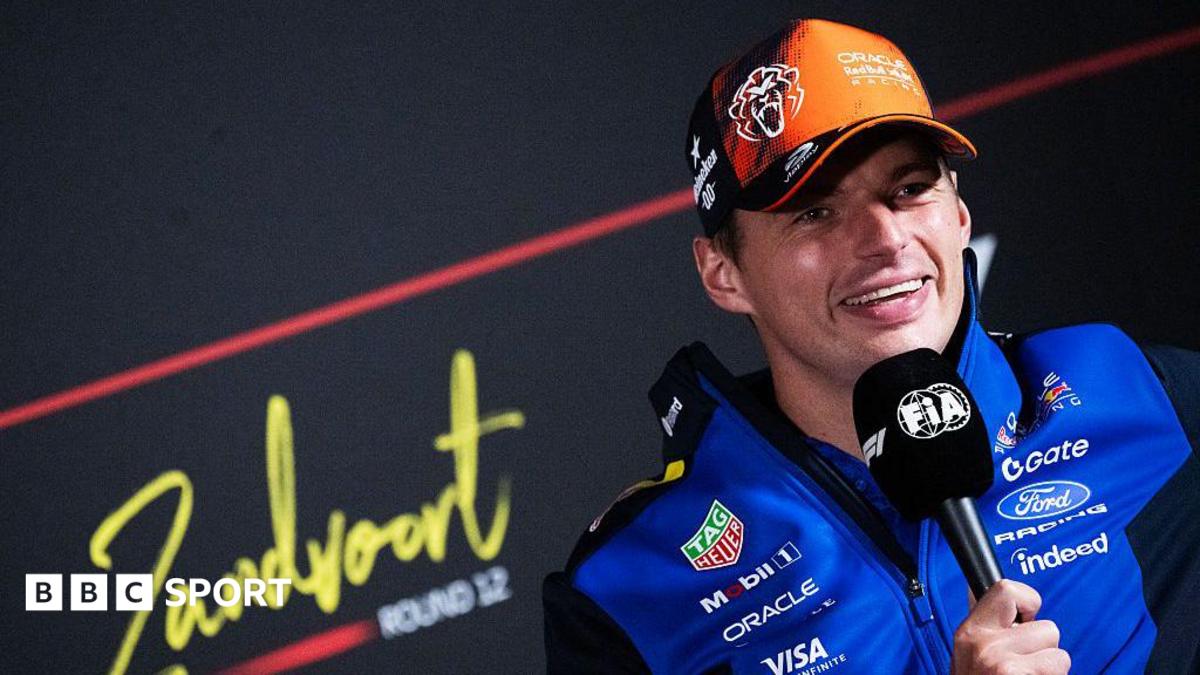
Four-time F1 champion Max Verstappen has signed a contract extension with Red Bull until 2030, revealing that he was closer to retiring than switching teams due to technical frustrations.
- Max Verstappen has extended his contract with Red Bull Racing until the end of 2030.
- The Dutchman admitted he was contemplating retirement more than a team move this season.
- Frustration with new hybrid engine regulations and 'energy starvation' played a major role.
- Future engine rule changes, including potential V8 returns, influenced his long-term decision.
In a candid moment following the announcement of his contract extension with Red Bull Racing, four-time Formula 1 World Champion Max Verstappen revealed the existential crisis he faced this season. "I was closer to retiring than changing teams," Verstappen remarked, highlighting the deep-seated frustrations regarding the sport's current technical direction.
The core of Verstappen's discontent lies in the new hybrid engine regulations. The struggle to maintain battery charge and the resulting 'energy starvation'—where cars lose significant horsepower mid-straight—has been a major point of contention. For a purist like Verstappen, who thrives on driving at the absolute limit, the artificiality introduced by these power-management struggles was nearly unbearable.
Why This Matters
BozokMedia analysis shows that Verstappen's struggle is a bellwether for the entire F1 grid. If the sport's most dominant driver finds the current power units unrewarding, it signals a disconnect between the FIA's regulatory goals and the fundamental essence of racing: driver agency and raw mechanical power.
"Is it worth it? Or do I enjoy being more at home with my family when you're not enjoying your sport?" Verstappen pondered.
The technical landscape is shifting. By 2028, regulations aim to shift the power balance back toward internal combustion engines (60:40 ratio), a move intended to alleviate the energy-depletion issues seen this year. This adjustment is crucial for drivers who feel the hybrid elements are currently hindering rather than helping performance.
Furthermore, the political battle within the FIA is heating up. President Mohammed Ben Sulayem has floated the idea of returning to naturally aspirated V8 engines to simplify the sport. While this appeals to purists, manufacturers like Audi and Mercedes remain cautious, preferring a more sophisticated turbo-hybrid integration.
| Feature | Current Status (2026) | Planned (2028) |
|---|---|---|
| Power Split (ICE vs Hybrid) | ~53:47 | ~60:40 |
| Driver Focus | Energy Management | Raw Power/Driving |
Frequently Asked Questions
1. Why did Max Verstappen stay at Red Bull?
Verstappen cited a desire to see the evolution of engine regulations and his comfort with the team as key factors in his 2030 extension.
2. What are the new engine rules aiming to fix?
The rules aim to increase the proportion of internal combustion power to prevent 'energy starvation' and improve the driving experience.