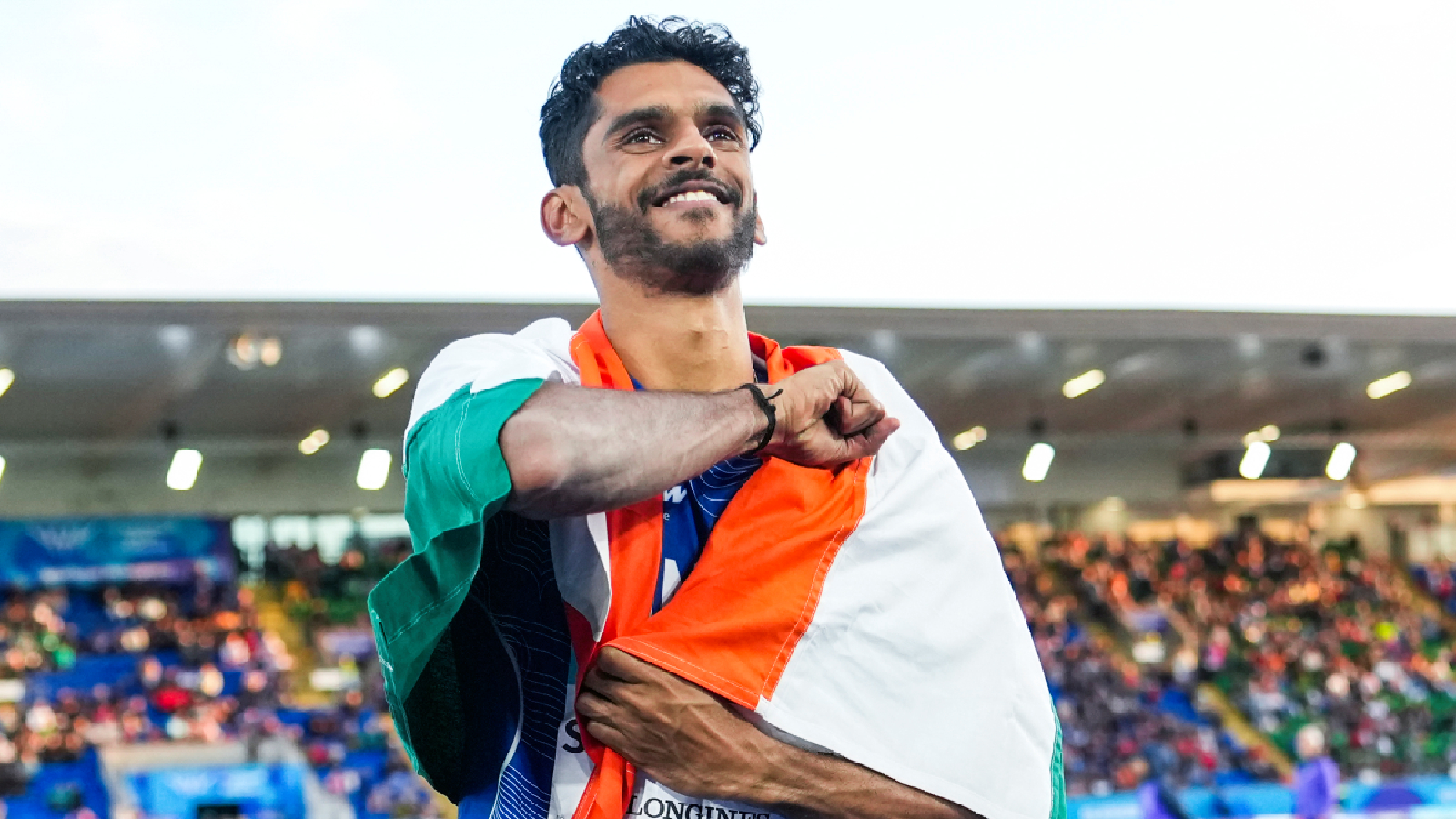
After securing consecutive Commonwealth Games silver medals, Indian long jumper Murali Sreeshankar is working on technical tweaks to break the 8.20m barrier.
- Murali Sreeshankar holds a season-best jump of 8.38 metres.
- He aims to transition from vertical flight to more efficient horizontal speed utilization.
- The Kalinga Stadium in Bhubaneswar remains his most successful venue.
- His recovery from a major 2024 knee surgery is a central part of his comeback story.
Indian long jump sensation Murali Sreeshankar is back at his favorite hunting ground, the Kalinga Stadium in Bhubaneswar, for the World Athletics Continental Tour Silver. Following his historic achievement of winning two consecutive silver medals at the Commonwealth Games, Sreeshankar is now pivoting his focus toward the upcoming Asian Games in Aichi-Nagoya.
Speaking at the venue, which also hosts the national camp for the Asiad, Sreeshankar noted, "Kalinga Stadium is my favourite track because I have always jumped well here. My first national record and my personal best have both been achieved on this track." With a season-best of 8.38 metres, he enters the competition as a heavy favorite for the gold medal.
Why This Matters
BozokMedia analysis shows that Sreeshankar's journey is one of the most inspiring comeback stories in modern Indian athletics. After a devastating patellar tendon rupture in 2024—an injury doctors compared to a high-impact car crash—his ability to consistently jump over 8 metres marks a significant milestone in his rehabilitation and professional resurgence.
"I tend to go more vertical than horizontal. Long jump is a horizontal jump, and I am currently not utilizing the full extent of my speed." - Murali Sreeshankar
The 27-year-old athlete has identified a critical technical flaw: his takeoff mechanics. While he possesses world-class sprinting speed, his jump trajectory is too vertical, meaning he gains excessive air time rather than forward distance. Sreeshankar plans to refine this during the off-season to reach the 8.20m-8.30m consistency seen in elite jumpers like Miltiadis Tentoglou.
Historical Background: The year 2024 was a turning point for Sreeshankar. A ruptured patellar tendon required surgery involving the implantation of anchor screws, sidelining him for 21 months. This injury occurred during the critical Paris Olympics cycle, making his current form even more impressive as he begins eyeing the 2028 Olympic wave.
| Metric | Bhubaneswar (Current Season) | Glasgow (CWG 2026) |
|---|---|---|
| Best Jump | 8.38m | 8.09m |
| Status | Gold Medal Contender | Silver Medalist |
Frequently Asked Questions
Question 1: What technical change is Sreeshankar planning?
Answer: He intends to adjust his takeoff mechanics to convert his high sprinting speed into horizontal distance rather than vertical flight.
Question 2: How did his previous injury affect him?
Answer: He suffered a severe patellar tendon rupture in 2024 that required surgery and 21 months of recovery, necessitating constant knee care and specialized treatments.