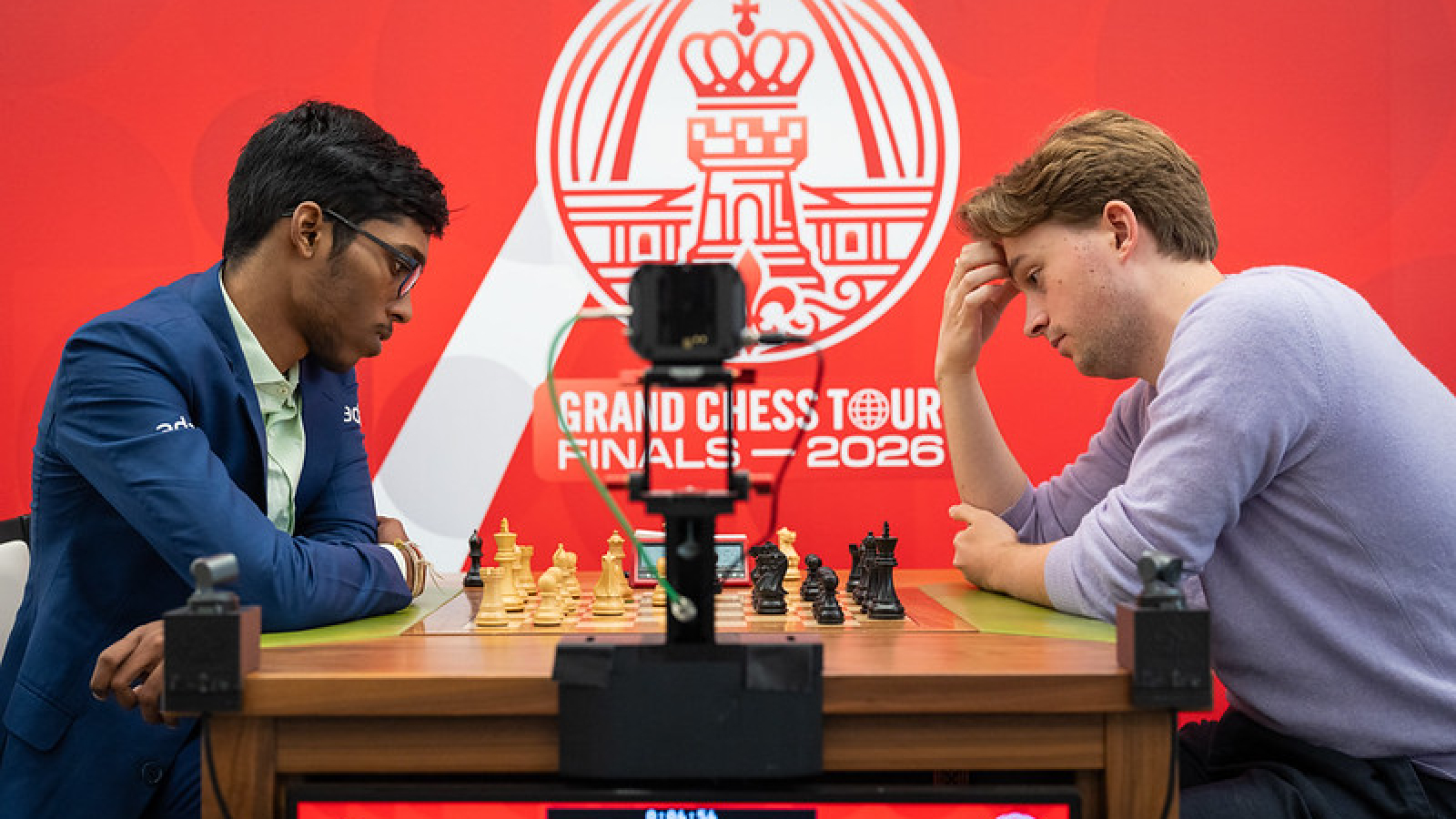
In a breathtaking display of composure, R Praggnanandhaa secured his spot in the GCT Finals by overcoming Germany's Vincent Keymer, highlighted by a legendary moment of calm amidst extreme time pressure.
- R Praggnanandhaa has officially qualified for the 2026 Grand Chess Tour (GCT) Finals.
- With only 9 seconds remaining on his clock, Praggnanandhaa calmly adjusted a pawn, a move that stunned commentators.
- Germany's Vincent Keymer struggled with time management, leading to critical blunders.
- Praggnanandhaa dominated the Rapid rounds to clinch the series.
The chess world has witnessed many great players, but few possess the 'nerves of steel' displayed by R Praggnanandhaa. In a high-stakes semifinal of the 2026 Grand Chess Tour (GCT) Finals, the Indian prodigy dismantled Germany's Vincent Keymer in a match that will be remembered more for its psychological intensity than just the moves played on the board.
The defining moment occurred when Praggnanandhaa's clock dipped dangerously low. With a mere 9 seconds left, instead of succumbing to the frantic pressure of the time scramble, he did something utterly audacious: he reached down and calmly adjusted a tumbling pawn, ensuring it sat perfectly on its square before hitting his clock. This act of composure amidst chaos left legendary commentator Maurice Ashley speechless, exclaiming, "That’s uber cool!"
Why This Matters
BozokMedia analysis shows that Praggnanandhaa's ability to maintain physiological calm during 'time trouble' is a hallmark of a future world champion. While Keymer's performance faltered under the ticking clock, Praggnanandhaa used the pressure to sharpen his focus, turning a potentially losing position into a decisive victory.
Adjusting a piece with seconds on the clock is a profound psychological statement that tells your opponent you are in complete control of the environment.
Technically, the match was a rollercoaster. In the first classical game, Keymer held a strong position but faltered as time ran low. American Grandmaster Wesley So had accurately predicted this vulnerability, noting that Keymer tends to lose significant rating points when forced into time trouble. Praggnanandhaa, showing immense resilience, capitalized on these errors.
The second classical game saw a dramatic shift. Despite a positional blunder by the Indian that gave Keymer a +3 advantage according to engines, the German player's inability to manage his clock led to a catastrophic blunder. Keymer's Knight move shifted the evaluation from +3 to -2, handing the momentum—and the game—to Praggnanandhaa.
Praggnanandhaa's dominance extended into the Rapid rounds, where he clinicaly dismantled Keymer's defenses to extend his lead to 17-3. Although Keymer managed to salvage some pride with three consecutive Blitz wins at the very end, the outcome was never in doubt. The Chennai-born Grandmaster has proven once again that he is a force to be reckoned with on the global stage.
Frequently Asked Questions
1. What was the most notable moment of the match?
The most notable moment was Praggnanandhaa calmly adjusting a pawn with only 9 seconds left on his clock during a high-pressure sequence.
2. How did Vincent Keymer lose the match?
Keymer lost primarily due to time management issues, making decisive tactical blunders when his clock ran low during the classical and rapid segments.