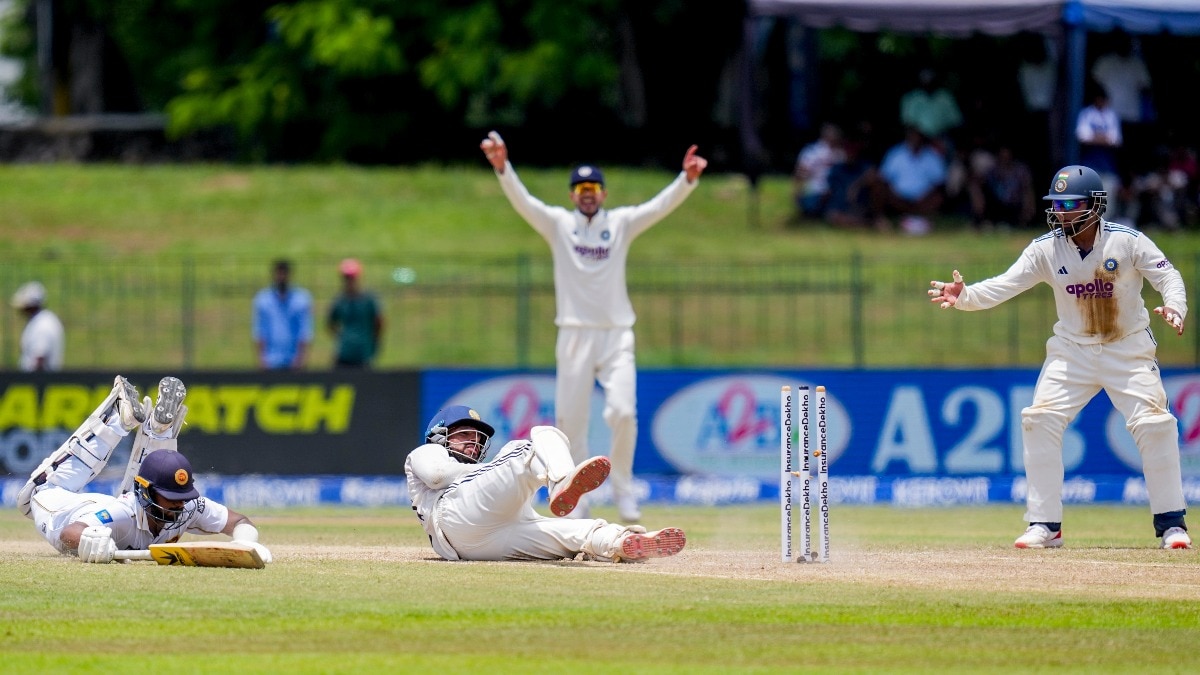
Young Sri Lankan batsmen Sonal Dinusha and Pasindu Sooriyabandara mounted a formidable resistance against the Indian bowlers on Day 3 of the second Test. Their gritty partnership with late-order batters helped Sri Lanka reach a respectable 265 for eight by stumps, setting up an intriguing final two days of play.
- Sri Lanka finished Day 3 of the second Test at 265/8, with Indian bowlers struggling to break through.
- Sonal Dinusha and Pasindu Sooriyabandara spearheaded a crucial resistance for their team.
- The performance highlights the resilience and potential of Sri Lanka's emerging talent.
Indian bowlers faced an unexpected and stubborn resistance from Sri Lanka's late-order batsmen, led by the promising duo of Sonal Dinusha and Pasindu Sooriyabandara, on day three of the second Test in Colombo. The home side concluded the day at 265 for eight, a testament to their resilience and a significant challenge to India's aspirations of wrapping up the match swiftly.
Dinusha and Sooriyabandara displayed immense temperament and determination, frustrating both the Indian pace and spin attack. Their partnership was instrumental in preventing a complete collapse and allowed Sri Lanka to post a total that offers a glimmer of hope heading into day four. India will now need to regroup and formulate a precise strategy to secure the remaining two wickets and capitalize on their overall advantage.
Historical Background
The cricketing rivalry between India and Sri Lanka has a storied history, marked by numerous memorable Test encounters. Historically, Sri Lankan teams, especially on home soil, have often shown flashes of strong resistance, particularly when their younger players step up under pressure. This particular Test match appears to be following that tradition, with India's relatively inexperienced side facing an unexpected challenge from a youthful Sri Lankan lineup. This match serves as a crucial platform for these young Sri Lankan talents to prove their mettle and showcase their potential on the international stage.
Why This Matters
BozokMedia analysis shows that this resistance is not just crucial for the immediate outcome of this Test match but also serves as a significant indicator for the future of Sri Lankan cricket. The ability of young batsmen to perform under pressure can boost team morale and confidence. For India, it is a wake-up call, emphasizing that no opponent should be underestimated, especially in the long format of Test cricket where patience and persistence are paramount. This match could also influence the momentum of the series, as Sri Lanka now has a chance to build some confidence.
This resilience is more than just runs on the board for Sri Lanka; it's a vital injection of confidence for young talents that will shape their future.
While the Indian bowlers made some early inroads at the start of the day, the middle and lower-order batsmen collectively formed a solid wall. Breaking this wall proved to be a strenuous task for India, highlighting the critical importance of every session in Test cricket. As Day 4 begins, India will need to adapt their strategy and plan afresh to claim the remaining two wickets as quickly as possible.
Frequently Asked Questions
- Which Sri Lankan batsmen provided the most significant resistance on Day 3?
- What strategic adjustments are expected from India's bowling attack in this Test match?