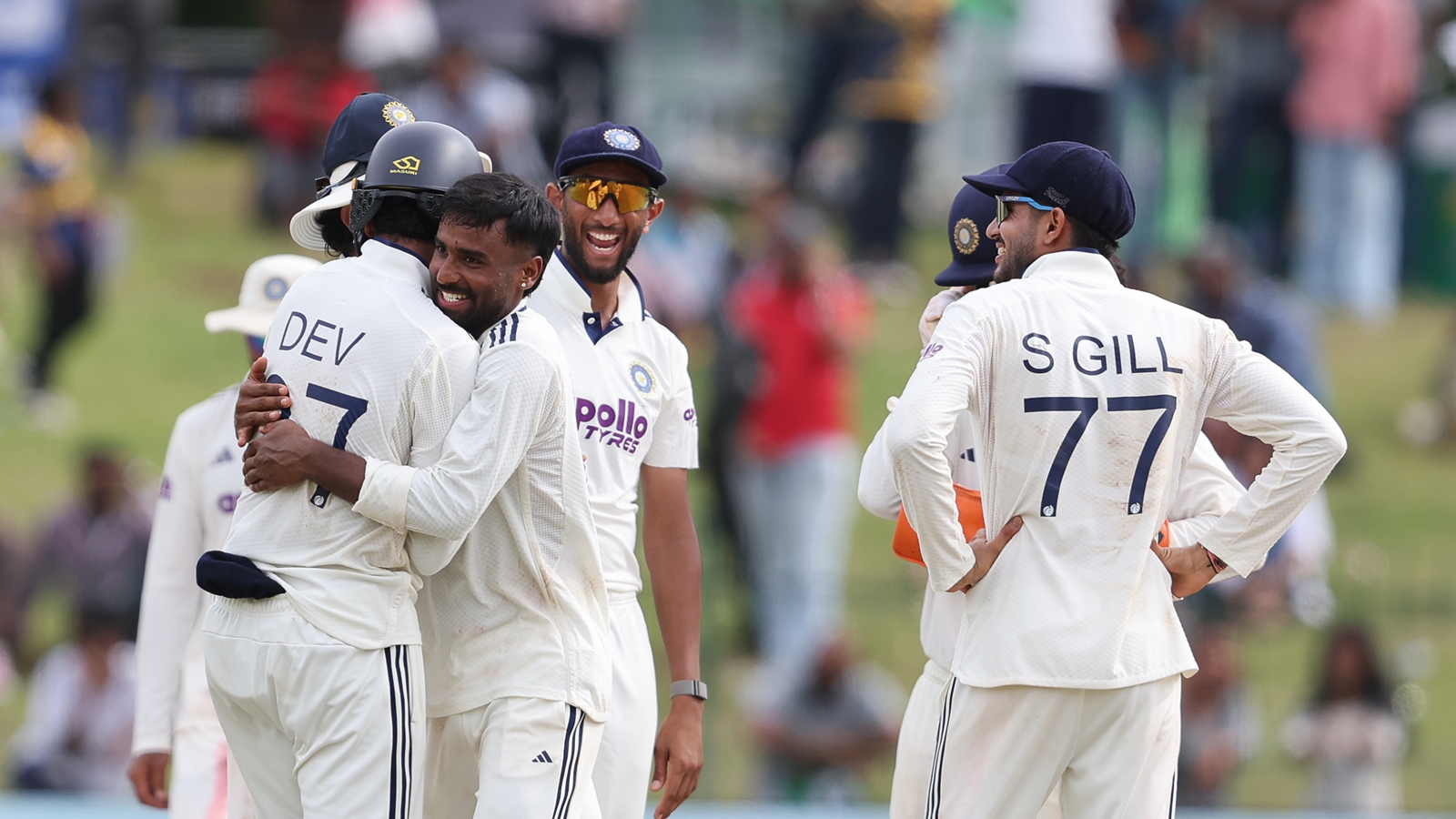
After a sluggish start and losing Mohammed Siraj to injury, India staged a dramatic third-session fightback to leave Sri Lanka reeling at 229/6.
- Mohammed Siraj was forced off the field due to a rib injury.
- Sri Lanka slumped from a dominant 178/2 to 229/6.
- Manav Suthar played a crucial role with the ball, dismissing Sooriyabandara.
- Rain intervened just as India gained significant momentum.
The second Test match between India and Sri Lanka in Colombo took a dramatic turn on Day 4. After a period of dominance by the hosts, the Indian bowling attack found its rhythm in the third session, leaving Sri Lanka in a precarious position at 229/6. The momentum shift came just before rain interrupted play, leaving the match finely balanced.
The Injury Blow and Sri Lankan Dominance
The day began with promise as Mohammed Siraj bowled disciplined spells, but disaster struck when he landed awkwardly while attempting a catch. A rib injury forced him off the field, leaving India's attack depleted. Without their spearhead, the Indian spinners struggled to find consistent breakthroughs. Pasindu Sooriyabandara and Kamindu Mendis capitalized on this, guiding Sri Lanka to a comfortable 178/2 and making captain Shubman Gill's decision not to enforce the follow-on look questionable.
Why This Matters
BozokMedia analysis shows that the loss of a frontline fast bowler like Siraj fundamentally altered India's tactical approach, forcing the spinners into defensive roles and allowing the Sri Lankan batsmen to dictate the tempo through sweeps and aggressive footwork.
India's inability to sustain pressure during the middle sessions allowed Sri Lanka to dictate terms, until the tactical shift in the third session.
For much of the afternoon, the pitch offered little assistance. While Ravindra Jadeja remained a threat, the Sri Lankan batsmen used calculated footwork to disrupt the spinners' rhythm, rotating the strike effectively and keeping the scoreboard moving.
The Third Session Fightback
The tide turned in the third session when Prasidh Krishna broke the resistance by dismissing Kamindu Mendis with a sharp rising delivery. This breakthrough acted as a catalyst for the Indian bowlers. Manav Suthar then delivered the decisive blow, dismissing the well-set Sooriyabandara (92) with a clever slower ball that drew a stumping by Rishabh Pant.
Following the dismissal of the set batsmen, India's intensity increased. The bowlers utilized close-in fielders and aggressive lines, leading to a cluster of wickets. Sri Lanka struggled to score, at one point going 36 balls without a run, before the weather finally intervened.
Frequently Asked Questions
Question 1: Why did India not enforce the follow-on?
Answer: Captain Shubman Gill likely considered the weather and the pitch conditions, though the decision was tested by Sri Lanka's strong partnership.
Question 2: What is the current status of Mohammed Siraj?
Answer: Siraj is sidelined with a rib injury sustained during a fielding attempt.