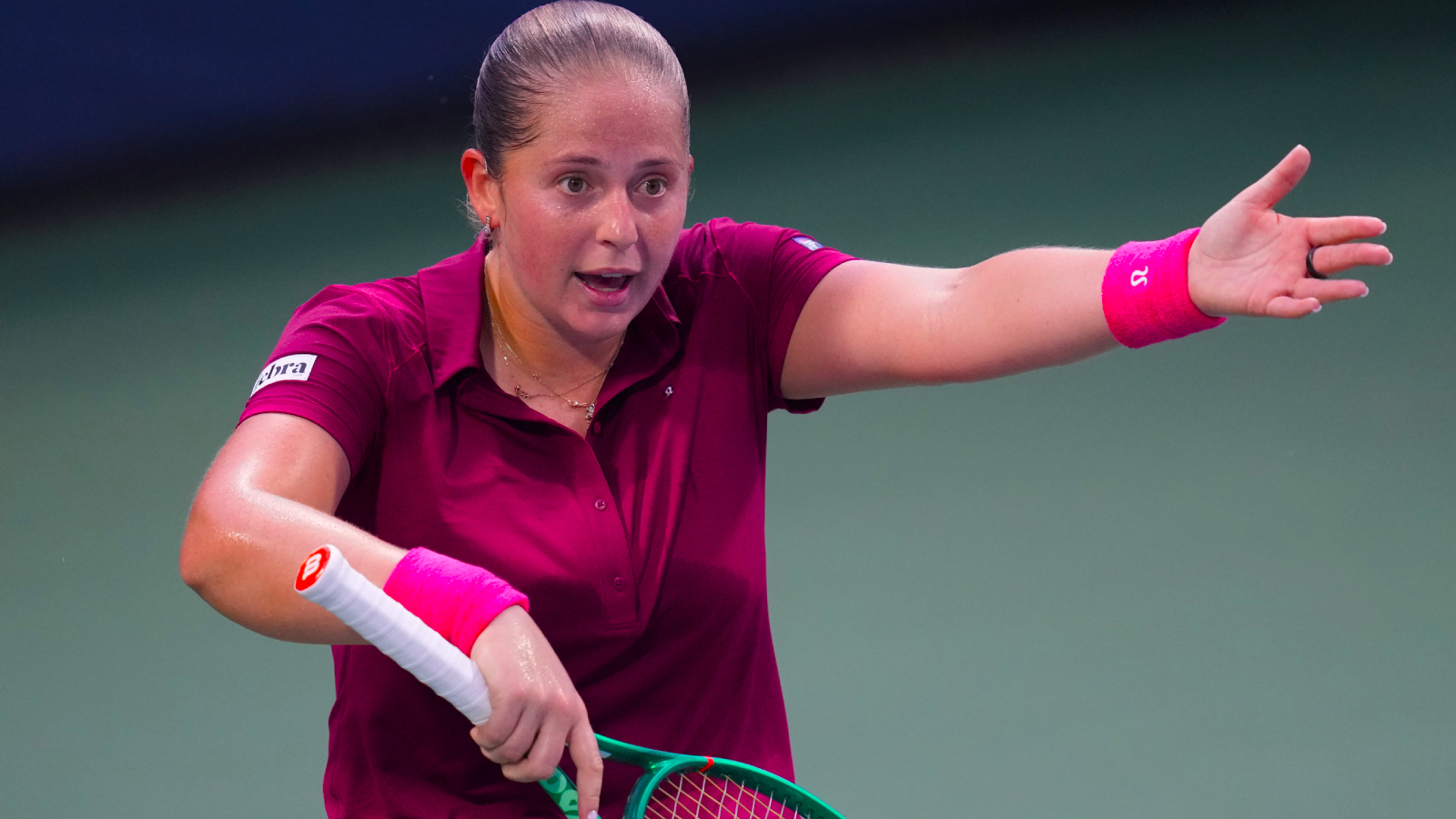
Latvian tennis star Jelena Ostapenko sparked controversy at the US Open by confronting a rival coach over alleged verbal taunts in Chinese. Despite the tension, she secured a doubles quarter-final spot but refused to shake hands with her opponents.
The US Open courts witnessed a storm of emotions as Jelena Ostapenko engaged in a fierce confrontation mid-match. The former 2017 French Open singles champion was seen visibly livid, approaching the chair umpire to report the behavior of the opposing team's coach during a match against the pair of Maya Joint and Chan Hao-ching.
Ostapenko alleged that the coach was using the Chinese language to make sarcastic remarks and clap mockingly after her mistakes. Since the Latvian player does not speak Chinese, her partner, Hsieh Su-wei, acted as a translator, fueling Ostapenko's frustration. "They do this because they know they cannot beat us," Ostapenko reportedly told the official, labeling the conduct as "very disrespectful."
Why This Matters
BozokMedia analysis shows that such outbursts highlight the growing tension in high-stakes professional tennis, where psychological warfare often crosses the line into perceived unsportsmanlike conduct. The demand for official translators during disputes is becoming a critical point for tournament organizers to manage.
The intersection of language barriers and psychological gamesmanship can create volatile environments on the professional circuit.
In a display of channeling her fury into performance, Ostapenko and Hsieh dominated the match, securing a 6-4, 6-4 victory to advance to the women's doubles quarter-finals. However, the victory was marred by a lack of sportsmanship; Ostapenko celebrated by roaring at the opponent's box, and both teams skipped the customary post-match handshake.
Historical Background
This is not an isolated incident for Ostapenko. Last year at the US Open, she made headlines for a scathing attack on Taylor Townsend, calling her "classless." Following that incident, Ostapenko had to issue an apology, citing language barriers as the reason for her choice of words.
Frequently Asked Questions
Question 1: Why was Ostapenko angry during the match?
Answer: She believed the opponent's coach was taunting her in Chinese to unsettle her.
Question 2: Who was Ostapenko's doubles partner?
Answer: She played alongside the experienced Taiwanese player Hsieh Su-wei.
