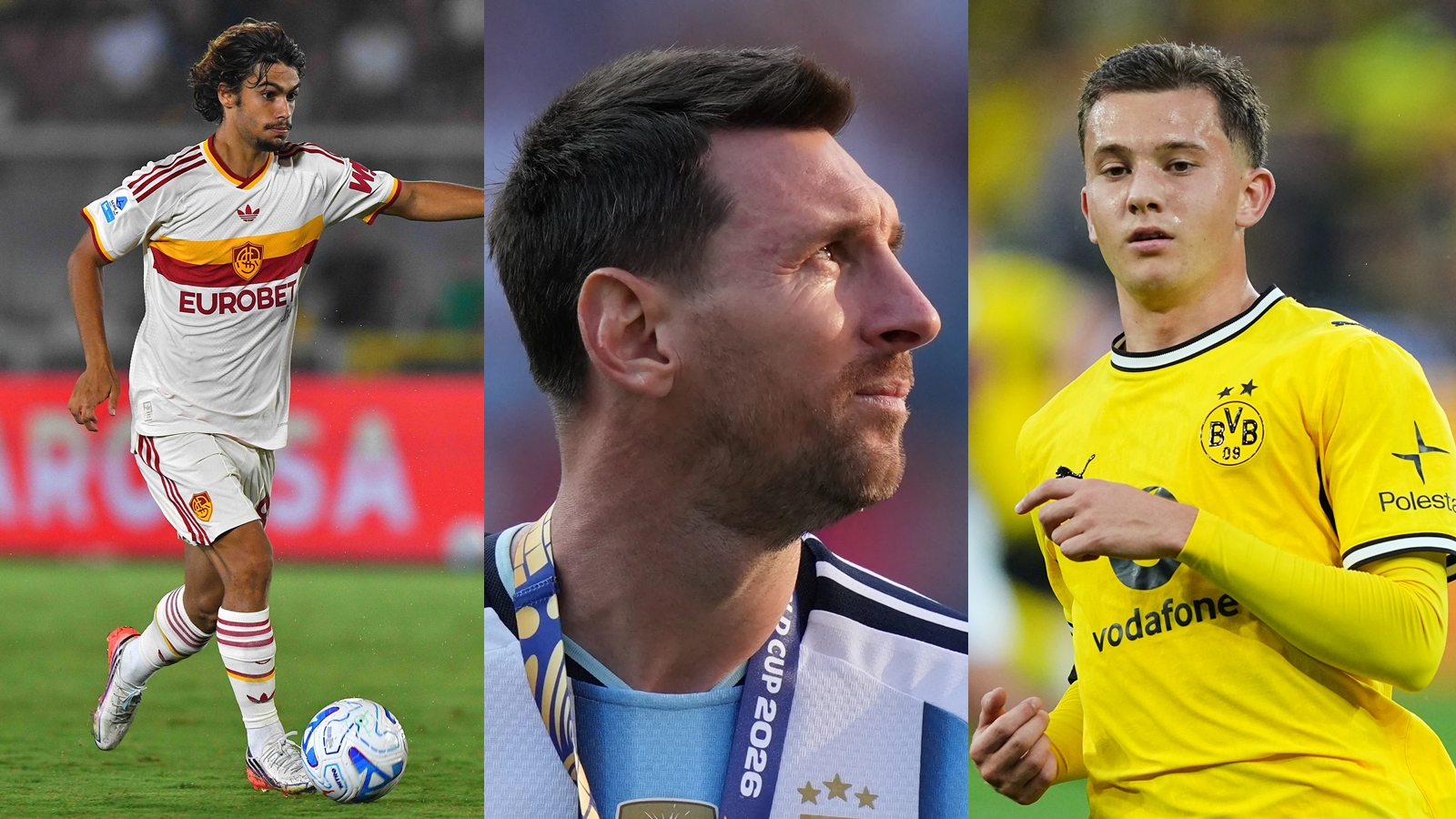
From Rodrigo Mora to Konstantinos Karetsas, a new wave of teenage prodigies is emerging across Europe, carrying the immense pressure of being compared to legends like Messi and Modrić.
- Rodrigo Mora is being hailed as the 'New Messi' after a move to AS Roma.
- Martin Baturina is emerging as the tactical successor to Luka Modrić for Croatia.
- Konstantinos Karetsas and Xavi Espart are redefining wing and full-back play in Germany and Spain.
The footballing world is perpetually searching for the next transcendent talent, a quest that often places an unimaginable burden on the shoulders of teenagers. Currently, the spotlight is firmly on Rodrigo Mora, the former Porto star now regarded as AS Roma's most precious asset. Mora's physical profile—a stocky build and a low center of gravity—mirrors that of a young Lionel Messi, combined with an explosive ability to glide past defenders.
The connection became official during an Inter Miami fixture against Porto, where Messi himself was so enamored by the teenager's skill that he swapped shirts and listed Mora among the top ten young stars globally. However, the 'New Messi' tag is a double-edged sword. When Mora expressed a wish for Portugal to have a figure like Messi, he faced a backlash from supporters of Cristiano Ronaldo, highlighting the volatile nature of footballing loyalty.
Why This Matters
BozokMedia analysis shows that the modern scouting ecosystem is shifting toward 'profile matching,' where clubs seek specific physical and tactical blueprints that mirror past legends. This creates a high-pressure environment where technical proficiency is expected from age 16, accelerating the developmental curve but increasing the risk of burnout.
Beyond Mora, Martin Baturina is carving a path as the 'New Modrić.' The 23-year-old Croatian, born in Switzerland, possesses the same vision and signature outside-of-the-boot passing as his idol. Unlike Modrić, Baturina plays a more advanced role, recently showcasing his goal-scoring prowess against England in the World Cup and dominating fixtures against Italian giants like Napoli.
"The transition from a 'wonderkid' to a legend requires more than just raw talent; it requires the mental fortitude to survive the weight of a legend's shadow."
In Germany, Konstantinos Karetsas is making waves at Borussia Dortmund. Raised in the coal-mining communities of Belgium, Karetsas brings a gritty work ethic to his exceptional dribbling. Similarly, at Barcelona, Xavi Espart is being compared to the legendary Philipp Lahm. Manager Hansi Flick has lauded Espart's versatility, noting his ability to operate as both a defensive midfielder (number 6) and a full-back (number 2).
The defensive sector is also seeing a revolution. Ismaelo Ganiou of Lens and Zeno Debast of Sporting CP are redefining the modern center-back role, blending traditional physicality with the distribution skills of a playmaker. These players represent a shift toward 'total football' where every position on the pitch is expected to contribute to the build-up play.
| Player | Compared To | Key Strength | Current Club |
|---|---|---|---|
| Rodrigo Mora | Lionel Messi | Low Center of Gravity / Dribbling | AS Roma |
| Martin Baturina | Luka Modrić | Vision / Long-range Passing | Como |
| Xavi Espart | Philipp Lahm | Tactical Intelligence / Versatility | Barcelona |
| Konstantinos Karetsas | Traditional Wingers | One-on-One Dribbling | Dortmund |
Frequently Asked Questions
Q: Why is Rodrigo Mora compared to Lionel Messi?
A: Due to his similar physical stature, low center of gravity, and the ability to change pace rapidly while dribbling in tight spaces.
Q: Which club is considered best for youngster development according to the text?
A: Borussia Dortmund is highlighted as a premier destination for young players to develop their skills before moving to the world's biggest stages.