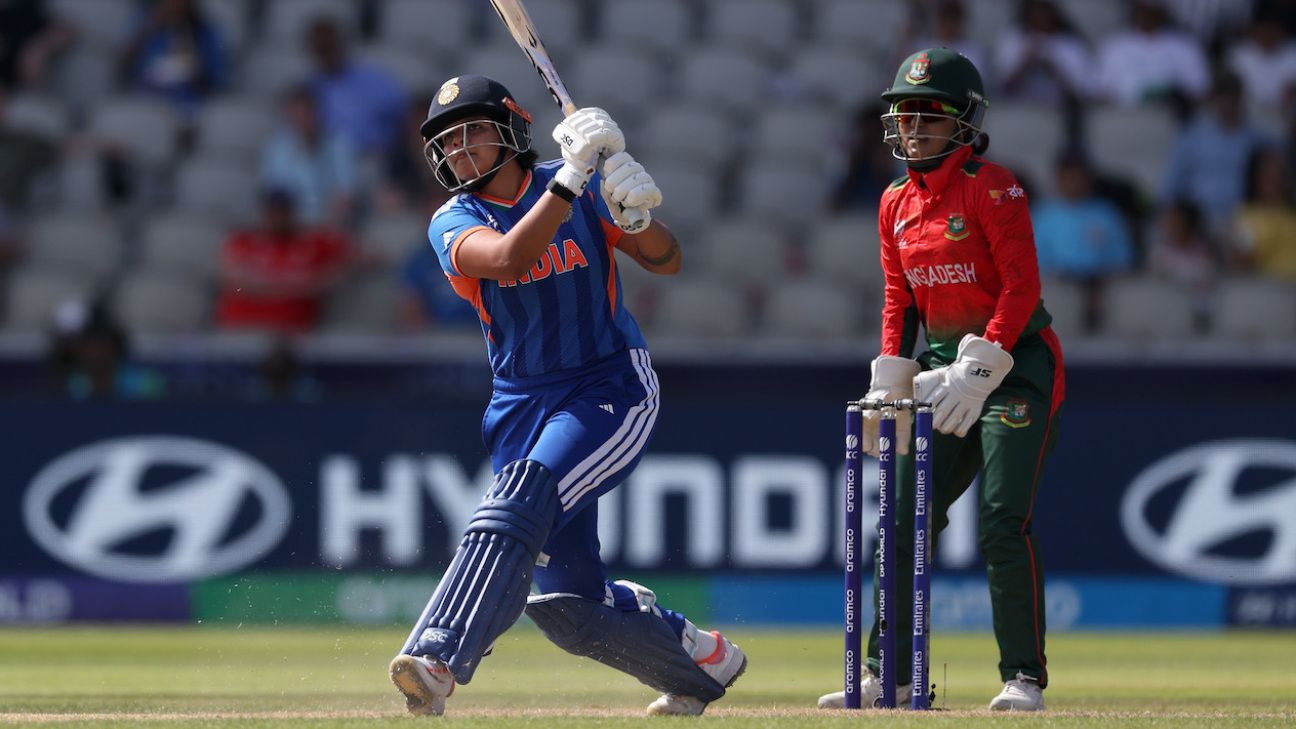
Bangladesh aims to leverage their formidable bowling attack to dismantle India's struggling middle order in a high-stakes Asia Cup clash. With historical dominance on India's side, the battle between Marufa Akter's swing and India's top order will be decisive.
- Bangladesh seeks to break India's dominant winning streak in the Women's Asia Cup.
- Marufa Akter emerges as the primary threat with a lethal economy rate of 3.27.
- India's middle order remains a vulnerability, evidenced by a recent collapse against Thailand.
- Pitch conditions in Dubai favor spinners and teams batting first.
As the Women's Asia Cup reaches its crescendo, Bangladesh is preparing a strategic assault on the heavyweights, India. While history heavily favors the Indian side—who have dominated the last eight encounters—Bangladesh is no longer the underdog of 2018. The current Bangladeshi squad has evolved into a resilient unit, having recently unsettled global powers like Australia and England in the ODI World Cup and securing a clinical victory over Pakistan in the UK.
The cornerstone of Bangladesh's strategy lies in their bowling potency. The emergence of Marufa Akter has provided the team with a genuine wicket-taking weapon. Akter has been the standout pace bowler of the tournament, utilizing prodigious swing to dismantle top orders, including a notable scalp of Chamari Athapathuthu. Her ability to strike in the opening spell will be critical in curbing the aggression of Shafali Verma and Smriti Mandhana.
Why This Matters
BozokMedia analysis shows that while India possesses superior individual talent, their collective batting consistency has been erratic. The collapse of 8 for 46 against Thailand highlights a fragile middle order that Bangladesh is eager to exploit. If Bangladesh can maintain their current bowling discipline, they can turn this semi-final into a low-scoring battle where India's psychological pressure increases with every fallen wicket.
The game will be decided by whether Pratika Rawal can stabilize the middle order or if Marufa Akter's early swing creates an insurmountable collapse.
On the Indian side, all eyes are on Smriti Mandhana, who is just 69 runs away from becoming the leading run-scorer in Women's T20I history. However, the burden of performance also falls on Pratika Rawal, who has struggled with a strike rate of 109.09 in this tournament. With the injured Jemimah Rodrigues absent, Rawal's ability to accelerate will be the litmus test for India's batting depth.
The conditions in Dubai further complicate the contest. With temperatures exceeding 35 degrees Celsius and a pitch that has historically favored spin, the slower bowlers will have the upper hand. Interestingly, teams batting first have won eight of the twelve matches, challenging the traditional T20 wisdom of chasing.
| Feature | India Women | Bangladesh Women |
|---|---|---|
| Recent Form | WWWLW | WLWLL |
| Key Strength | Spin Attack (21 Wickets) | Pace Swing (Marufa Akter) |
| Main Concern | Middle-Order Stability | Batting Consistency |
| Key Player | Smriti Mandhana | Marufa Akter |
Frequently Asked Questions
1. Who is the leading wicket-taker for India in this tournament?
Shree Charani has been exceptional, taking 21 wickets in eight games across the T20 World Cup and Asia Cup.
2. What is the significance of Marufa Akter's performance?
She is currently the top wicket-taker among pace bowlers in the Asia Cup with a highly restrictive economy rate of 3.27.