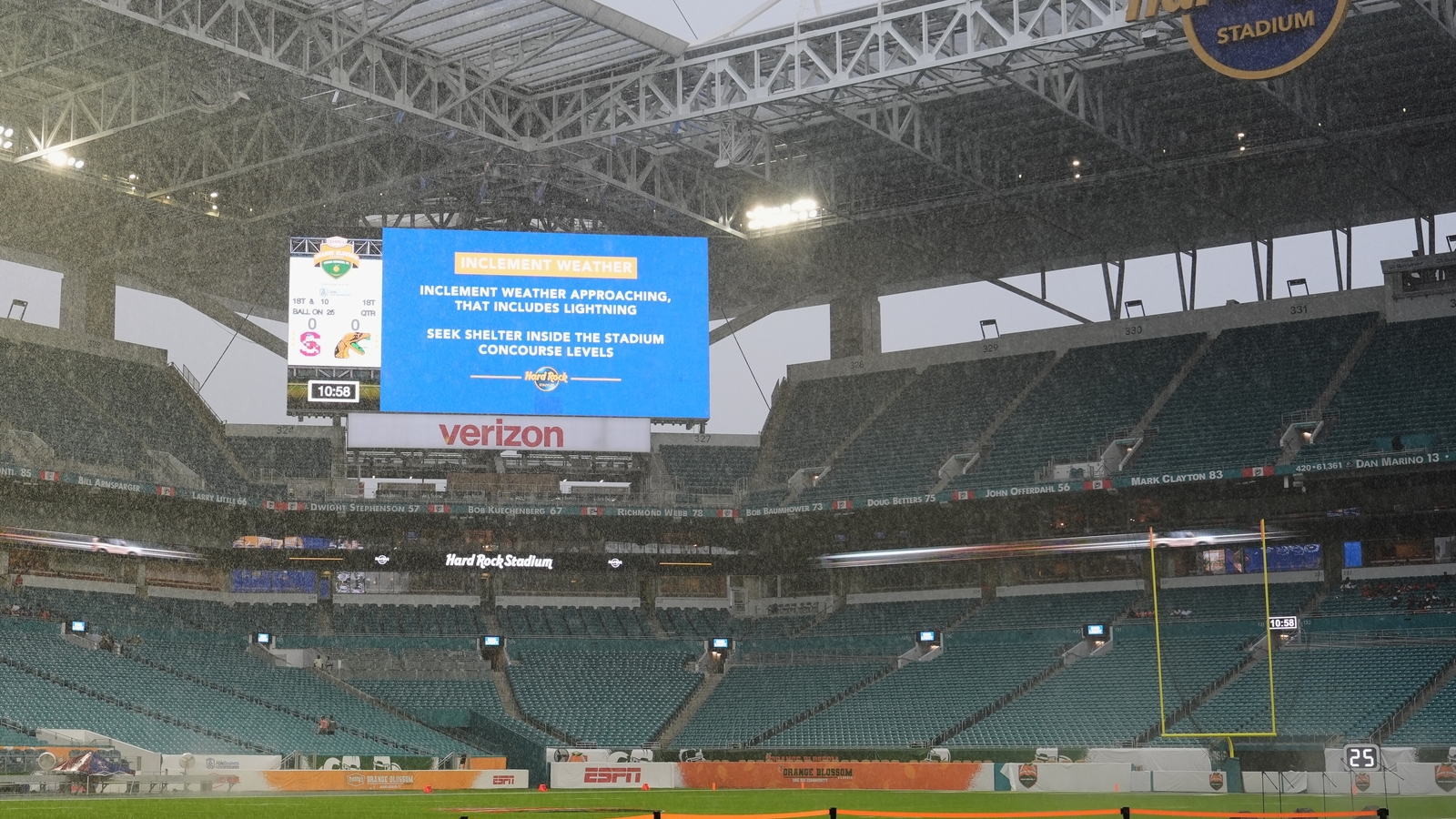
The highly anticipated college football matchup between the Oregon Ducks and Oklahoma State Cowboys has been suspended indefinitely in Stillwater due to severe lightning activity. Fans and players are currently awaiting updates on when, or if, the game will resume amidst safety concerns.
- The college football game between the Oregon Ducks and Oklahoma State Cowboys was suspended due to lightning.
- The suspension occurred in Stillwater, Oklahoma, prioritizing player and fan safety.
- Officials are monitoring weather conditions to determine a potential resumption time or rescheduling.
The much-anticipated college football showdown featuring the Oregon Ducks and the Oklahoma State Cowboys has been brought to an abrupt halt in Stillwater, Oklahoma. The game was suspended indefinitely following severe lightning activity in the immediate vicinity of the stadium, forcing officials to prioritize the safety of players, coaching staff, and thousands of attending fans.
The decision to suspend play came as a direct response to the hazardous meteorological conditions, which saw multiple lightning strikes detected within an unsafe radius of the venue. Standard safety protocols for outdoor sporting events dictate an immediate stoppage and evacuation of the field during such threats. This unexpected turn of events has left spectators in limbo, huddled in designated safe areas, while game officials and meteorological teams continuously monitor the evolving weather patterns over Stillwater.
Historical Background
Weather-related delays and suspensions are an inherent challenge in outdoor sports, particularly in regions prone to severe thunderstorms. College football has a long history of games being impacted by inclement weather, ranging from torrential rain to extreme heat and, most critically, lightning. Such interruptions underscore the sport's deep connection to natural elements and the constant need for robust safety protocols. While frustrating for fans, these measures are vital for preventing serious injury or even fatalities, a lesson learned through past incidents across various sports where weather risks were underestimated.
The impact of such a delay extends beyond the immediate game. For the Oregon Ducks and Oklahoma State, it disrupts carefully planned strategies, can affect player momentum, and creates logistical challenges for travel and subsequent fixtures. For broadcasters, it means immediate adjustments to programming schedules, while for local businesses, it can alter the expected flow of game-day revenue. The uncertainty also poses a mental challenge for athletes, who must remain focused and ready to perform whenever the all-clear is given.
Why This Matters
BozokMedia analysis shows that weather-induced suspensions in high-profile sports events like college football carry significant implications. Foremost is player and spectator safety, which must always supersede competitive considerations. Beyond that, these delays highlight the complex operational challenges faced by event organizers, involving intricate coordination with meteorological services, emergency responders, and stadium management. The financial repercussions can also be substantial, affecting ticket sales, concessions, and broadcast rights, underscoring the delicate balance between entertainment and safety.
"Ensuring the safety of everyone involved, from the players on the field to the fans in the stands, is paramount. While frustrating, weather delays are a necessary evil that reflects a commitment to well-being over schedule adherence."
As the situation unfolds, officials from both universities and the NCAA are in constant communication, evaluating potential windows for resumption. Contingency plans often include resuming play at a later hour, if conditions permit, or even postponing the game to an entirely different date, though the latter is typically a last resort due to scheduling complexities. Fans are advised to stay tuned to official team and league announcements for the latest updates.
The incident in Stillwater serves as a stark reminder of nature's unpredictable power and its capacity to alter even the most meticulously planned sporting spectacles. It reinforces the importance of advanced weather monitoring systems and stringent safety protocols that are now standard across professional and collegiate sports, ensuring that while the game may be delayed, the safety of its participants and audience is never compromised.
Frequently Asked Questions
Q1: Why was the Oregon Ducks vs Oklahoma State game specifically suspended?
A1: The game was suspended due to severe lightning activity detected within an unsafe proximity to the stadium in Stillwater, Oklahoma, as per standard safety protocols.
Q2: What happens if the game cannot resume today?
A2: If the game cannot resume today, officials will explore options such as postponing it to a later date, which involves complex rescheduling, or in rare cases, declaring it a no-contest, depending on league rules and the game's status at the time of suspension.