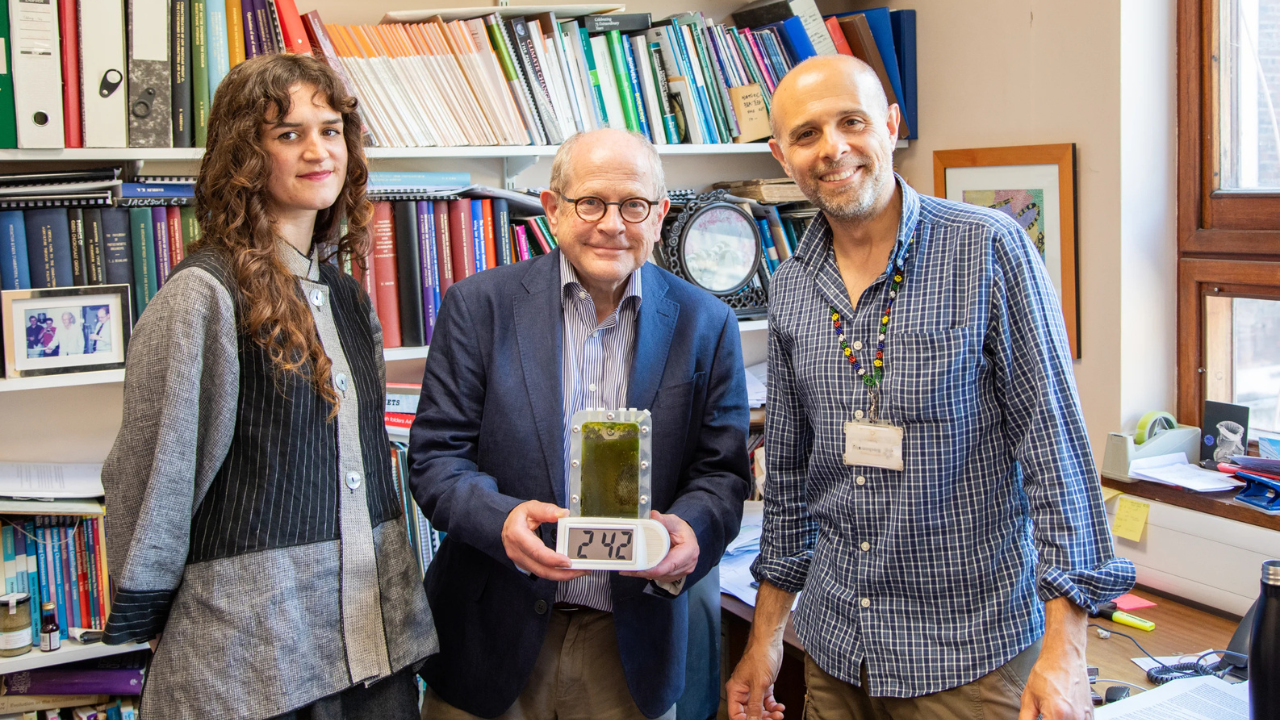
Scientists at Cambridge University have created a living algae‑based bio‑battery that generates electricity around the clock. The breakthrough promises a paradigm shift in renewable‑energy storage and grid independence.
Researchers at Cambridge University have announced a prototype of a living algae bio‑battery capable of delivering uninterrupted electricity day and night. The system encapsulates specially selected micro‑algae within an electrochemical cell, allowing the photosynthetic electrons produced by the algae to be harvested directly as electrical current.
How the Technology Works
During photosynthesis, algae absorb carbon dioxide and split water molecules, releasing electrons as part of the biochemical process. By wiring these electrons to an electrode, the team transformed a biological reaction into a usable power source. Unlike conventional photovoltaic panels, this bio‑battery continues to generate electricity in darkness by exploiting the algae’s respiration cycle, ensuring a constant power output.
Historical Context and Research Trends
Algae‑based energy research has accelerated over the past two decades, initially focusing on light‑driven microbial fuel cells that ceased operation without sunlight. Cambridge’s breakthrough overcomes this limitation by leveraging the metabolic flexibility of algae, merging solar and bio‑electrochemical principles into a single, self‑sustaining device.
Practical Implications and Potential Applications
The most compelling advantage of this bio‑battery is its scalability and environmental friendliness. From portable electronics to off‑grid rural micro‑grids, the technology can be adapted to a range of power demands. Rapid algae growth and low maintenance costs position it as a cost‑effective alternative to conventional batteries. In the long term, large‑scale deployment could support electric‑vehicle charging stations, maritime infrastructure, and even space missions where weight and reliability are critical.
Future Outlook and Remaining Challenges
While early results are promising, commercial viability hinges on overcoming several hurdles: extending algae lifespan, enhancing temperature tolerance, and stabilising the electrode‑algae interface. Researchers are pursuing genetic engineering, nanocoating, and hydrogen‑bonding strategies to boost efficiency and durability.
In summary, Cambridge’s living algae bio‑battery could redefine the renewable‑energy landscape, ushering in a new era of continuous, low‑impact electricity generation.



