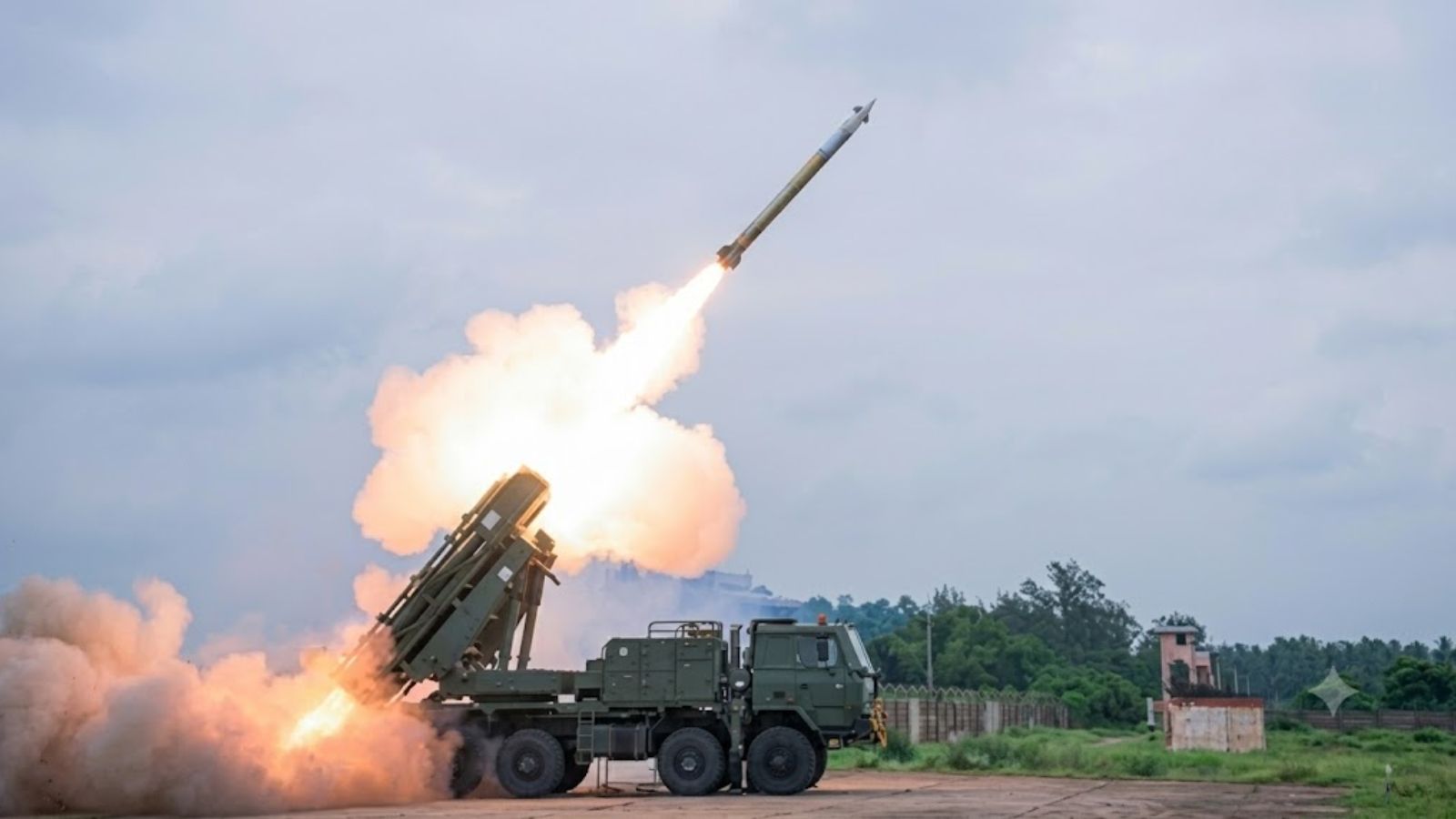
India's Defence Research and Development Organisation (DRDO) successfully demonstrated the Pinaka Long Range Guided Rocket (LRGR) at its minimum range of 60 km, hitting the target with textbook accuracy at Integrated Test Range, Chandipur. The test marks a major step forward for indigenous long‑range artillery capabilities.
The Defence Research and Development Organisation (DRDO) of India, through its two premier Pune facilities – the Armament Research and Development Establishment (ARDE) and the High Energy Materials Research Laboratory (HEMRL) – conducted a flawless flight test of the Pinaka Long Range Guided Rocket (LRGR) at a minimum range of 60 kilometres. The trial, held on Wednesday 8 July 2026 at the Integrated Test Range (ITR) in Chandipur, saw the rocket strike its target with textbook precision, confirming the system’s reliability across its full range envelope.
Technical Overview of Pinaka LRGR
Pinaka is fundamentally a multi‑barrel rocket launcher (MBRL) capable of firing a salvo of twelve rockets in just 44 seconds. The LRGR variant is engineered for deep‑strike missions, allowing the armed forces to engage high‑value enemy assets well beyond the front line. Developed jointly by ARDE and HEMRL in Pune, the project also leveraged technical expertise from the Defence Research and Development Laboratory (DRDL) and the Research Centre Imarat in Hyderabad.
Historical Context and Previous Trials
The Pinaka programme began in the late 1980s as India’s answer to the Russian Grad multiple‑rocket system. After successful Mark‑1 trials in the 1990s, Pinaka saw combat for the first time during the 1999 Kargil conflict. A series of incremental upgrades followed, culminating in the LRGR’s maiden test in December 2025, when the rocket achieved its maximum range of 120 km.
Strategic and Political Significance
Defence Minister Rajnath Singh hailed the achievement as "a major milestone in indigenous design and development capability for long‑range guided rockets," praising DRDO, the Indian Army and the defence industry. DRDO Chairman Rajesh Kumar Singh closely monitored the trial and congratulated all teams for meeting the mission objectives. The success reinforces India’s strategic autonomy, reducing reliance on foreign artillery systems and enhancing deterrence posture.
Future Roadmap
Upcoming phases will involve user‑defined scenario testing, covering diverse climatic and terrain conditions to validate operational robustness. Researchers are also exploring integration of hypersonic payloads and electronic‑warfare modules, which could transform Pinaka LRGR into a versatile platform for future high‑intensity conflicts.



