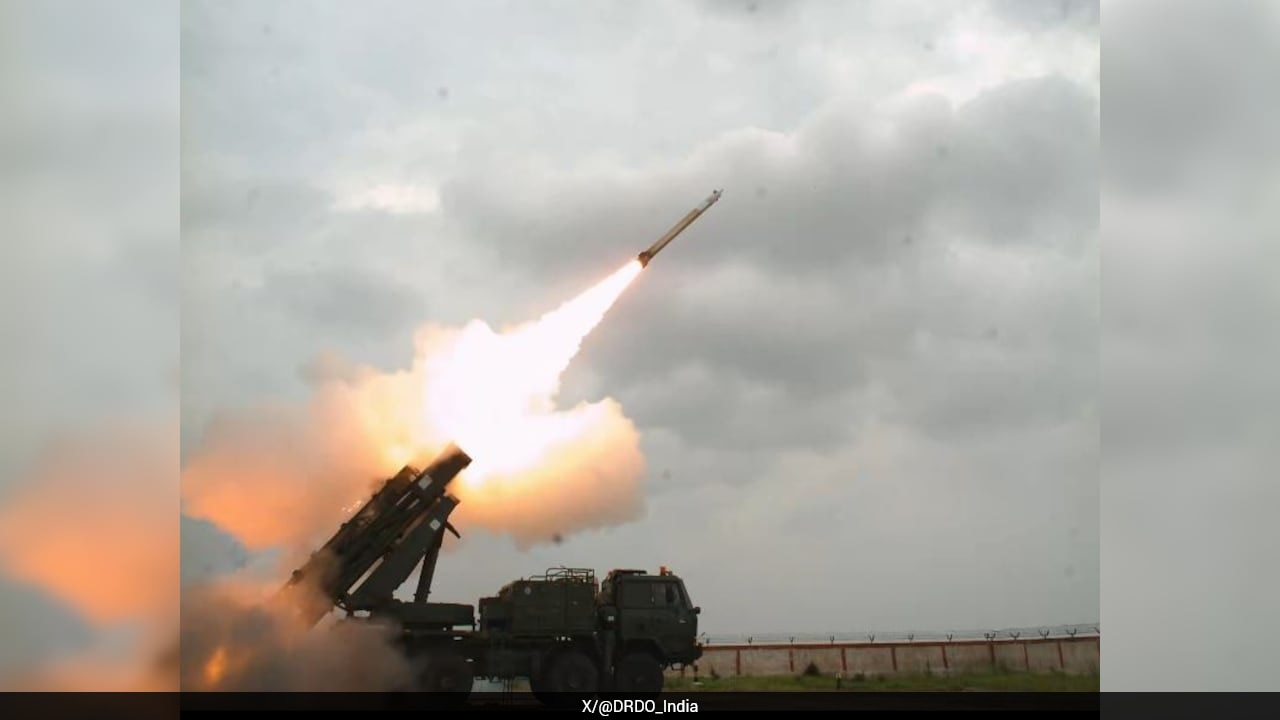
India’s defence research agencies successfully tested the Pinaka Long‑Range Guided Rocket (LRGR) at a user‑defined minimum range of 60 km, achieving textbook‑level accuracy. The test underscores the country’s growing self‑reliance in advanced missile technology.
India has demonstrated a significant leap in indigenous missile capability by successfully testing the Pinaka Long‑Range Guided Rocket (LRGR) at a precisely defined minimum distance of 60 km. The achievement not only validates the technical robustness of the system but also marks a strategic milestone in reducing dependence on foreign suppliers.
Evolution of the Pinaka System
The original Pinaka artillery rocket, conceived by the Armament Research and Development Establishment (ARDE), was designed for a maximum range of roughly 40 km. In partnership with the High Energy Materials Research Laboratory (HEMRL), engineers introduced advanced propellants and a sophisticated guidance suite, extending the range to the 60‑70 km envelope of the LRGR variant. This evolution reflects a deliberate push toward a more versatile, long‑reach fire‑support platform for the Indian Army.
Technical Highlights of the Recent Test
The recent trial employed a ‘user‑defined minimum range’ configuration, allowing operators to set the target distance before launch. The missile utilized an integrated inertial navigation system (INS) supplemented by GPS‑based mid‑course updates, resulting in a terminal error of less than 0.2 % of the range. Such precision is critical for ‘independent fire support’ missions, where ground units require accurate, rapid response without extensive coordination.
Strategic Implications and Future Roadmap
With its extended reach and pinpoint accuracy, the Pinaka LRGR enhances India’s ability to engage hostile formations deep within the battlefield while maintaining a low logistical footprint. The system is slated for integration with the Army’s Advanced Battlefield Management System (ABFMS), promising a network‑centric approach to fire‑direction. The Ministry of Defence has earmarked additional funding under the ‘Make in India’ initiative to accelerate the development of next‑generation Pinaka variants featuring higher payloads and electronic warfare resilience.
Historical Context and Global Comparison
Since its inaugural test in 2002, Pinaka has undergone multiple upgrades, evolving from a simple unguided artillery rocket to a precision‑guided munition. While comparable long‑range guided rockets exist in China, Russia, and select European nations, Pinaka LRGR’s indigenous pedigree offers India a unique strategic advantage—autonomous control over production, upgrades, and deployment schedules.
Conclusion
The successful LRGR trial underscores India’s maturing defence‑technology ecosystem. As the system moves from test‑beds to field units, it is expected to substantially boost the Indian Army’s firepower and operational flexibility. Continued testing, coupled with seamless integration into command‑and‑control networks, will likely redefine the sub‑regional security calculus.



