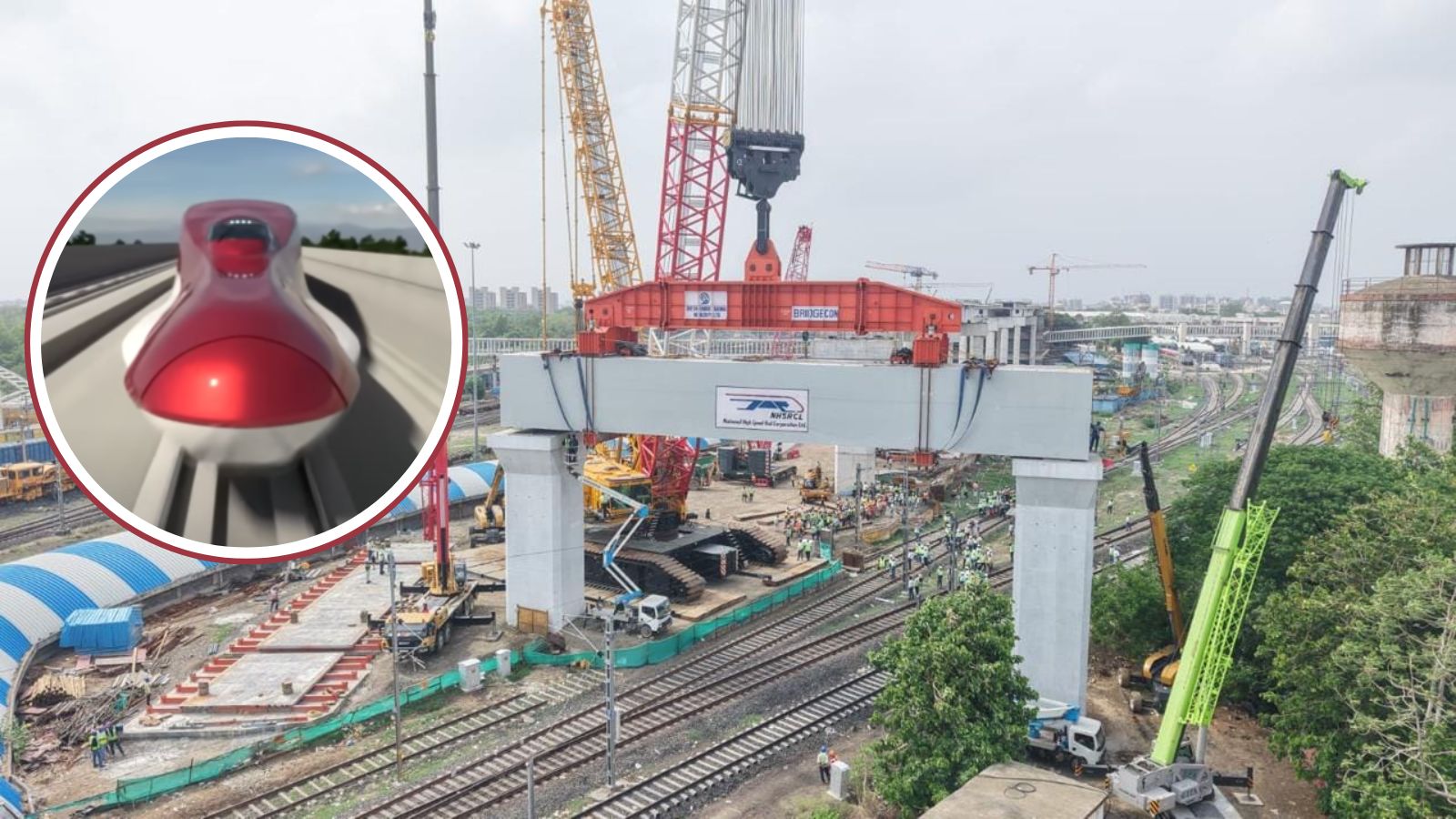
The National High-Speed Rail Corporation Limited (NHSRCL) has successfully launched 13 massive portal beams in Ahmedabad, marking a critical step forward for the 508‑km Mumbai‑Ahmedabad bullet‑train corridor. The achievement accelerates India's ambition to operationalise the priority Surat‑Bilimora stretch by August 2027.
Key Takeaways
- All 13 pre‑cast portal beams launched in Ahmedabad
- Heaviest beam weighs 1,640 metric tonnes, 34.5 m long
- Target to commission the 47‑km Surat‑Bilimora priority corridor by Aug 2027
India's inaugural bullet‑train project, overseen by the National High‑Speed Rail Corporation Limited (NHSRCL), has reached a pivotal construction milestone in Ahmedabad. Thirteen heavy portal beams—key structural components of the 18‑km elevated viaduct—were hoisted in a three‑hour operation using a 2,200‑tonne crawler crane, underscoring the project's rapid progress.
Project Background and Current Momentum
The Mumbai‑Ahmedabad High‑Speed Rail (MAHSR) line spans 508 km and is designed for commercial operation at 320 km/h. The Ministry of Railways has divided the corridor into a 47‑km priority segment (Surat‑Bilimora) and the remaining stretch. The priority segment is slated for commissioning by August 2027, a timeline that promises to catalyse regional trade, tourism, and commuter mobility.
Technical Highlights of the Portal Beams
Of the 13 beams, five are positioned over the main Mumbai‑Ahmedabad line at Maninagar, seven at Vatva, and one at Sabarmati crossing the Ahmedabad‑Delhi line. The Sabarmati beam, at approximately 1,640 metric tonnes, is the heaviest ever lifted for the MAHSR project. Measuring 34.5 m in length with a 5.5 × 4.5 m cross‑section, it stands as one of the largest pre‑cast, pre‑stressed portal members globally.
Despite constrained site conditions, the lift was meticulously planned in coordination with Indian Railways, adhering to stringent safety protocols to ensure uninterrupted train services on the existing network.
Ahmedabad Station: A Multimodal Hub in the Making
The upcoming Ahmedabad bullet‑train station is being fashioned as a world‑class multimodal transport hub. Inspired by a kite motif, the station will integrate metro services, buses, taxis, auto‑rickshaws, and other local modes, enabling seamless passenger transfers. State‑of‑the‑art amenities—including a waiting lounge, nursery, retail outlets, clear signage, information kiosks, and elevators/escalators—are slated for installation to enhance accessibility and comfort.
Implications and the Road Ahead
This achievement signals India's growing competence in high‑speed rail engineering and project delivery. Once fully operational, the corridor is expected to shrink travel time between Mumbai and Ahmedabad to under two hours, stimulate economic corridors, and position India as a key player in the global high‑speed rail arena.