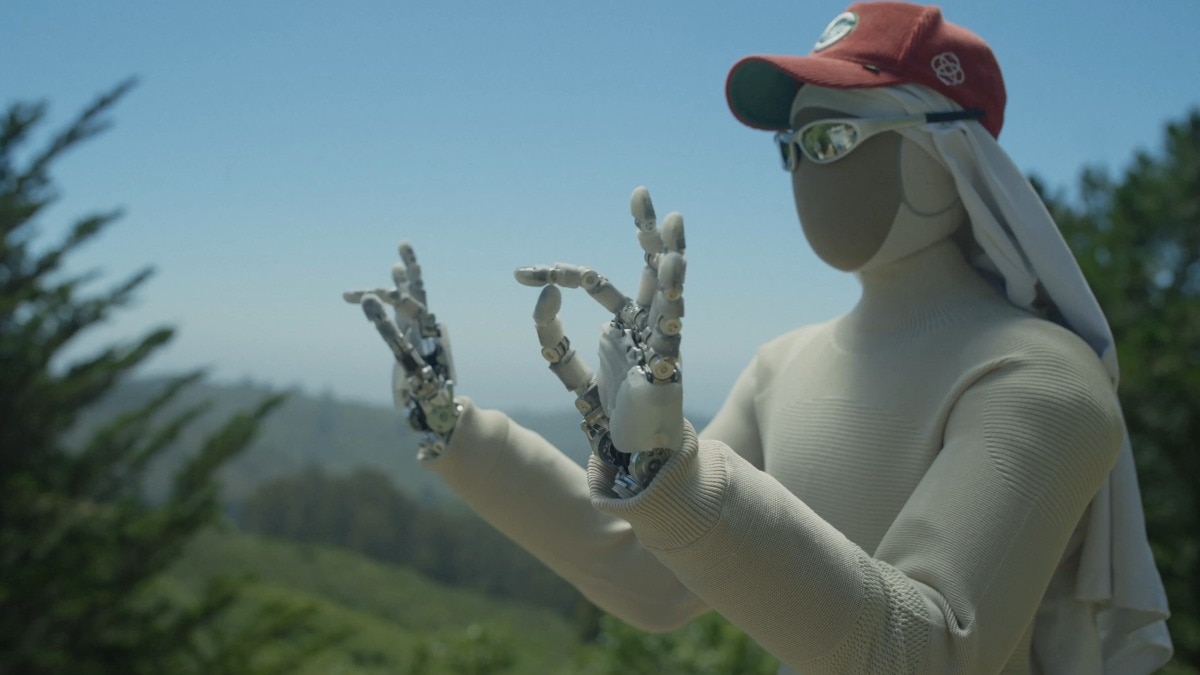
Norwegian‑American firm 1X unveiled Neo, a humanoid robot equipped with 25‑DoF tendon‑driven hands that can pick grapes, plug USB‑C cables and more, sparking a wave of viral videos and industry buzz.
मुख्य बिंदु (Key Takeaways)
- Neo’s hands provide 25 degrees of freedom, nearly matching a human hand.
- The tendon‑driven mechanism lets the robot sense pressure and slip in real‑time.
- Complex tasks still rely on a remote “Expert Mode” operated by humans.
Norwegian‑American robotics company 1X has launched its newest humanoid platform, Neo, featuring 25‑degree‑of‑freedom (DoF) tendon‑driven hands that are already trending across social media. Marketed as having “superhuman” fingers, Neo can delicately pluck grapes, catch falling objects, plug a USB‑C cable, and even wash its own hands after handling food.
Technical Highlights of the Tendon‑Driven Hands
Each hand contains 22 fully actuated joints across the fingers and palm, plus three DoF at the wrist, totaling 25 DoF—only two fewer than an average human hand. The design mimics human tendon movement, allowing each joint to act simultaneously as a motor and a sensor. Integrated cameras, AI algorithms and tactile sensors collaborate to identify the object being held, detect slippage, and adjust grip force instantly.
Viral Demonstrations Capture Public Imagination
1X’s promotional videos show Neo performing a range of everyday chores: plucking grapes from vines, picking up screws and coins, installing light bulbs, using a screwdriver, pouring water from a kettle, plugging in a USB‑C cable, wiping kitchen surfaces, catching a soft ball, and even signing in sign language. These clips have amassed millions of views on Twitter and YouTube, fueling speculation about the robot’s readiness for real‑world homes.
Designed for Domestic Environments
The hands carry an IP68 rating and are built from food‑safe materials, enabling Neo to self‑clean after contact with food items. According to 1X, the hardware has endured millions of operating cycles, and the wrist joints have survived over two million load cycles. Production is already in the hundreds, with a target of 10,000 units this year.
Expert Mode: Human‑In‑The‑Loop
Neo is not yet fully autonomous. For more intricate tasks, 1X offers an “Expert Mode,” where trained operators can remotely assist via onboard cameras. The system only connects when the user requests help, and facial data is blurred to protect privacy. While some viral videos showcase fully autonomous actions, others were remotely guided to highlight the full capability of the new hands.
Industry analysts view Neo’s launch as a pivotal moment for household robotics. The tendon‑driven hand architecture pushes the boundary of dexterity, strength, and reliability, yet true independence will require further advances in sensor fusion and energy efficiency. As production scales and costs drop, robots like Neo could become commonplace, reshaping daily chores and elevating quality of life.