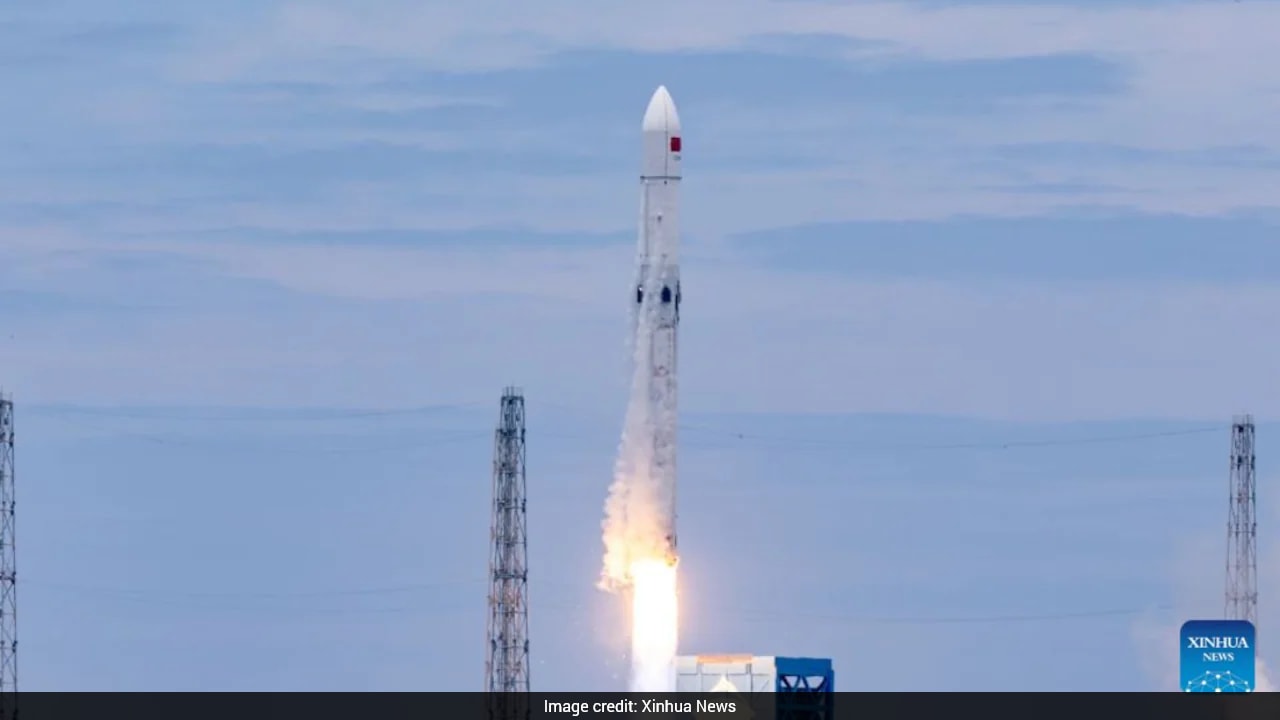
China’s Long March‑10B lifted off from Hainan’s commercial spaceport, demonstrating a reusable launch capability that puts it on par with SpaceX’s Falcon 9 and reshapes the global launch market.
मुख्य बिंदु (Key Takeaways)
- Long March‑10B, a 63‑meter tall reusable liquid‑fuel rocket, launched from Hainan.
- The vehicle completed a successful recovery‑system test, matching Falcon 9’s re‑usability.
- This milestone positions China as a serious competitor in the commercial launch arena.
Long March‑10B is a state‑of‑the‑art reusable liquid‑propellant carrier rocket standing about 63 metres tall with a 5‑metre diameter. Its maiden flight from the Hainan commercial launch site has attracted worldwide attention as China seeks to close the reusability gap with SpaceX.
Technical Overview
The rocket incorporates a thrust‑vectoring engine, autonomous navigation, and a sea‑landing platform designed to capture the first stage after separation. Engineers estimate that a single‑stage recovery could shave 30‑40 % off launch costs, a figure comparable to SpaceX’s reported savings.
Comparison with Falcon 9
Since 2015, SpaceX’s Falcon 9 has set the benchmark for reusable launchers, routinely landing first stages on droneships or land pads. Long March‑10B’s successful recovery test demonstrates that China now possesses a comparable level of precision and reliability, even though payload capacity and launch cadence still lag behind the U.S. counterpart.
Commercial Implications
With a proven recovery system, Chinese launch services could become markedly more price‑competitive for small‑satellite constellations, scientific missions, and commercial telecom payloads. Industry analysts predict that within three to five years, the Long March family could secure a sizable share of the burgeoning global launch market, especially as demand for low‑cost, high‑frequency access surges.
Geopolitical Significance
Space is increasingly viewed as a strategic economic frontier. By mastering reusable technology, China not only reduces its own launch expenses but also gains leverage in international space collaborations and security arrangements. The move may prompt other space‑faring nations, including India, to accelerate their own reusability programs.
In sum, the Long March‑10B recovery test marks a pivotal moment for China’s space ambitions, signalling that the era of single‑use rockets is rapidly giving way to a more sustainable, cost‑effective paradigm.



