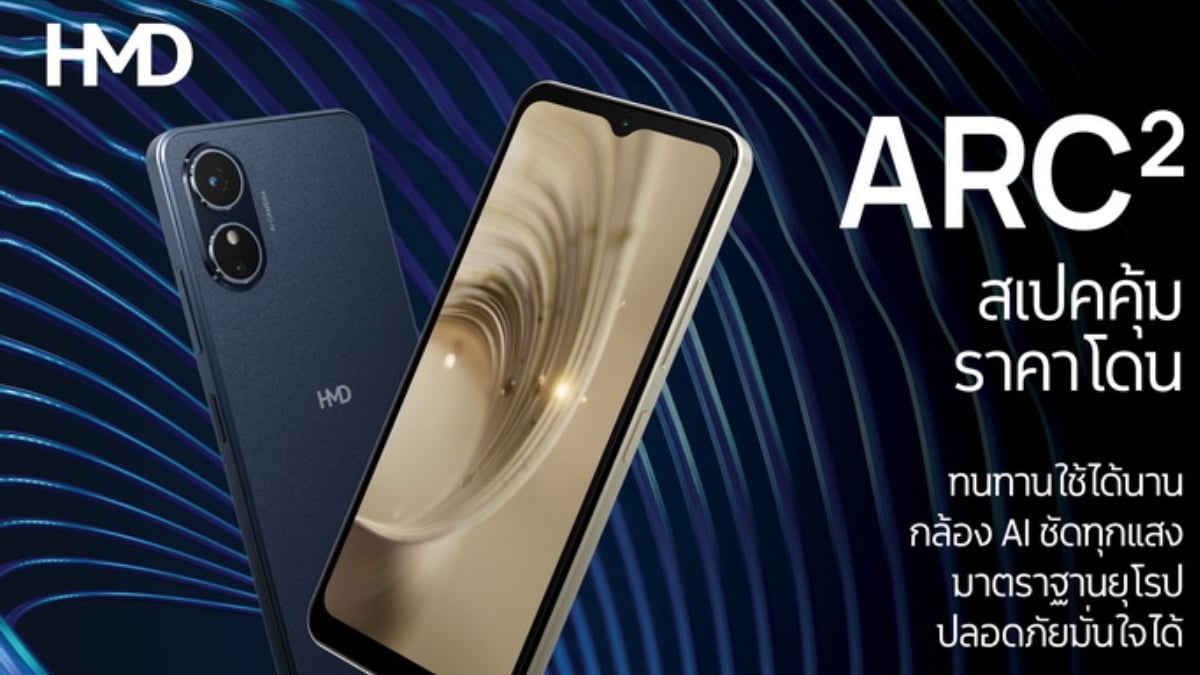
HMD has introduced the entry‑level HMD Arc 2 in Thailand, powered by a Unisoc T603 chipset, a 5,000 mAh battery and Android 14 Go Edition. The 4 GB + 64 GB model is priced at THB 2,290, while the 4 GB + 128 GB variant costs THB 2,990.
HMD has entered the highly competitive Thai budget‑smartphone segment with the launch of the HMD Arc 2. Arriving two years after the original Arc, the new model swaps the older SC9863A for a 12 nm Unisoc T603 processor that clocks up to 1.8 GHz, promising better power efficiency and smoother multitasking.
Design and Display
The handset sports a 6.52‑inch IPS LCD panel with HD+ (720 × 1600) resolution and a 60 Hz refresh rate. It is offered in two colour finishes – Dark Blue and Golden Beige – aimed at local aesthetic preferences. The dimensions and weight remain competitive for an entry‑level device, ensuring comfortable one‑hand use.
Hardware and Software
Equipped with 4 GB of RAM, the Arc 2 comes in 64 GB or 128 GB internal storage variants, with micro‑SD expansion supported. Out‑of‑the‑box it runs Android 14 Go Edition, a lightweight OS layer optimized for low‑spec hardware, delivering a responsive experience despite the modest chipset.
Camera and Battery
Photography is handled by a single 13‑megapixel rear sensor and a 5‑megapixel front‑facing camera housed in a water‑drop notch. While not a flagship‑grade setup, it is adequate for everyday snapshots in the budget class. Power comes from a 5,000 mAh battery with 10 W wired charging, promising more than a full day of typical usage.
Pricing, Availability and Market Impact
According to a NokiaMob report, the 4 GB + 64 GB version is priced at THB 2,290 (≈ ₹ 6,500) and the 4 GB + 128 GB variant at THB 2,990 (≈ ₹ 8,600). The device is slated to hit Thai stores on 20 July, with no official word on launches in other regions yet. At this price point, the Arc 2 will directly challenge Realme, Xiaomi and Samsung’s entry‑level offerings.
Future Outlook
If HMD expands the Arc 2 to other Southeast Asian markets, it could cement Unisoc’s 12 nm platform as a go‑to solution for cost‑sensitive manufacturers. Moreover, the adoption of Android Go may spur developers to create more lightweight apps, enriching the ecosystem for low‑cost devices.


