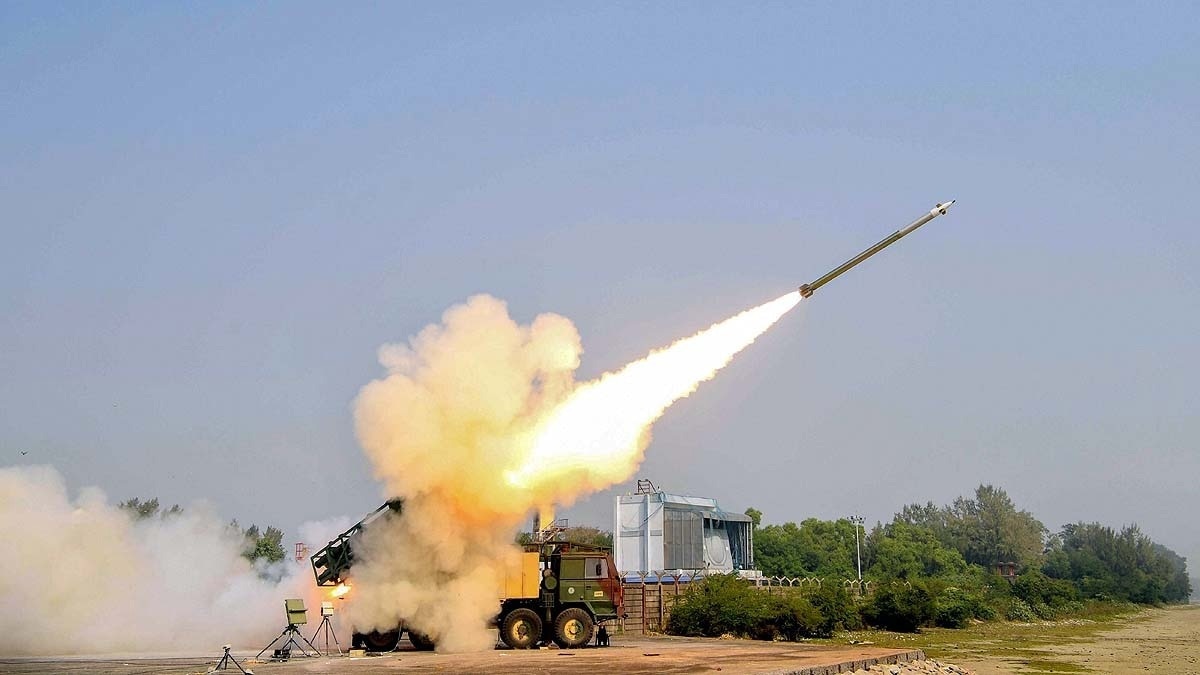
India's Pinaka MRLS adopts Israeli rocket technology to cut costs, double its range and gain mid‑course steering capability. The upgrade marks a strategic leap for indigenous defence manufacturing and operational flexibility.
The Indian Army’s Pinaka Multi‑Rocket Launch System (MRLS) is undergoing a transformative upgrade by integrating cutting‑edge Israeli rocket technology. Recent statements from the Ministry of Defence reveal that the next‑generation Pinaka will be cheaper to produce, achieve up to twice the current range, and feature mid‑course steering, a capability that dramatically enhances its battlefield effectiveness.
Evolution of the Pinaka System
First introduced in the 1990s, the original Pinaka could launch a salvo of 12 rockets with a maximum range of roughly 40 km. It has seen extensive use along India’s western and northern frontiers, proving its reliability in high‑intensity scenarios. However, its limited reach and lack of in‑flight trajectory correction have prompted a push for modernization.
Israeli Rocket Innovations as a Blueprint
Israel’s defence industry has pioneered thrust‑vectoring and advanced guidance systems such as Dynamic Jet Control (DJC) and infrared thermal imaging, enabling rockets to alter their flight path after launch. A dedicated Indo‑Israeli research consortium has been formed to adapt these technologies for the Pinaka platform, ensuring seamless integration with India’s existing launch infrastructure.
Key Features of the New Pinaka
1. **Cost Reduction – up to 30%**: Use of domestically sourced composites and solid‑propellant advancements lowers unit price.
2. **Extended Range – up to 80 km**: Enhanced motor efficiency doubles the strike envelope, providing deeper penetration into hostile territory.
3. **Mid‑Course Steering**: Thrust‑vectoring allows real‑time target re‑acquisition, neutralising enemy counter‑measures.
4. **Digital Integration**: Compatibility with network‑centric command‑and‑control systems ensures rapid data exchange across the battlefield.
Strategic and Economic Implications
The upgrade positions India as a competitive exporter of affordable, high‑performance artillery rockets, especially for nations seeking cost‑effective deterrence solutions. Moreover, the added steering capability transforms Pinaka from a pure area‑saturation weapon into a precision‑strike system capable of engaging moving targets across land, sea and air domains.
Roadmap Ahead
The Ministry of Defence aims to commence full‑scale production by 2025, with field deployment slated for critical sectors by 2027. Analysts suggest that the success of this collaboration could pave the way for deeper Indo‑Israeli defence ties, potentially spawning joint projects in missile defence, unmanned systems and cyber‑enabled warfare.