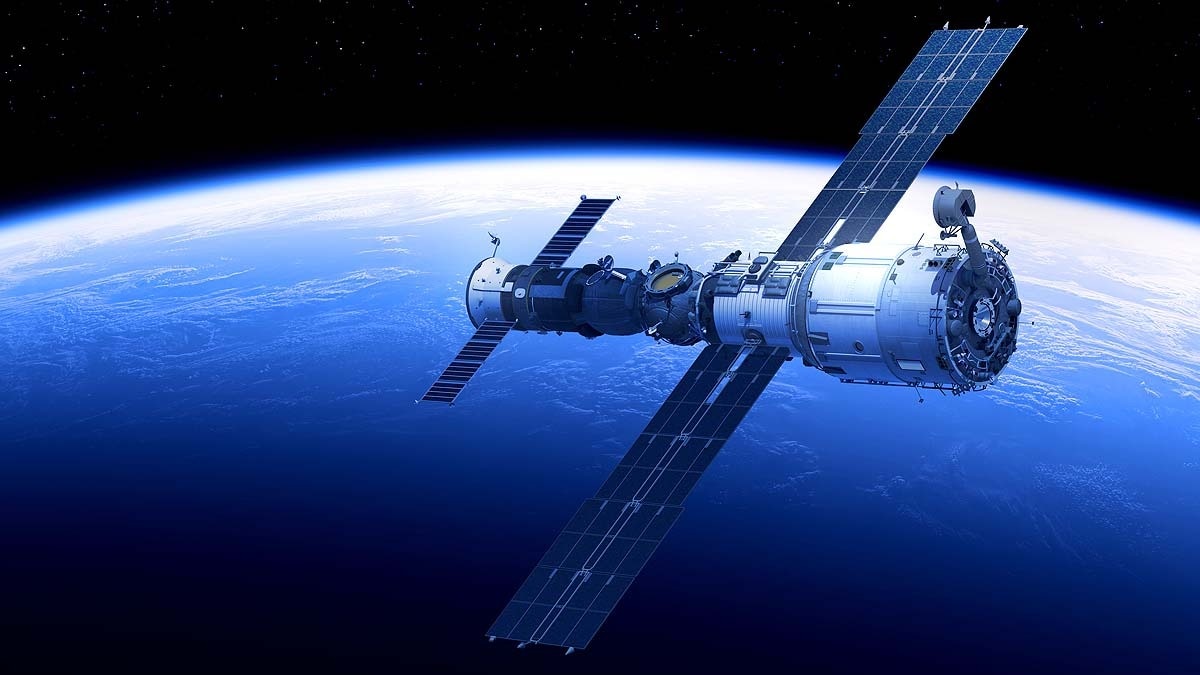
Russia's Cosmos‑2553 satellite is now being viewed as a possible carrier of nuclear weapons in orbit. MIT scientists have unveiled a miniature satellite capable of detecting neutron signatures from a distance of up to 4 km, offering a new method to verify treaty compliance. The breakthrough could reshape international space security and monitoring frameworks.
Key Takeaways
- Russia's Cosmos‑2553 satellite is suspected of carrying nuclear payloads in space.
- MIT proposes a small satellite that can capture neutron emissions to identify nuclear weapons.
- The technology can detect a thermonuclear device from 4 km away, potentially changing global monitoring regimes.
Russia's enigmatic satellite Cosmos‑2553 has sparked heightened global concern after its launch in February 2022. The spacecraft traverses the Van Allen radiation belts, an environment that could amplify signatures associated with nuclear materials. The United States and several allied nations allege that Moscow may be developing an orbital nuclear‑weapon delivery capability, while Russian officials dismiss the claims as unfounded.
MIT's Novel Detection Approach
Researchers at the Massachusetts Institute of Technology, led by Dr. Areg Danagolian, have introduced a groundbreaking method to verify the presence of nuclear armaments aboard suspect satellites. Their concept relies on a diminutive, sensor‑rich satellite that flies close to the target and captures distinctive neutron emissions—by‑products that only appear during thermonuclear reactions. Simulations suggest the probe can identify a weapon from roughly 4 kilometers away; deploying a swarm of such probes could shrink the verification window to a few hours.
Historical Context and International Treaties
The 1967 Outer Space Treaty, ratified by 118 nations including the United States and Russia, bans the placement of nuclear weapons in outer space. Yet the treaty offers no technical means to confirm compliance, leaving a verification gap that MIT's system aims to fill. If adopted, the technology could provide the first reliable, in‑situ check against clandestine space‑based nuclear assets.
Operational Challenges and Policy Implications
Flying one satellite within a few kilometres of another raises safety and diplomatic concerns, especially in high‑radiation zones. International regulators will need to craft new guidelines governing such close‑approach missions, balancing verification needs against the risk of accidental collisions or escalation. Successful implementation would require multilateral data‑sharing agreements and a consensus on the legal status of inspection satellites.
Looking Ahead
With thousands of satellites now populating low‑Earth orbit, the security architecture of space is under pressure. MIT's prototype offers a promising step toward a more transparent regime, but its full potential hinges on political will, standard‑setting, and the development of robust, radiation‑hardened sensors. If the global community embraces this capability, it could usher in a new era of enforceable space‑weapon norms.