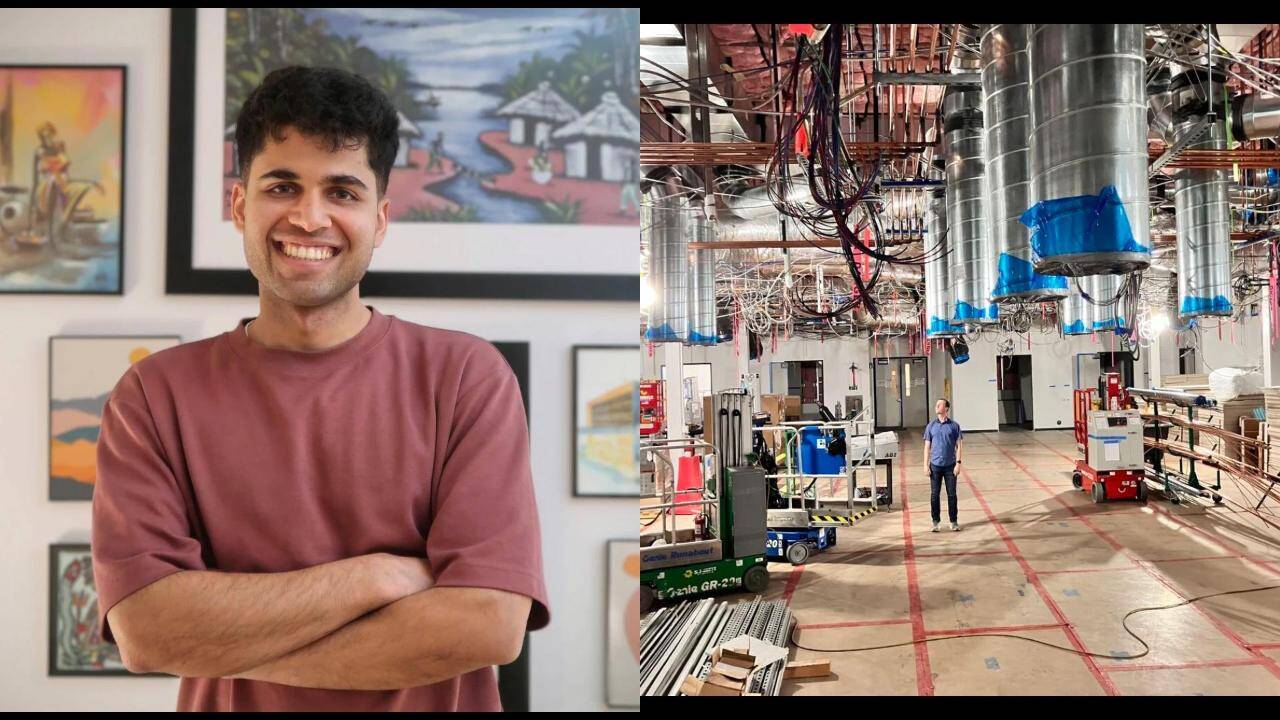
IIT Bombay alumnus and AI entrepreneur Rishabh Agrawal rejected a roughly $1 million offer from Meta after a five‑month stint. He chose to launch his own artificial‑intelligence venture, underscoring a growing shift toward entrepreneurship in India’s deep‑tech sector.
Key Takeaways
- Rishabh Agrawal declined Meta’s $1 million‑plus offer
- He is pursuing an independent AI startup despite a lucrative corporate package
- The move highlights a rising trend of Indian engineers opting for entrepreneurship over big‑tech jobs
IIT Bombay graduate and AI researcher Rishabh Agrawar publicly clarified that the offer he received from Meta was “higher than reported,” yet he turned it down. After a brief five‑month tenure at Meta’s Superintelligence Lab, he announced on X (formerly Twitter) that his last week with the company would be his final one, citing a desire to take “a different kind of risk.”
Professional Journey and Academic Credentials
Agrawar secured a JEE All‑India rank of 33, completed his B.Tech in Computer Science at IIT Bombay, and earned a PhD in Artificial Intelligence with a dissertation titled “Beyond the Status Quo in Deep Reinforcement Learning.” His career spans internships at Saavn and Tower Research Capital, a research stint at Latent Logic (later acquired by Waymo), senior research roles at Google Brain, a staff position at DeepMind, and finally a research scientist role at Meta. He has co‑authored award‑winning papers at NeurIPS 2021 and contributed to breakthroughs in offline RL and Atari‑level performance.
The Meta Offer – More Than a Million Dollars
Media outlets initially reported that Meta offered Agrawar a package worth roughly Rs 9.5 crore (about $1 million). In a pinned X post, he clarified that the figure was actually “higher than reported,” yet his decision remained unchanged: “I rejected it because I wanted to build something of my own.” The statement reflects a conscious choice to prioritize creative autonomy over financial gain.
Emerging Entrepreneurial Wave in Indian Tech
Agrawar’s decision mirrors a broader shift among India’s elite technical talent. Graduates from premier institutes are increasingly eschewing high‑salary roles at global giants in favor of founding deep‑tech startups—especially in AI, quantum computing, and biotech. This trend reshapes the talent pipeline, compelling venture capitalists to adjust funding strategies and prompting policymakers to rethink talent retention frameworks.
Implications for the Future
If Agrawar’s AI venture succeeds, it could position India as a formidable player in the global AI ecosystem, challenging the dominance of Silicon Valley and Chinese AI hubs. Moreover, his high‑profile exit may inspire a new generation of engineers to view risk‑taking as a strategic career move rather than an anomaly, potentially accelerating home‑grown innovation and reducing brain‑drain.



