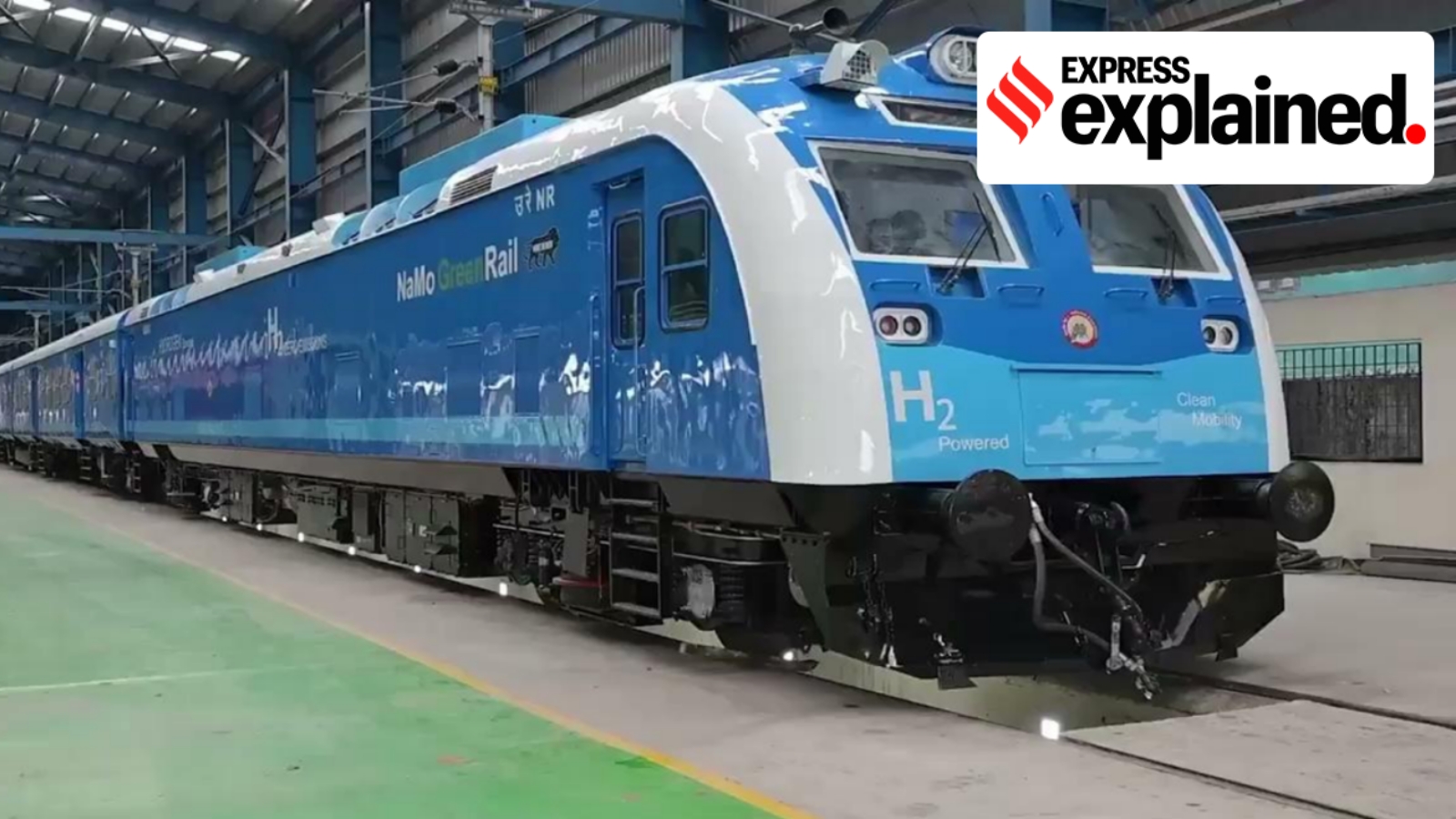
India’s inaugural hydrogen‑powered train will be inaugurated on July 17 in Jind, Haryana, marking a major green‑mobility milestone. The eight‑coach, two‑power‑car set can carry 682 passengers at 75 km/h, yet worldwide adoption of hydrogen trains remains limited.
मुख्य बिंदु (Key Takeaways)
- India’s first hydrogen train will operate on the 89‑km Jind‑Sonipat corridor at a top speed of 75 km/h.
- It delivers 2400 kW (3200 hp) of power, consumes roughly 300 kg of hydrogen per day, and runs two round trips daily.
- Key technical challenges include high‑pressure hydrogen storage (200‑500 bar) and the integration of fuel‑cells with lithium‑ferro‑phosphate batteries.
Prime Minister Narendra Modi is set to flag off the nation’s first hydrogen‑driven train on July 17 in Jind, Haryana. The event signals a watershed moment for Indian Railways, which has so far lagged behind a handful of countries that have experimented with this clean‑energy propulsion.
Technology Overview
The trainset comprises eight passenger coaches and two driving power cars, making it one of the longest hydrogen trains globally. Each power car houses four integrated power packs that combine a hydrogen fuel‑cell with a lithium‑ferro‑phosphate battery. Onboard storage holds 440 kg of hydrogen at 200‑500 bar, while ambient air supplies the required oxygen.
How the System Works
The fuel‑cell continuously converts high‑pressure hydrogen and oxygen into electricity. At low speed, the generated power primarily charges the battery; as speed and demand increase, the battery supplements the fuel‑cell, delivering a combined output of 300 kW per pack (115 kW from the fuel‑cell, 185 kW from the battery). With four packs per power car, total output reaches 1200 kW, doubled to 2400 kW across both cars—comparable to conventional EMU or DEMU units.
Energy Management Strategy
According to a senior Northern Railway official, the fuel‑cell offers a steady power baseline, while the battery handles peak loads. When the train decelerates or approaches a station, the battery disengages, allowing excess fuel‑cell energy to recharge it. Consequently, after a full circuit the battery is roughly 80 % charged, enhancing overall efficiency.
Hydrogen Storage and Supply Logistics
Storing hydrogen at 200‑500 bar is the principal technical hurdle. To ensure uninterrupted supply, the railways have installed a 3000‑kg capacity fueling station at Jind, complemented by a chilling plant that maintains hydrogen at –15 °C, converting it to a liquid for easier dispensing.
Project Timeline and Future Outlook
The Rs 136‑crore project was approved for the 2020‑21 fiscal year, with Medha of Hyderabad awarded the propulsion contract in April 2022. After successful trials, the Ministry of Railways cleared the train for operation on May 22. No further hydrogen‑train projects have been announced yet; the senior official cautioned that the expansion will hinge on the performance of this pilot.
Global Context
France’s Alstom first showcased hydrogen rolling stock at the 2016 Berlin Expo, launching the Coradia iLint in Germany two years later as the world’s inaugural hydrogen passenger train. Japan, China, and the United States have since introduced their own prototypes, but all remain limited to short‑haul routes. India’s move could position it as a leader in scaling hydrogen rail technology, provided the pilot proves both economically viable and environmentally impactful.