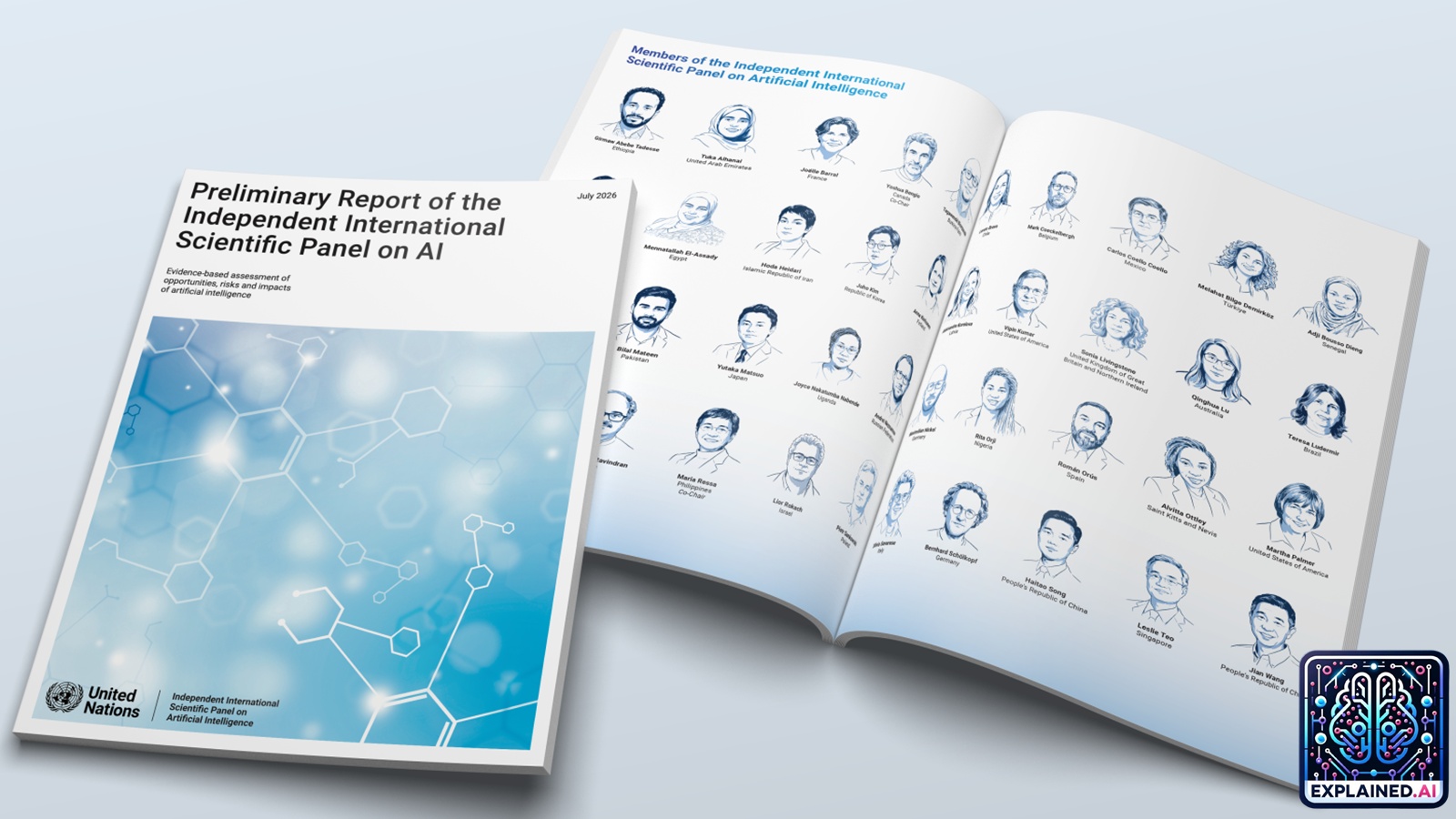
The United Nations’ inaugural scientific assessment warns that artificial intelligence is outpacing existing safety frameworks. It calls on India and other nations to base policies on independent evidence and act now before harms become irreversible.
Key Takeaways
- AI development is outstripping current regulatory safeguards.
- A widening global compute divide is concentrating power in a few nations.
- Policymakers need immediate, science‑based guidance to prevent irreversible harms.
The United Nations has commissioned its first independent International Scientific Panel on Artificial Intelligence, culminating in a Preliminary Report that paints a stark picture of the AI landscape. Chaired by Turing Award laureate Yoshua Bengio and Nobel laureate Maria Ressa, the 40‑member panel examined AI across seven thematic pillars and issued an urgent call for action.
Seven Pillars of the Report
The report surveys advances in AI science; applications in health, education and agriculture; economic ramifications; security and environmental impacts; human rights and democracy; cultural and individual well‑being; and finally, governance and reliability. It is positioned as the first in a series of periodic assessments, with a more exhaustive study slated for next year.
Why Governments Must Be Alarmed
According to the panel, AI capabilities are evolving faster than scientific understanding and public oversight can keep pace with. Waiting for complete certainty, the authors warn, could mean reacting only after serious damage has already occurred. UN Secretary‑General António Guterres emphasized, “The world cannot govern what it cannot understand,” underscoring the need for independent scientific evidence before policy choices are made.
The Global Compute Divide
The document highlights a new dimension of the AI race: control over the massive computing infrastructure required for frontier models. The United States accounts for roughly 75 % of global AI compute capacity, China about 15 %, and the rest of the world shares the remaining 10 %. This concentration creates a “compute divide,” turning processing power into a strategic resource rather than a mere technical input.
Implications for India
India’s recent IndiaAI Mission and its push to acquire compute hardware align with the report’s warning that without expanding indigenous capacity, digital inequities could harden into long‑term technological dependence. To build sovereign AI models tailored to local languages, agriculture and healthcare needs, India must accelerate investments in data centers, advanced semiconductors and high‑quality datasets.
Concentration Risks Beyond Compute
The panel also notes that AI development is increasingly concentrated in the hands of a handful of corporations and nations. The sheer financial outlay, specialized talent, cutting‑edge chips and massive data centers required for frontier AI create high barriers to entry, limiting competition and potentially enabling authoritarian capture of AI governance. “Current AI systems reflect only a limited range of the world’s linguistic and cultural diversity,” the report cautions, urging proactive investment from the Global South.
In sum, the UN’s first scientific AI report is both a warning bell and a roadmap. If governments heed its evidence‑based recommendations and bolster domestic compute ecosystems, they can steer AI’s transformative power toward inclusive growth while mitigating existential risks.



