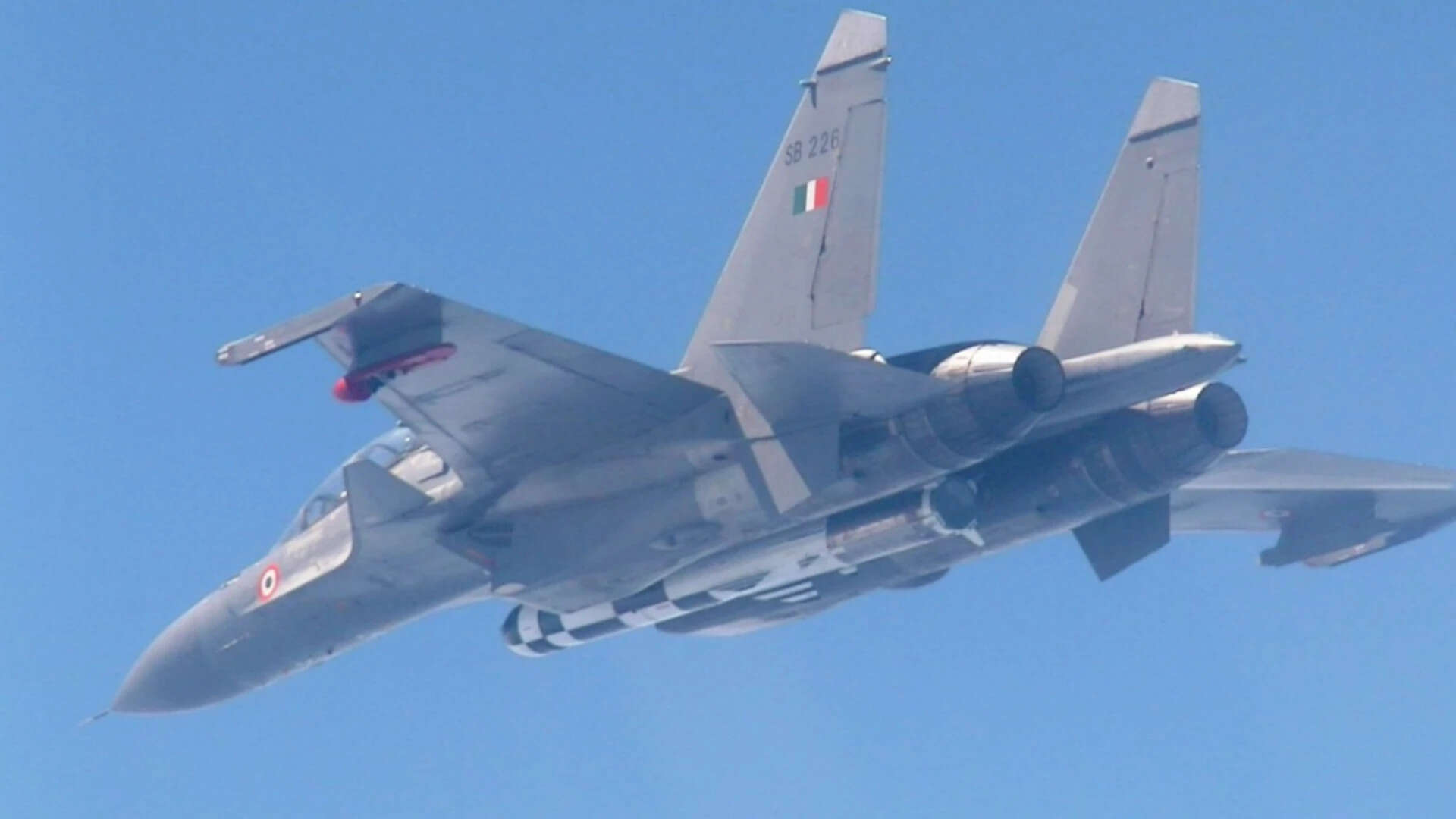
The BrahMos missile proved decisive in Operation Sindoor, crippling Pakistani airbases and reshaping regional power dynamics. Now deployed across all three Indian services and gaining export traction, it remains at the forefront of supersonic strike capability.
मुख्य बिंदु (Key Takeaways)
- BrahMos delivered decisive impact in Operation Sindoor
- Extended range up to 800 km and ongoing NG development
- Integrated across Army, Navy and Air Force; growing export demand
Born out of a 1998 Indo‑Russian agreement, the BrahMos supersonic cruise missile celebrated its 25th anniversary as a cornerstone of India’s strategic arsenal. Inspired by the US Tomahawk’s performance in the 1991 Gulf War, Indian planners sought a comparable capability, leading to the formation of the BrahMos Corporation and the first test‑flight of a 290 km‑range prototype.
Historical Context and Technical Evolution
At the time of its inception, India was not a member of the Missile Technology Control Regime (MTCR), limiting the missile’s range to below 300 km and payload to under 500 kg. After joining MTCR in 2016, the programme pushed the envelope, unveiling an Extended‑Range (ER) version capable of striking targets up to 800 km away. Concurrently, engineers are working on the BrahMos NG (New Generation), promising lighter weight, higher speed, and even longer reach without altering the airframe.
Strategic Edge – Three‑Pronged Defense Penetration
BrahMos defeats modern air‑defence systems through a combination of raw speed (Mach 3), ultra‑low altitude flight, and a minimal radar cross‑section (RCS). Flying just a few metres above the surface at roughly 3,600 km/h gives the missile a razor‑thin radar horizon, leaving even advanced Chinese‑origin systems only eight seconds to detect, track, and engage—far too brief for any effective response.
Tri‑Service Deployment
The missile is one of the few weapons fielded by the Indian Army, Navy and Air Force. Ground‑based Transporter‑Erector‑Launcher (TEL) units, ship‑borne vertical launch systems (VLS), aircraft carriage, and a submarine‑launched variant (tested in 2013) illustrate its versatility. The Navy was the first to adopt BrahMos, fitting it on the guided‑missile destroyer INS Rajput in 2005, while the Army raised its inaugural BrahMos regiment in 2007, giving land forces a deep‑strike capability independent of air‑force support.
Export Success and Global Implications
Countries such as the Philippines, Vietnam, Indonesia and the United Arab Emirates have placed orders or are in negotiation, attracted by the missile’s anti‑ship and land‑attack prowess. This export momentum not only bolsters India’s defence‑industry revenue but also extends its strategic influence across the Indo‑Pacific.
Looking ahead, the NG variant and continued upgrades ensure BrahMos remains a benchmark for supersonic cruise missiles worldwide, reinforcing India’s position as a leading innovator in missile technology and reshaping regional security calculations for years to come.