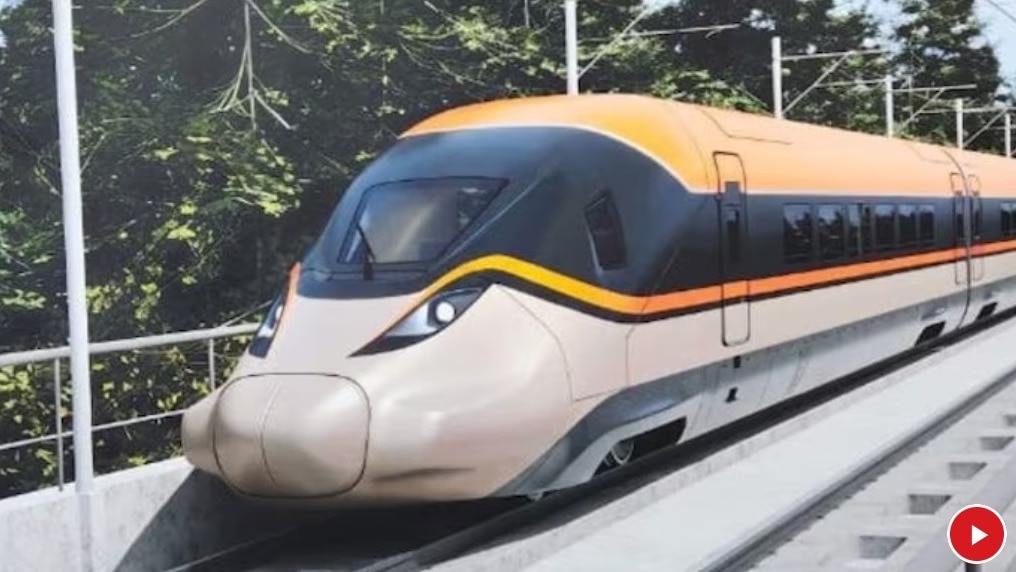
Union Railway Minister Ashwini Vaishnav announced that the first operational stretch of the Mumbai‑Ahmedabad high‑speed rail, the Surat‑Bilimora section, will commence service next year. The phased rollout aims to boost connectivity, regional integration and pave the way for new corridors linked to Hyderabad.
मुख्य बिंदु (Key Takeaways)
- Surat‑Bilimora segment to begin operations in 2025.
- Full Mumbai‑Ahmedabad corridor to be operational by 2027 in phases.
- Three additional high‑speed corridors will connect Hyderabad with Pune, Chennai and Bengaluru, creating a pan‑India rail ecosystem.
India's first bullet‑train corridor, the Mumbai‑Ahmedabad High‑Speed Rail, will see its inaugural stretch – the Surat‑Bilimora section in Gujarat – go live next year, said Union Railway Minister Ashwini Vaishnav at a HYSEA GCCS & IT roundtable in Hyderabad. The 113‑km segment will host trains capable of cruising at 320 km/h, dramatically cutting travel times between the two cities.
Background and Genesis
The project was approved in 2017 under a joint venture with Japan, leveraging Shinkansen technology. Spanning 508 km, the corridor connects two of India's most vibrant economic hubs. While land‑acquisition, environmental clearances and technical complexities caused early delays, accelerated construction since 2020 has brought the timeline back on track.
Phased Implementation Roadmap
After Surat‑Bilimora, the next phases will roll out Vapi‑Surat, Vapi‑Ahmedabad, Ahmedabad‑Thane and finally Ahmedabad‑Mumbai, targeting completion between 2026 and 2027. This staggered approach allows the railways to fine‑tune operations on shorter stretches, address teething‑issues, and deliver immediate passenger benefits.
Economic Ripple Effects
Reduced travel times will knit together the Gujarat‑Maharashtra industrial belt. For instance, the 170‑km Mumbai‑Pune leg will shrink to a 48‑minute journey, while the 500‑km Pune‑Hyderabad link will be covered in just over two hours. Faster movement of goods, talent and tourists is expected to spur investment, boost tourism, and create a more integrated regional economy.
Hyderabad as a High‑Speed Hub
The centre has earmarked three new corridors linking Hyderabad with Pune, Chennai and Bengaluru. Transforming the city into a southern high‑speed rail hub will deepen economic ties across western and southern India, fostering a multi‑node logistics network.
Infrastructure Upgrades and Future Outlook
Under the “Nav‑Nirmaan” programme, 261 stations have been modernised, including ongoing upgrades at Secunderabad station, which now features a large air‑concours above the platforms. Telangana has received a ₹5,400 crore rail budget, bolstering electronics manufacturing and other industrial projects. Collectively, these initiatives position India to become self‑reliant in bullet‑train technology and set a benchmark for future high‑speed rail ventures.



