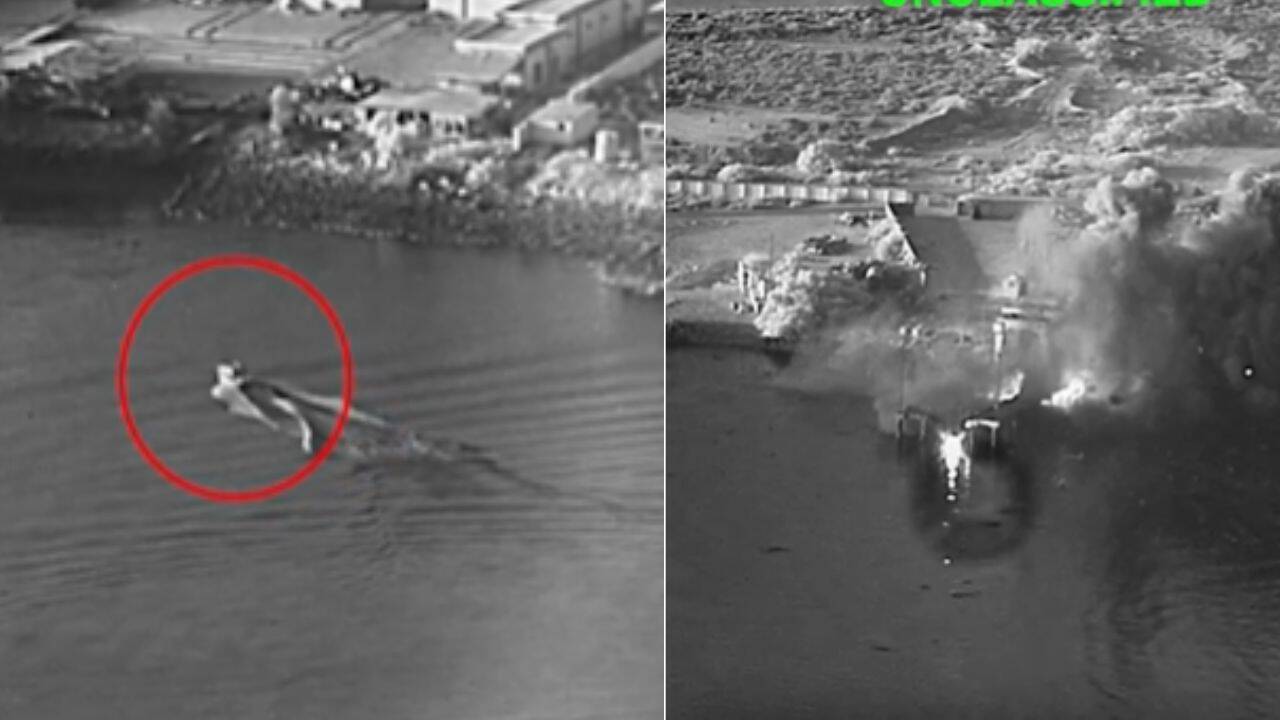
The United States, under CENTCOM, used three Corsair sea drones to target a submarine maintenance hub at Iran’s Bandar Abbas naval base, marking the first combat use of unmanned surface vessels. The strike aims to curtail Iran’s ability to threaten commercial shipping in the Strait of Hormuz.
मुख्य बिंदु (Key Takeaways)
- Three Corsair sea drones hit a submarine maintenance facility at Bandar Abbas
- First operational use of US sea drones in a combat scenario
- Goal: Degrade Iran’s capacity to attack commercial shipping
The United States has carried out its inaugural sea‑drone operation, deploying three Corsair unmanned surface vessels (USVs) to strike a submarine and ship‑maintenance complex at Iran’s strategic Bandar Abbas naval base on the Strait of Hormuz. CENTCOM described the attack as a “multiple one‑way attack surface drone” mission, indicating that the drones were not intended for recovery.
Operation Details
During the night of July 13, the three Corsair drones advanced from the Persian Gulf toward the target. CENTCOM released footage showing the unmanned vessels colliding with the facility’s infrastructure, disabling critical submarine support and repair capabilities. The stated objective was to weaken Iran’s ability to continue targeting commercial vessels traversing this vital waterway.
Strategic and Tactical Implications
Deploying sea drones introduces a new dimension to naval warfare. Compared with conventional warships, USVs are cheaper, present lower risk to personnel, and can be launched rapidly. Analysts predict that such platforms will see expanded use, potentially reshaping power dynamics in contested maritime zones.
Iranian Response and International Context
Iran condemned the strike as “illegal and provocative,” while security experts warned that the incident could further inflame regional tensions. The Strait of Hormuz, a chokepoint for a significant portion of global oil shipments, has long been a flashpoint between Tehran and Washington.
Future Outlook
As autonomous maritime technology matures, more nations are likely to integrate unmanned surface vessels into their defense arsenals. Successful deployment by the United States may set a precedent, prompting a re‑evaluation of naval doctrines worldwide.



