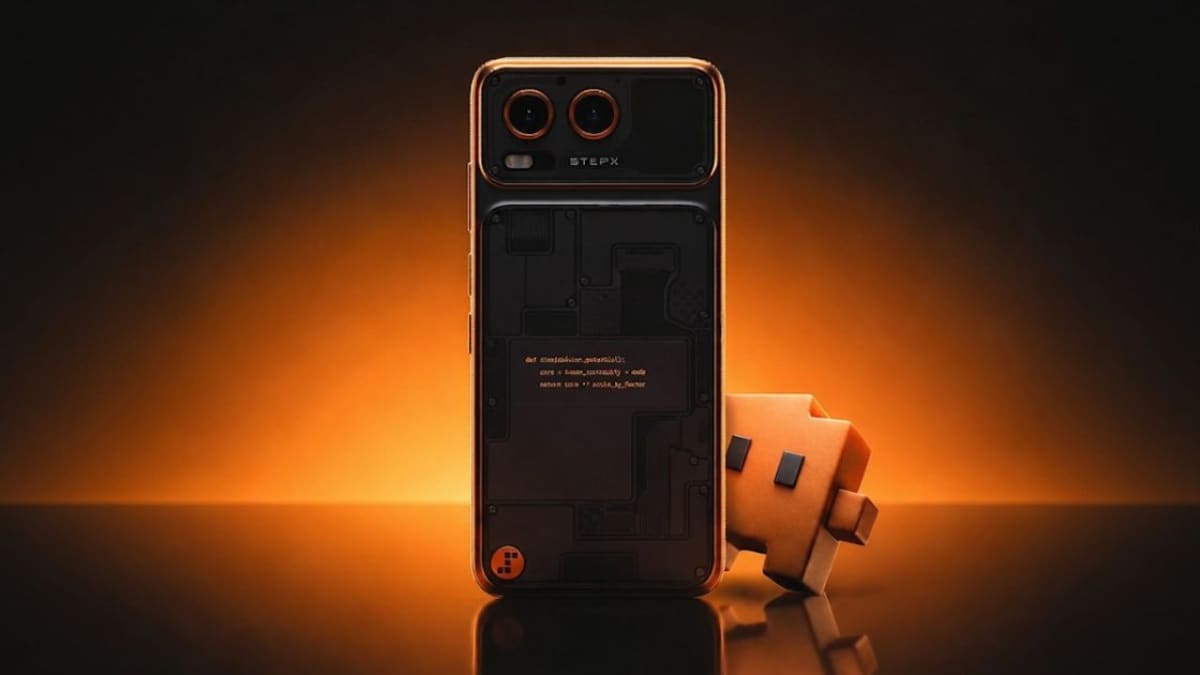
China‑based AI startup StepFun unveiled the StepX Neo on Monday, branding it as the world’s first mass‑market agentic smartphone equipped with an offline AI assistant. The device’s integrated AI agent can autonomously execute complex, multi‑app tasks with minimal user input.
मुख्य बिंदु (Key Takeaways)
- StepX Neo is the first agentic smartphone that operates offline.
- Its built‑in AI agent automates multi‑app workflows, redefining user interaction.
- Founded by ex‑Microsoft executives, StepFun brings deep technical credibility.
StepFun, a Chinese artificial‑intelligence venture founded in 2023 by former Microsoft leaders, has officially introduced its inaugural consumer hardware – the StepX Neo. Far beyond a conventional handset, the phone is marketed as an “agentic” platform where an embedded AI agent interprets user intent and orchestrates multi‑step actions across applications without constant supervision.
What Does “Agentic” Mean?
In AI terminology, “agentic” refers to systems that do more than follow commands; they set goals, plan, and execute tasks autonomously. The StepX Neo’s AI agent runs a specially trained on‑device neural network, allowing it to function even when the device is disconnected from the internet. This privacy‑first architecture is especially appealing in markets where data sovereignty concerns are paramount.
Why Offline AI Matters
Most mainstream voice assistants – Google Assistant, Siri, Alexa – rely on cloud processing, sending every request to remote servers. StepFun’s offline agent eliminates that dependency, delivering sub‑second responses without a data‑link and keeping user queries local. For regions with spotty connectivity, such as rural India, Sub‑Saharan Africa, and parts of Southeast Asia, this capability could be a decisive advantage.
Market Impact and Competitive Landscape
The smartphone sector has long integrated AI features, yet the StepX Neo’s true agentic capability distinguishes it from rivals like Apple, Samsung, and Xiaomi. If consumers embrace the seamless, hands‑free workflow, incumbents may be forced to embed comparable AI orchestration layers into their own OS ecosystems. Moreover, StepFun’s close ties to Chinese AI chip manufacturers suggest a rapid scaling path for hardware‑software co‑design.
Future Outlook
StepFun hinted at upcoming updates that will broaden language support, tighten security protocols, and expose developer‑friendly APIs. By doing so, the company aims to transition from a consumer‑focused device to a broader “agentic” platform that could serve enterprise automation needs as well. Industry analysts argue that the StepX Neo could set a new benchmark – turning the vague promise of AI‑assisted phones into a concrete, everyday reality.