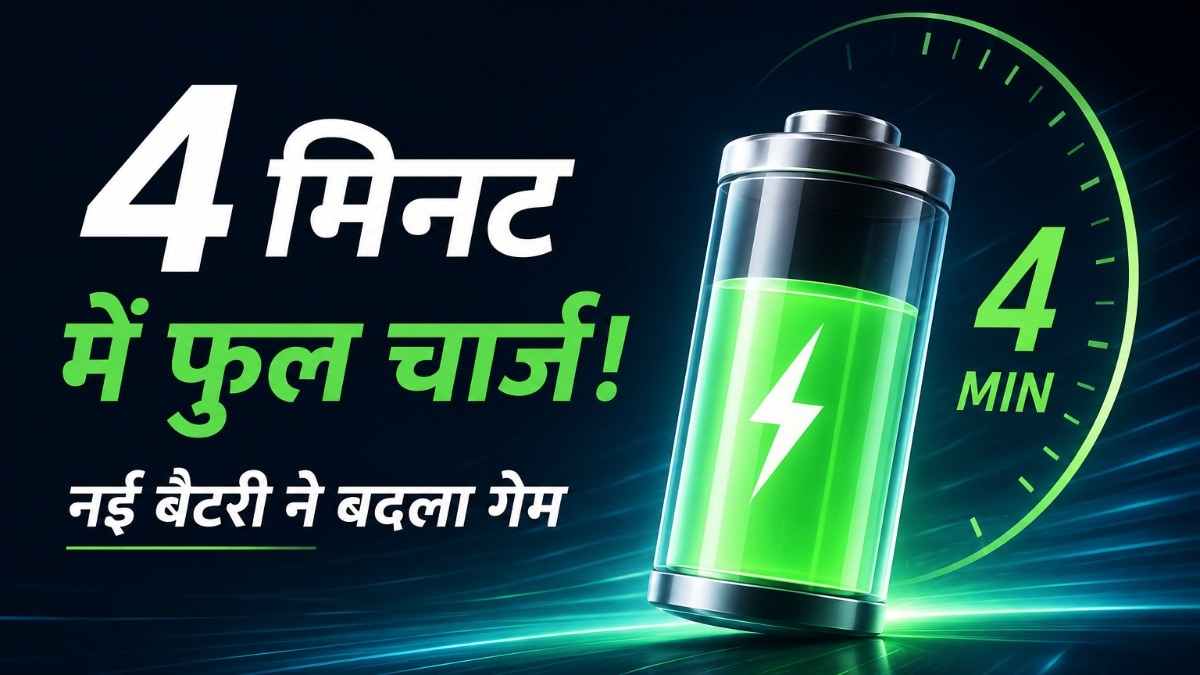
Scientists claim a breakthrough with Sodium Metal Batteries that could replace Lithium-ion, offering ultra-fast charging and lower costs. This tech could redefine the future of EVs and mobile devices.
Key Takeaways
- Sodium Metal Batteries could achieve a full charge in just 4 minutes.
- Sodium is a cheaper, more abundant alternative to expensive Lithium.
- A specialized 'Quasi-Solid Gel Electrolyte' prevents dangerous dendrite formation.
- The technology is currently in the research phase and faces energy density challenges.
The landscape of portable electronics and electric mobility is on the verge of a seismic shift. For decades, Lithium-ion (Li-ion) batteries have been the gold standard, but their high cost and the geopolitical complexities of lithium supply chains have long been pain points. Now, researchers in China have unveiled a potential successor: the Sodium Metal Battery, which promises to charge in a staggering 4 minutes.
The Science Behind the Breakthrough
The core innovation lies in the use of Sodium, an element that is significantly more abundant and cost-effective than Lithium. To solve the safety concerns typically associated with rapid charging, scientists have developed a unique 'Quasi-Solid Gel Electrolyte'. This component is critical because it prevents the growth of Dendrites—microscopic, needle-like structures that can pierce battery separators, causing short circuits and potential fires. By neutralizing these dendrites, the battery becomes both faster and safer.
Performance and Longevity Metrics
The research data suggests impressive endurance. In rigorous laboratory testing, the battery maintained approximately 90% of its capacity even after 2,000 charge cycles. This level of longevity, combined with the ability to hit a full charge in a mere 4-minute window, positions this technology as a formidable competitor to current standards in the long run.
The Road to Commercialization: Challenges Ahead
Despite the excitement, the transition from the lab to the consumer market is not instantaneous. Industry experts point out a significant hurdle: Energy Density. Currently, sodium-based batteries store less energy per unit of volume compared to lithium-ion counterparts. This means that for a smartphone or a long-range Electric Vehicle (EV) to adopt this tech, the density must be significantly improved to ensure devices don't become bulkier or lose range.
Furthermore, the technology must undergo extensive testing across diverse climatic conditions and scale up to mass manufacturing. If these hurdles are cleared, we are looking at a future where 'range anxiety' in EVs and 'low battery anxiety' in smartphones become relics of the past.