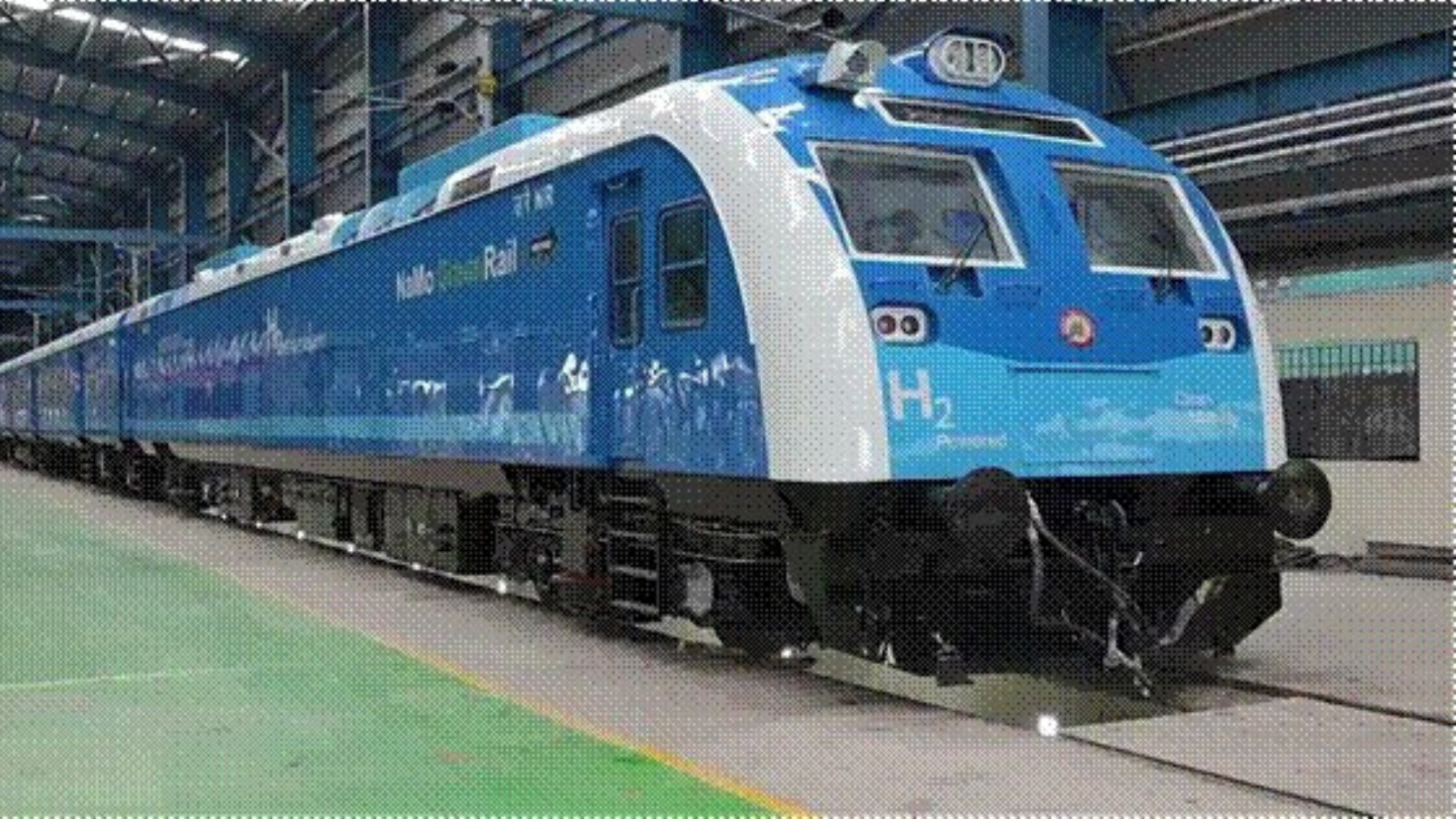
Prime Minister Narendra Modi is set to flag off India's first hydrogen-powered train on the Jind-Sonipat route in Haryana. This landmark project establishes the nation's first integrated hydrogen railway ecosystem, marking a massive leap toward green transportation.
Key Takeaways
- India's first Hydrogen Fuel Cell Train will be flagged off by PM Narendra Modi on the Jind–Sonipat route in Haryana.
- The train features 10 coaches (8 passenger, 2 power cars) with a carrying capacity of 2,600 passengers.
- It operates using Proton Exchange Membrane (PEM) fuel cells, emitting only water vapor and heat.
India is poised to make history in sustainable transit as Prime Minister Narendra Modi prepares to flag off the country's first-ever Hydrogen Fuel Cell Train on the Jind–Sonipat section in Haryana. This pioneering initiative marks a monumental shift from traditional diesel-operated and overhead electric-line trains, positioning India among a select group of nations utilizing hydrogen technology for mass transit.
The Technology Behind Hydrogen Trains
Unlike conventional electric trains, this advanced trainset generates its own electricity onboard. It utilizes a state-of-the-art Proton Exchange Membrane (PEM) fuel cell system. Hydrogen stored in high-pressure cylinders combines with atmospheric oxygen inside the fuel cell to generate electricity, which then powers the traction motors. The only by-products of this chemical reaction are water vapor and heat, making it a completely zero-emission transport solution.
Route, Capacity, and Specifications
The train will initially run on the 89-km Jind–Sonipat section of the Northern Railway, serving multiple intermediate stations. It consists of 10 coaches, including eight passenger trailer coaches and two Hydrogen Driving Power Cars (DPCs), with a massive capacity to accommodate 2,600 passengers. While designed for a top speed of 110 kmph, it will initially operate at a maximum speed of 75 kmph to demonstrate operational viability and safety under regular conditions.
Infrastructure and Safety Measures
To support this green transition, Indian Railways has built the country's largest railway hydrogen refueling facility at Jind, capable of storing nearly 3,000 kg of hydrogen. Addressing safety concerns surrounding the highly flammable nature of hydrogen, the project employs a "defense in depth" strategy. This includes multiple independent safety layers, continuous ventilation, and advanced leak, flame, and smoke detectors approved by the Petroleum and Explosives Safety Organisation (PESO).
Global Context and Environmental Impact
This launch follows India's successful electrification of over 99% of its broad-gauge network. By transitioning to hydrogen, the country is taking a vital step toward its net-zero carbon emission goals. Globally, hydrogen trains are operational in countries like Germany and China, but India's 10-coach configuration represents one of the largest passenger capacities for a hydrogen train worldwide, showcasing Indian engineering prowess on a global stage.