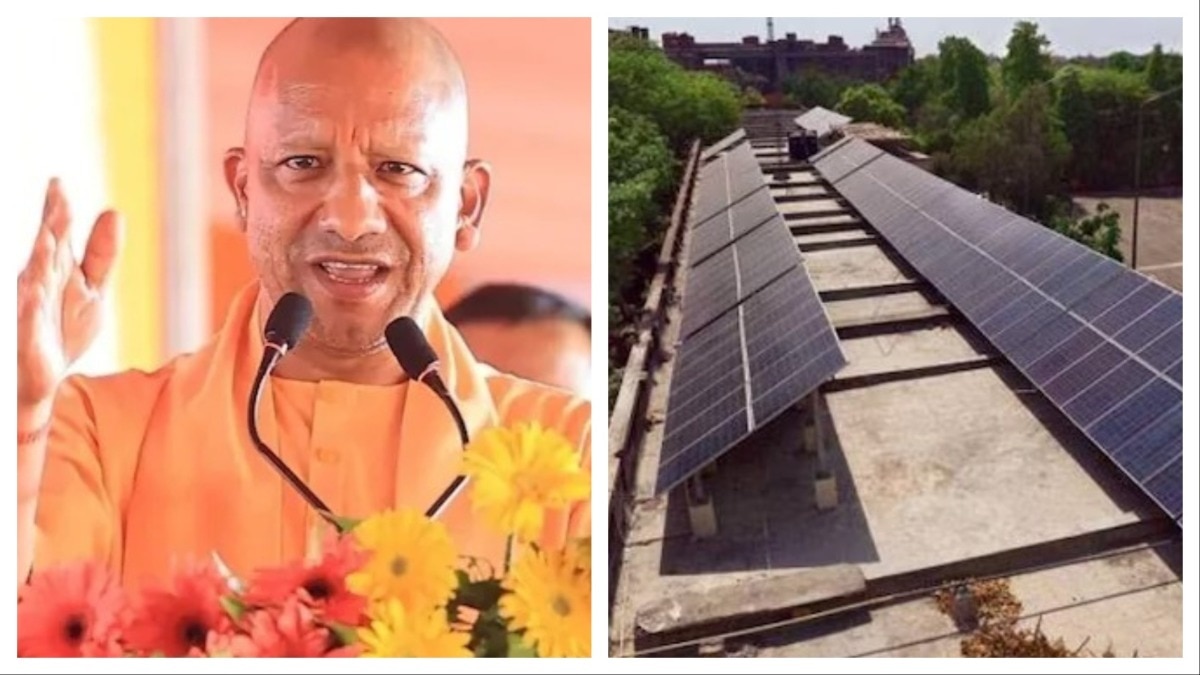
Under CM Yogi Adityanath, Uttar Pradesh has spearheaded a renewable energy revolution, with Lucknow surpassing Surat to become India's undisputed rooftop solar capital.
In a remarkable shift from its historical infrastructural struggles, Uttar Pradesh has emerged as a powerhouse of renewable energy. Under the leadership of Chief Minister Yogi Adityanath, the state has transitioned from passive policy adoption to an aggressive, performance-managed consumer campaign. By mid-2026, Lucknow has surged ahead of Gujarat's Surat, crossing the milestone of 1,02,000 rooftop solar installations, cementing its status as India's premier solar capital.
The success story is built on a foundation of 'decentralized implementation and centralized monitoring.' The administration didn't just wait for demand; they created it. By mobilizing over 700 Resident Welfare Associations and offering a 10% property tax rebate via the Lucknow Municipal Corporation, the government made solar adoption a financially savvy decision for the middle class. Furthermore, the vendor ecosystem was supercharged, scaling from a mere 600 to an impressive 6,000 professionals.
Why This Matters (इसके मायने क्या हैं)
BozokMedia analysis shows that this solar surge is a vital driver for the state's grassroots economy. As households drastically reduce their monthly electricity expenditures, they gain higher disposable income, which stimulates local consumption and economic circulation. This isn't just an environmental win; it's a massive uplift in household financial stability.
On a macro level, this transition reduces the strain on the state's traditional power grid and enhances energy security. By democratizing energy production, the state is effectively turning every rooftop into a miniature power plant, decentralizing the economy and reducing dependence on centralized, often expensive, fossil fuel-based energy sources.
"The transformation of Uttar Pradesh's energy landscape proves that when policy aligns with the pragmatic math of the common man, even the sun can be harnessed for economic liberation."
Historical Background
Historically, large-scale solar projects in India were concentrated in desert regions like Rajasthan. However, the paradigm has shifted toward 'distributed solar' or rooftop installations. The introduction of the PM Surya Ghar Muft Bijli Yojana, coupled with aggressive state-level incentives in Uttar Pradesh, has shifted the focus from massive solar parks to individual residential and small-scale commercial rooftops.
| Metric | Previous Status | Current Solar Era |
|---|---|---|
| Vendor Network Size | ~600 Vendors | 6,000+ Vendors |
| Primary Focus | Large Utility Projects | Rooftop & Consumer Adoption |
| Economic Driver | Government Subsidies | Consumer Savings & Incentives |
Frequently Asked Questions (अक्सर पूछे जाने वाले प्रश्न)
Question 1: How much subsidy is available for solar in UP?
Answer: Users can benefit from the central PM Surya Ghar scheme plus an additional state subsidy of up to ₹30,000 provided by the UP government.
Question 2: Is solar adoption limited to wealthy neighborhoods?
Answer: No, the low cost of portable panels and easy bank loans have made solar accessible even to small street vendors and low-income households.

