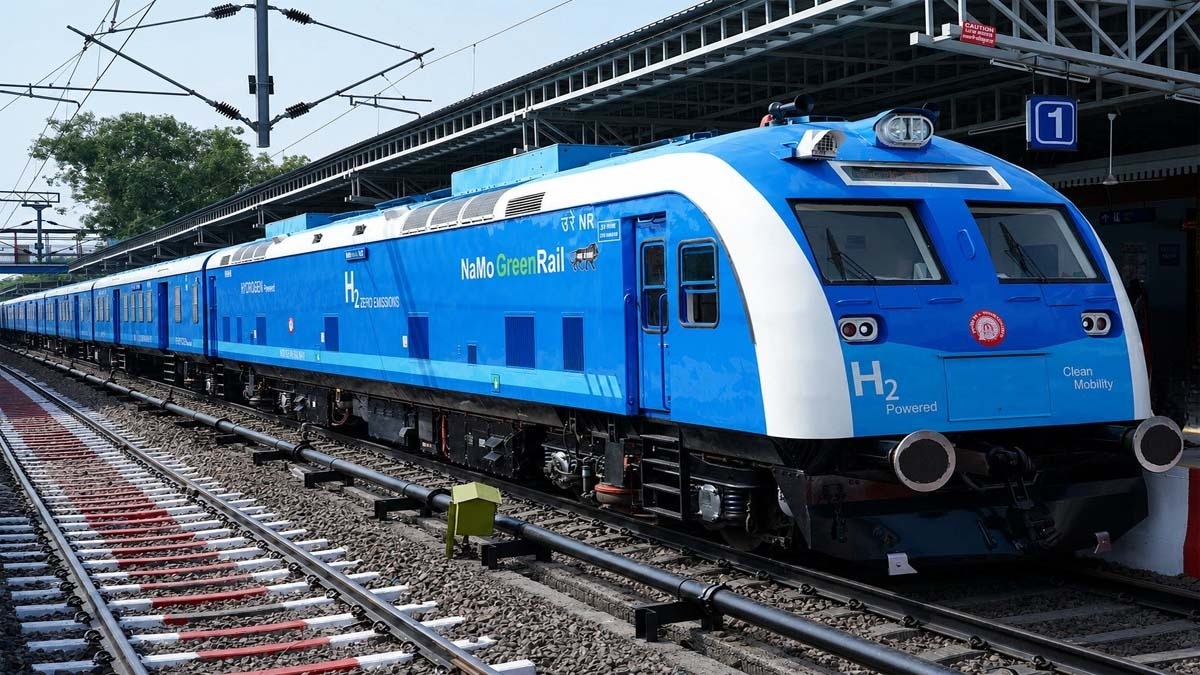
India is set to revolutionize rail travel with its first hydrogen-powered train. Beyond its striking blue aesthetic, discover the deep scientific symbolism and technological brilliance of this green marvel.
Key Takeaways
- The blue color symbolizes water (H₂O), clear skies, and environmental purity.
- Hydrogen fuel cells emit only water vapor, making it a zero-emission technology.
- The pilot project will run on the Jind-Sonipat route with a capacity of 2600 passengers.
- The project includes a specialized refueling plant in Jind with advanced safety protocols.
As India marches toward a greener future, the arrival of its first Hydrogen Train marks a monumental shift in the nation's transport landscape. While the train's striking blue hue has caught the attention of many, the reasoning behind this color choice is far more profound than simple aesthetics. It is a visual representation of the very science that powers the locomotive.
The Symbolism of Blue: Cleanliness and Water
Unlike traditional diesel or electric trains, a hydrogen train operates on Hydrogen Fuel Cell technology. In this process, hydrogen gas reacts with oxygen to generate electricity, leaving behind nothing but water vapor (H₂O) as an exhaust.
Because the entire lifecycle of this technology is rooted in cleanliness and the elemental nature of water and sky, the color blue has become the global standard. From Germany's Coradia iLint to Japan's Hybari, hydrogen-powered fleets across the world adopt blue to signify 'Green Technology' and environmental stewardship. India is now aligning itself with this international visual language of sustainability.
Technical Specifications and Route Details
The inaugural hydrogen train in India is a sophisticated machine consisting of 8 passenger coaches and 2 power cars. It is slated to operate on the Jind-Sonipat route in Haryana, spanning approximately 89 kilometers. With a passenger capacity of 2600 and 682 seats, it aims to provide an efficient and affordable alternative to existing transit methods.
While its operational speed is set at 75 km/h, recent trials have demonstrated its capability to reach up to 120 km/h. The train will serve several key stations, including Jind City, Gohana, and Sonipat, bridging the gap between regional connectivity and high-tech mobility.
Safety Infrastructure and Future Outlook
Handling hydrogen requires rigorous safety standards due to its highly flammable nature. To mitigate risks, the train is equipped with a multi-layer safety system, including advanced hydrogen leak detectors, fire sensors, and real-time monitoring tools. Furthermore, a dedicated hydrogen refueling plant has been established in Jind, featuring automated shutdown systems and flame detectors.
This pilot project, costing approximately ₹112 crore, is just the beginning. Under the 'Hydrogen for Heritage' initiative, Indian Railways plans to expand this fleet to 35 hydrogen-powered trains, signaling a long-term commitment to decarbonizing the subcontinent's massive rail network.