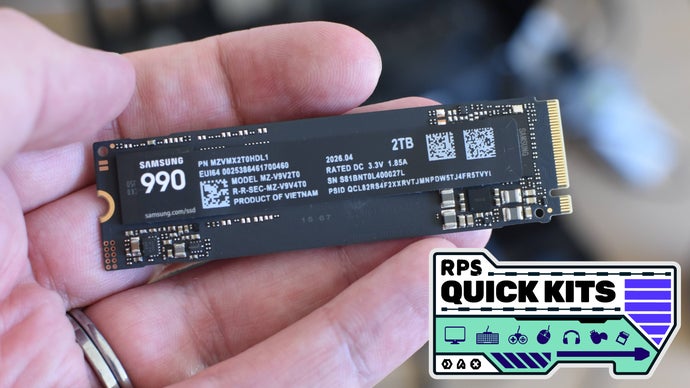
The Samsung 990, a DRAM‑less QLC SSD, offers modest benchmark speeds but delivers outstanding load‑time performance for gamers. This analysis explores why the drive stands out despite its price and warranty quirks.
Key Takeaways
- Samsung 990 comes with a three‑year warranty, unlike the usual five‑year term for the series.
- QLC architecture limits sequential read/write speeds, yet it achieves record‑low game load times.
- The 1TB model priced at £220 is competitively priced against older single‑terabyte SSDs.
The Samsung 990 SSD, built on a PCIe 4.0 interface, is a bold move in today’s hardware climate. It is DRAM‑less and packed with QLC NAND, which reduces production costs but raises concerns about speed and endurance. Compared with its sibling, the 990 Pro, the 990 offers only a three‑year warranty, turning potential reliability into a buyer’s risk.
In synthetic benchmarks, the 990 registers a read speed of 2,878 MB/s and a write speed of 3,974 MB/s—figures typical of budget‑grade SSDs. However, in real‑world gaming tests, particularly the Shadow of the Tomb Raider load‑time benchmark, it clocks an impressive 6.3 seconds, matching the PCIe 5.0‑based WD Black SN8100 and slightly beating both the 990 Pro and WD Black SN850X (each at 6.5 seconds).
Historical Background: SSD technology began in the early 2000s with SLC (Single‑Level Cell) NAND, offering high speed but at a premium price. Over the years, MLC, TLC, and finally QLC layers emerged, each trading performance for cost efficiency. Samsung entered the PCIe market with its first PCIe 3.0 drive in 2013 and later showcased PCIe 4.0 capabilities with the 990 Pro in 2020. The 990 marks a new phase—delivering gaming‑focused performance while keeping costs low.
Why This Matters (इसके मायने क्या हैं)
According to BozokMedia analysis, the arrival of a drive like the 990 reduces entry barriers for mid‑range gaming PCs, offering gamers a cheaper yet fast‑loading storage solution. This can stimulate broader adoption of high‑performance gaming rigs, benefiting both consumers and hardware manufacturers.
Conversely, the shortened three‑year warranty may erode consumer confidence, especially for users who prioritize data integrity and long‑term investment. Therefore, opting for the 1TB model is advisable, as its price‑to‑performance ratio is more compelling, while the 2TB variant should be compared against more cost‑effective alternatives.
"The Samsung 990’s surprisingly low load times make it a unique budget‑segment contender, but the limited warranty is a drawback for long‑term reliability," says SSD analyst Dr. Anjali Kumar.
Frequently Asked Questions (अक्सर पूछे जाने वाले प्रश्न)
Q1: Is the Samsung 990 suitable for everyday computing beyond gaming?
A: Yes, it performs well for typical file transfers and application launches, but heavy, continuous write workloads may expose QLC endurance limits.
Q2: What are the main differences between the 990 and the 990 Pro?
A: The 990 Pro includes a DRAM cache, higher sequential speeds (3,775 MB/s read, 4,261 MB/s write), and a five‑year warranty, whereas the 990 lacks DRAM, offers lower speeds, and only a three‑year warranty.
.jpg?width=720&quality=80&disable=upscale)