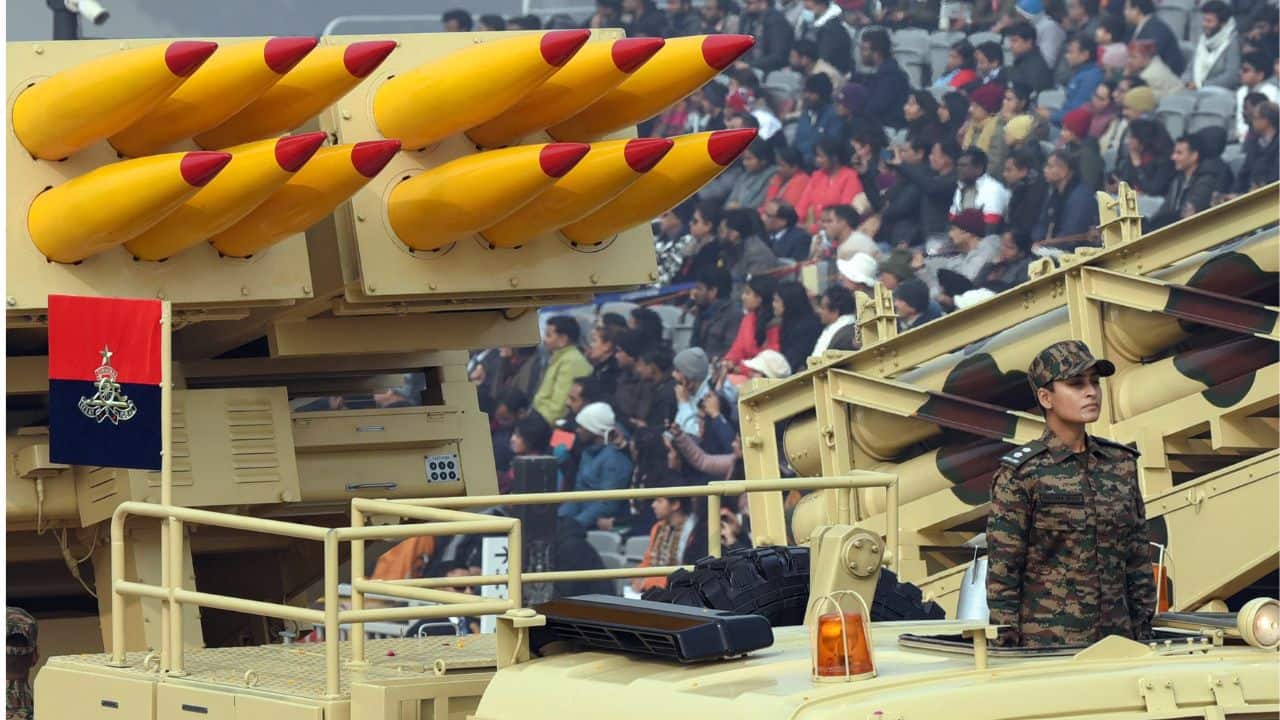
DRDO’s latest Pinaka Mk‑3 rocket struck a target 60 km away in just 37 seconds during a test at Odisha’s Balasore range. Its low cost, near‑hypersonic speed and pinpoint accuracy mark a strategic leap for India’s defence capabilities.
The Defence Research and Development Organisation (DRDO) successfully tested its new Pinaka Mk‑3 rocket at the Balasore test range in Odisha, destroying a target 60 km distant in a mere 37 seconds. The projectile achieved a velocity of Mach 4.7, just shy of the hypersonic threshold of Mach 5, making it the fastest artillery rocket in the world today.
Technical Highlights of Pinaka Mk‑3
At Mach 4.7, Pinaka Mk‑3 outpaces China’s PHL‑16 (Mach 4.5), Russia’s Grad series (Mach 3) and the United States’ HIMARS (Mach 2.7). This speed compresses the enemy’s reaction window: by the time radar picks up the launch, the rocket has already closed in on its target.
What “Mark‑3” Signifies
The “Mark” designation denotes generational upgrades; Pinaka Mk‑3 is the third iteration of the indigenous artillery system. Conceived in the 1980s, the programme stalled due to technology gaps, but heightened tensions after the 1999 Kargil conflict accelerated development. The new version can engage targets up to an estimated 100‑120 km, extending India’s deep‑penetration strike envelope.
Cost‑Effectiveness and Strategic Value
India’s short‑range missile Pralay costs roughly ₹6‑7 crore per unit, whereas a Pinaka Mk‑3 rocket is priced at about ₹1.5 crore – nearly five times cheaper while delivering comparable range and accuracy. This affordability enables large‑scale deployment without straining the defence budget, while retaining the ability to neutralise high‑value targets swiftly.
Geopolitical Context
Facing two distinct security challenges – Chinese radar installations along the Line of Actual Control and Pakistani militant bases near the Line of Control – India needs a weapon that can strike deep with minimal warning. Pinaka Mk‑3’s extended reach and rapid flight time make it ideally suited to neutralise these threats, reinforcing India’s deterrence posture.