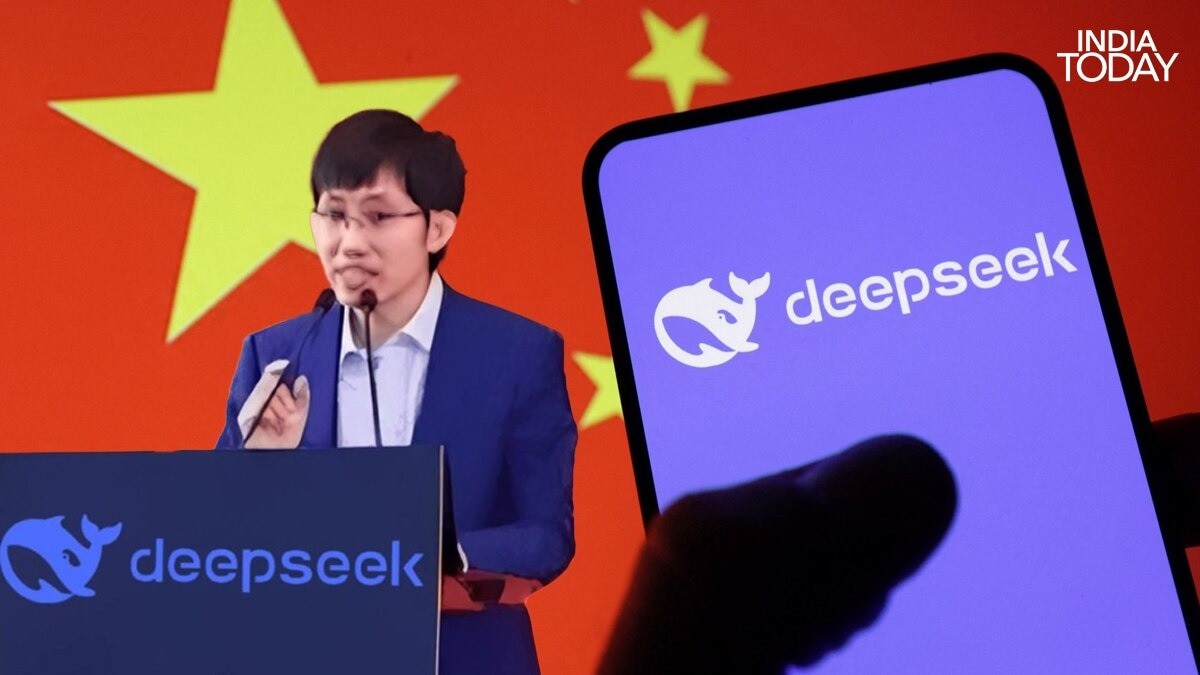
DeepSeek CEO Liang Wenfeng has signaled a paradigm shift in the AI race, prioritizing AGI over profits and predicting that US chip restrictions may inadvertently boost China's semiconductor independence.
Key Takeaways
- DeepSeek's primary mission is achieving AGI, not generating massive corporate revenue.
- CEO Liang Wenfeng rejects the IPO-driven model favored by Silicon Valley giants.
- US trade restrictions on Nvidia chips are accelerating China's domestic semiconductor ecosystem.
- The goal is to reach 'Singularity' through continuous AI learning capabilities.
In a bold move that has sent ripples through the global tech industry, DeepSeek CEO Liang Wenfeng has effectively declared an ideological war on Silicon Valley. While Western AI leaders like Sam Altman (OpenAI) and Dario Amodei (Anthropic) are navigating the complexities of trillion-dollar valuations and profit margins, Wenfeng is pursuing a singular, uncompromising goal: Artificial General Intelligence (AGI).
Profit vs. Purpose: The 'Sesame Seed' Philosophy
During a recent investor exchange, Wenfeng dismissed the notion of an Initial Public Offering (IPO) for DeepSeek. He characterized revenue as mere "sesame seeds"—something to be picked up casually—while his true focus remains on the "watermelons" of the future: true human-level intelligence. Unlike the profit-driven models emerging from the US, DeepSeek aims to act with "tremendous goodwill toward the world," focusing on utility for humanity rather than capital market dominance.
Why This Matters
BozokMedia analysis shows that this divergence in strategy could create a bifurcated AI landscape. If a major player like DeepSeek succeeds by ignoring traditional financial metrics, it could force a global re-evaluation of how AI research is funded and prioritized.
"Vision is not a slogan hanging on the wall—vision is how you do things, not how you talk; it is how you actually operate."
Nvidia and the Paradox of Restrictions
Perhaps the most controversial part of Wenfeng's stance involves Nvidia. He suggested that the US-imposed trade restrictions, intended to curb China's technological progress, might actually be counterproductive. By limiting access to Nvidia's high-end GPUs, the West is forcing Chinese tech firms to build a robust, domestic chip ecosystem. Wenfeng warned that this pressure could lead to Nvidia "digging its own grave" as China achieves semiconductor self-sufficiency.
Frequently Asked Questions
1. What is the difference between DeepSeek and OpenAI's approach?
OpenAI has transitioned into a for-profit model focused on scale and enterprise value, whereas DeepSeek emphasizes AGI development as a mission beyond monetary gain.
2. How do chip restrictions affect the AI race?
Restrictions limit the hardware available to Chinese firms, but they also serve as a catalyst for China to develop its own advanced AI chip manufacturing capabilities.