Five BTech students from Dumka Engineering College have engineered an autonomous water-cleaning robot to maintain the sanctity of Shiv Ganga pond during the Shravani Mela.
Key Takeaways
- Developed by five final-year students from Dumka Engineering College.
- Named 'Nature's Revival Bot', it targets floating debris in water bodies.
- Scheduled for deployment at Basukinath Dham during the Shravani Mela.
- Capable of 20 hours of continuous operation on a single charge.
In a remarkable feat of engineering, a team of five BTech students from Dumka Engineering College in Jharkhand has transitioned a classroom project into a real-world solution. They have developed an autonomous water-cleaning robot designed to tackle pollution in the sacred Shiv Ganga pond at Basukinath Dham.
The device, officially named 'Nature's Revival Bot – Autonomous Water Cleaning Robot', is set to be deployed during the upcoming Shravani Mela, starting July 30. This initiative aims to reduce the reliance on manual labor for cleaning water bodies while ensuring high efficiency during massive religious gatherings.
Technical Specifications and Mechanism
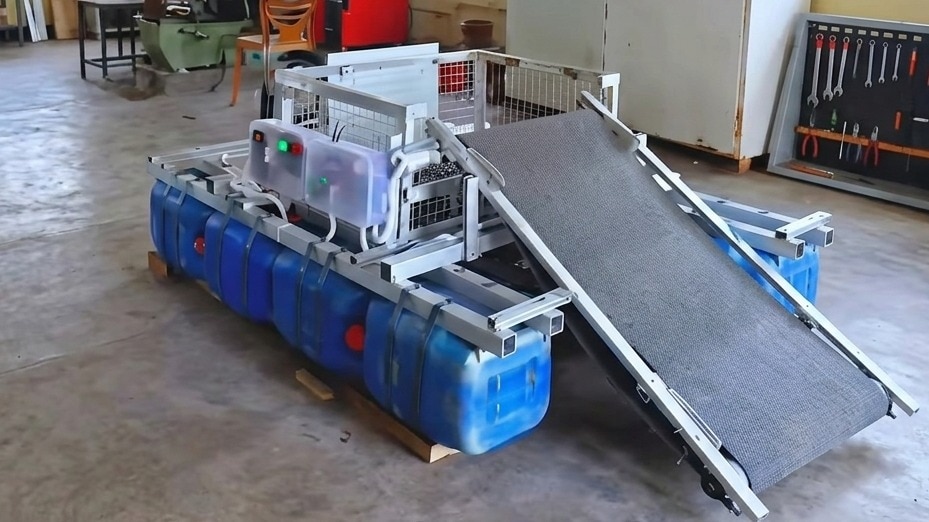
According to Professor Pankaj Sarkar, Head of the Electrical Engineering Department, the robot utilizes a sophisticated motor-driven track-belt conveyor system. This system effectively scoops up floating waste—including plastic bottles, polythene bags, and paper—and deposits it into a secure, net-covered collection bucket.
The robot's architecture is highly advanced, featuring three distinct motors: a Brushless Direct Current (BLDC) hub motor for propulsion, a gear motor for the conveyor, and a servo motor for precision steering. To ensure safety and obstacle avoidance, it is equipped with a photoelectric sensor. The unit is powered by a 48-volt hybrid battery system, allowing for an impressive 20-hour operational window.
Why This Matters
BozokMedia analysis shows that this project represents a significant shift from theoretical learning to practical application. By addressing the environmental challenges of pilgrimage sites, these students are providing a scalable model for civic bodies across India to manage water pollution in urban and religious hubs.
This transition from a final-year project to a municipal deployment tool marks a milestone for student-led innovation in regional India.
Frequently Asked Questions
1. What kind of waste can the robot collect?
It is specifically designed to collect floating debris such as plastic bottles, bags, clothes, and paper.
2. Where will the robot be first deployed?
The robot will be first deployed at the Shiv Ganga pond in Basukinath Dham during the Shravani Mela.