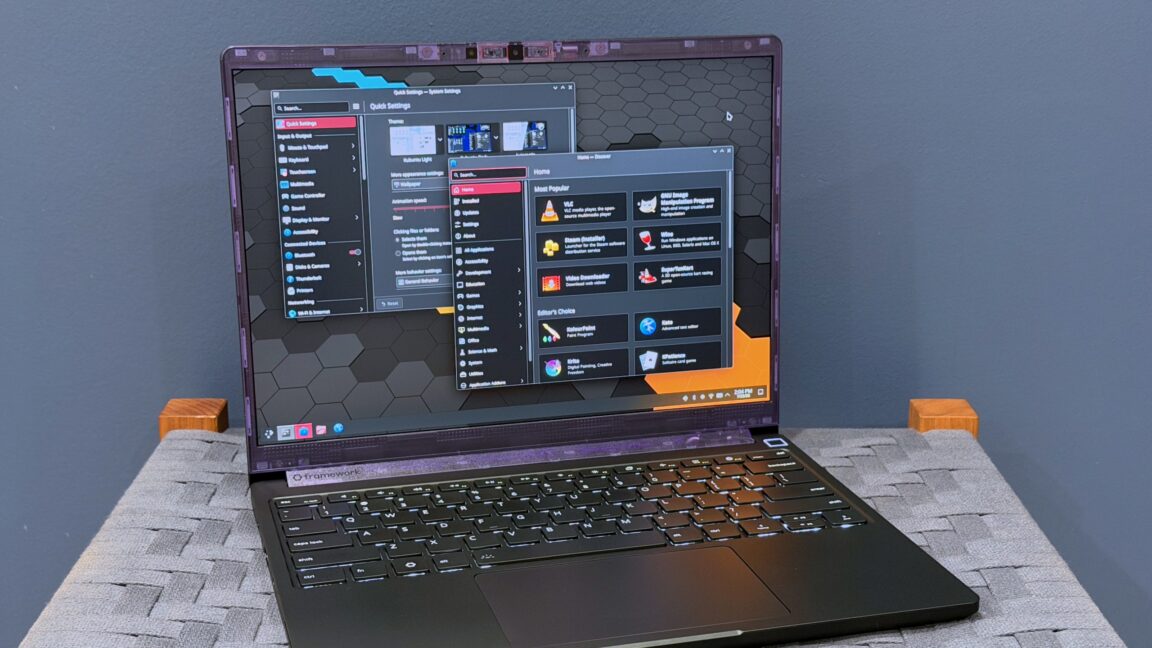
Framework's new 13‑inch Pro model dramatically improves battery life but doubles the price tag. This review examines whether the power upgrade justifies the steep cost.
Key Takeaways
- Battery capacity jumps 30‑40%, extending real‑world usage.
- Price spikes roughly 100%, challenging value perception.
- Design overhaul breaks compatibility with several older modules.
Introduction
The original Framework Laptop 13 earned praise for its repairable, upgradeable design and ultra‑portable feel. Yet its mediocre battery life remained a persistent drawback for power users.
The Leap to Laptop 13 Pro
Framework’s newest Laptop 13 Pro is essentially a second‑generation revision of the first model. By redesigning the bottom case, keyboard, trackpad, and replacing the 55 WHr/61 WHr batteries, the company achieved a substantial boost in endurance while sacrificing backward compatibility for those parts.
Historical Background
Since its 2020 debut, Framework has championed a fully modular laptop ecosystem, allowing owners to replace or upgrade components at will. This philosophy promotes sustainability and consumer control, but early versions struggled with limited battery capacity, capping their appeal.
Performance vs. Price
The Pro model ships with a 70 WHr battery, delivering roughly 2‑3 extra hours of everyday use. However, the price now hovers around $2,000—nearly double the original—raising questions about the cost‑benefit ratio for most buyers.
Why This Matters
BozokMedia analysis shows that while the battery upgrade positions Framework as a serious contender in the ultra‑portable segment, the steep price may push eco‑conscious consumers back to traditional OEMs, potentially slowing the adoption of modular laptops.
"The battery improvement is a major win, but without a price anchor, the market impact could be muted," notes tech analyst Ali Sheikh.
Frequently Asked Questions
Q1: Can I reuse parts from the original Laptop 13 in the Pro?
A: Most of the bottom case, keyboard, and battery modules are incompatible, but the display and CPU remain interchangeable.
Q2: Does the battery boost also mean faster charging?
A: The new battery supports quicker charge rates, but actual charging time still depends on the charger’s wattage and usage patterns.