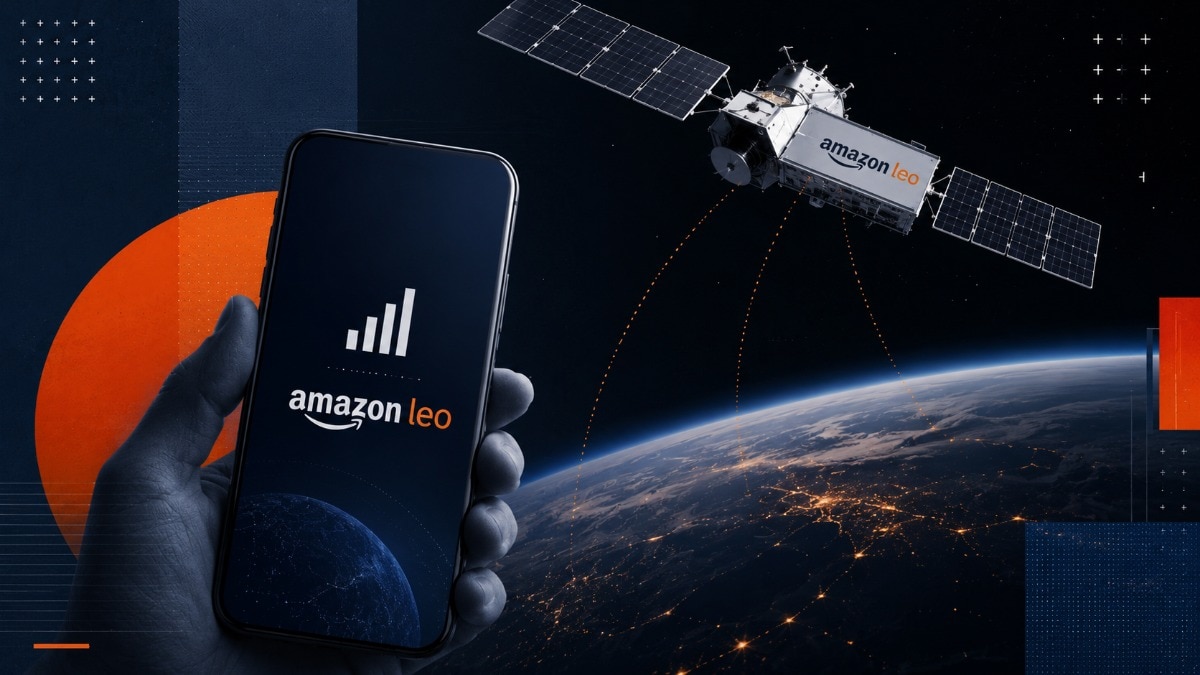
Amazon is gearing up to launch a massive constellation of over 5,000 satellites to provide direct-to-device connectivity. The service aims to enable calls, messaging, and data on standard smartphones by 2028.
Key Takeaways
- Amazon proposes a constellation of up to 5,105 Low Earth Orbit (LEO) satellites.
- Targeted launch and rollout period is set for 2028.
- The service will provide voice, messaging, and data directly to compatible smartphones.
- It aims to bridge the connectivity gap in remote and disaster-prone areas.
Amazon has unveiled ambitious plans to revolutionize global communication by connecting smartphones directly to space. Under its 'Amazon Leo' project, the tech giant has filed an application with the US Federal Communications Commission (FCC) to deploy a massive constellation of up to 5,105 low Earth orbit (LEO) satellites.
If approved, the Direct-to-Device (D2D) service is expected to begin rolling out in 2028. Unlike traditional satellite internet that requires specialized hardware, this network is designed to work with compatible smartphones, providing voice calls, messaging, and mobile data even in areas completely devoid of cellular coverage.
Why This Matters
BozokMedia analysis shows that Amazon is strategically positioning itself to dominate the next frontier of telecommunications. By leveraging its recent acquisition of Globalstar's satellite assets, Amazon is creating a seamless ecosystem that could complement existing mobile operators rather than replace them, specifically targeting underserved regions and emergency response scenarios.
Amazon's LEO network is poised to eliminate dead zones and redefine how humanity stays connected in the most remote corners of the Earth.
The proposed network will utilize five orbital shells to ensure global coverage, including high-latitude and near-polar regions. The satellites will use advanced L-band and S-band spectrum for device connection, while high-speed Ka-band and V-band links will manage data transfers between the satellites and the internet backbone.
Historical Background
For decades, satellite communication was limited to specialized maritime or military equipment. The emergence of LEO satellite constellations like SpaceX's Starlink has paved the way for mass-market satellite internet, and Amazon's move into direct-to-smartphone technology represents the next logical evolution in the race for global connectivity.
Frequently Asked Questions
1. Will I need a new phone to use Amazon's satellite service?
The service is designed for smartphones equipped with satellite-capable chipsets, but Amazon aims to work closely with manufacturers to ensure wide compatibility.
2. How will this help during natural disasters?
By providing connectivity where cell towers are destroyed or non-existent, the service will allow emergency responders and civilians to communicate vital information during crises.