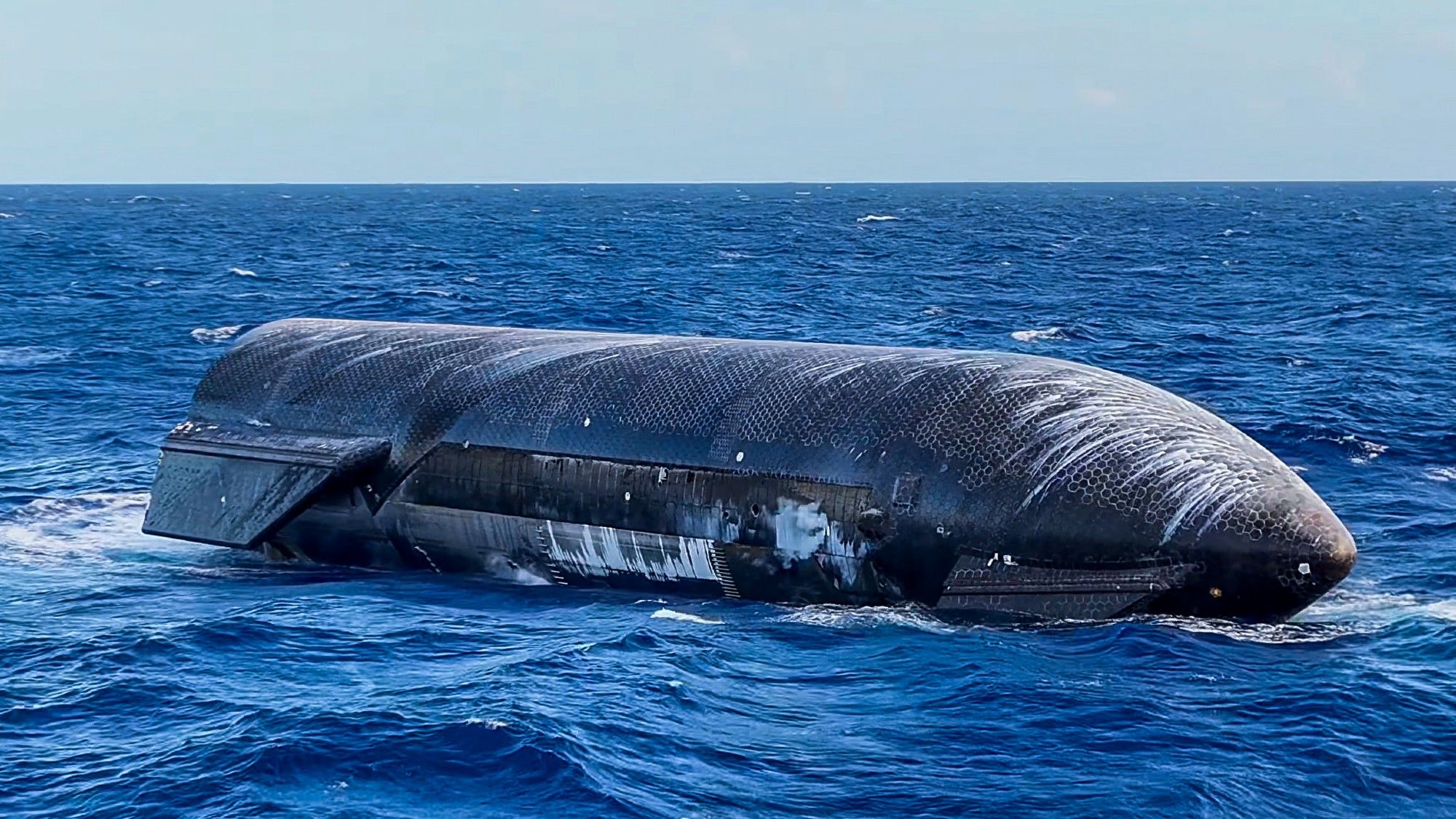
SpaceX's Starship Version 3 has achieved a remarkable feat, remaining afloat in the Indian Ocean days after its successful Flight Test 13 splashdown.
Key Takeaways
- SpaceX Starship V3 successfully completed its 13th flight test on July 24, 2026.
- The 171-foot upper stage achieved an incredibly smooth 'soft splashdown'.
- The vehicle remains intact and floating in the Indian Ocean five days later.
- The mission focuses on proving the rapid reusability of the Starship system.
In a stunning display of aerospace engineering, SpaceX's Starship Version 3 (V3) is still floating in the Indian Ocean, five days after its historic Flight Test 13. The 408-foot-tall massive rocket, which launched on July 24, 2026, executed what engineers are calling its softest splashdown to date, leaving the upper stage remarkably intact.
New imagery released by SpaceX on Tuesday shows the 171-foot (52-meter) scorch-streaked upper stage resting on the ocean surface. The visual, shared via X (formerly Twitter), depicts the vessel resembling a submarine or an orca, drifting peacefully off the coast of Western Australia. This level of structural integrity following a suborbital reentry is unprecedented.
Why This Matters
BozokMedia analysis shows that this milestone is a critical component of SpaceX's long-term vision for rapid reusability. Unlike traditional rockets that are discarded after a single use, both the Super Heavy booster and the Starship upper stage are designed to be recovered, refueled, and launched again within days. This capability is the key to making interplanetary travel economically viable.
The ability to maintain structural integrity after the intense heat of reentry is the ultimate litmus test for the future of deep-space exploration.
However, the path to total reusability is not without obstacles. Technical experts, including those from Ars Technica, have pointed out that the durability of the Starship's heatshield remains a significant hurdle. For SpaceX to achieve its goal, the thermal protection system must withstand multiple high-velocity atmospheric entries without extensive repairs.
Historical Background
Since its inception, the Starship program has undergone rapid iterations. From early explosive tests to the current version 3, SpaceX has consistently pushed the boundaries of what is possible in launch vehicle design, aiming to eventually transport humans to Mars and beyond.
Frequently Asked Questions
Question 1: What makes the Flight Test 13 unique?
Answer: It achieved an exceptionally smooth splashdown, allowing the upper stage to remain floating and intact for several days.
Question 2: Is Starship fully reusable?
Answer: Not yet. While the design aims for full reusability, SpaceX is still perfecting the durability of the heatshield for multiple flights.