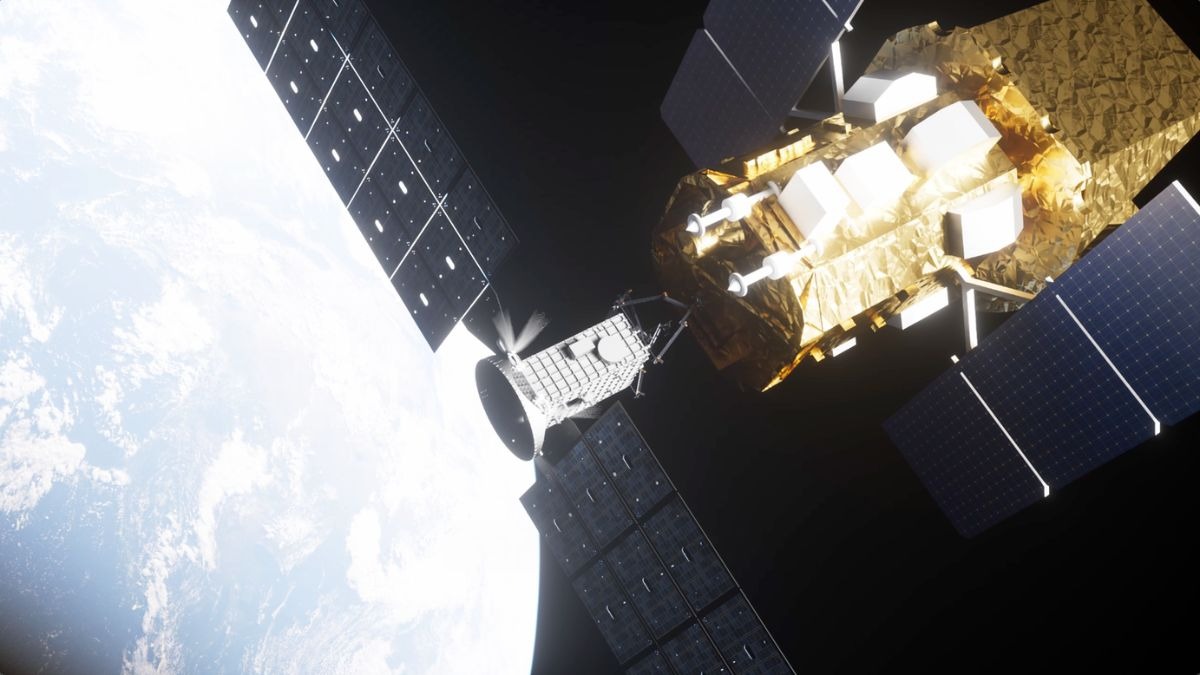
The ambitious mission to save NASA's aging Swift Observatory has hit a major snag. The private LINK spacecraft has experienced a propulsion failure, causing it to tumble uncontrollably in orbit.
Key Takeaways
- The LINK servicing spacecraft, built by Katalyst Space, experienced a propulsion system anomaly.
- The malfunction caused the spacecraft to spin, disrupting vital communications with Earth.
- The mission's goal is to dock with the Swift Observatory and raise its decaying orbit.
- Engineers are currently analyzing telemetry to regain attitude control.
A pioneering mission designed to extend the operational life of one of NASA's most productive space observatories has encountered a critical early challenge. The LINK spacecraft, a robotic vehicle sent to rescue the aging Neil Gehrels Swift Observatory, has run into technical trouble during its commissioning phase in orbit.
What Went Wrong?
According to an update from NASA, the anomaly occurred while engineers were performing routine post-launch checks. A malfunction in the propulsion system caused the LINK spacecraft to begin tumbling, which has interrupted communication with mission controllers and delayed the next phase of the mission. Engineers are now racing to stabilize the craft before proceeding with the rendezvous.
Why This Matters
BozokMedia analysis shows that the stakes for this mission are incredibly high. The Swift Observatory, launched in 2004, has been vital in studying gamma-ray bursts and black holes. However, due to increased solar activity and atmospheric drag, the telescope's orbit has been steadily decaying. Without the 'boost' provided by the LINK spacecraft, the observatory risks an early and premature re-entry into Earth's atmosphere.
A propulsion failure during the commissioning phase is a nightmare scenario for orbital servicing missions, as stability is paramount for docking.
The LINK spacecraft was launched on July 3 aboard a Northrop Grumman Pegasus XL rocket. Unlike traditional satellites, its purpose is purely logistical: to rendezvous with, inspect, and dock with the Swift Observatory to lift it into a higher, more sustainable orbit.
Historical Background
Since its launch in November 2004, the Swift Observatory has been a cornerstone of astrophysics. It has provided unprecedented data on transient cosmic phenomena, including supernovae and neutron star mergers. The current rescue mission represents a new era of 'orbital servicing,' where private companies like Katalyst Space play a crucial role in maintaining NASA's long-term assets.
Frequently Asked Questions
Question 1: What is the purpose of the LINK spacecraft?
Answer: LINK is designed to dock with the Swift Observatory and raise its orbit to prevent it from falling into Earth's atmosphere.
Question 2: Is the mission a total failure?
Answer: Not yet. Engineers are actively working to regain control and restore communication to continue the mission.