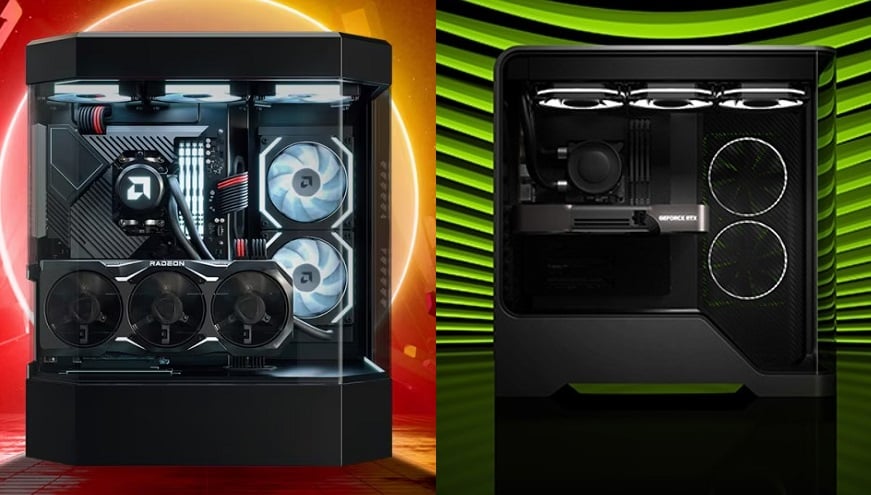
The GPU market is facing a massive price surge as both Nvidia and AMD prepare to hike manufacturer costs, driven by the relentless AI arms race.
Key Takeaways
- Nvidia is reportedly raising prices for partners by up to 30%.
- AMD is expected to follow suit with a 10% price increase for its partners.
- The AI hardware boom is driving up overall component costs.
- Budget-tier cards are seeing a regression, with 4GB VRAM models resurfacing.
If you were planning to build a high-end gaming PC or upgrade your current rig, you might want to hold your breath. The graphics card market, already strained by supply issues, is set for another massive shock. Both industry giants, Nvidia and AMD, are rumored to be hiking the prices they charge their manufacturing partners.
The Nvidia Price Surge
According to reports from the Taiwanese outlet Economic Daily News, Nvidia is preparing to increase prices for partners like MSI and Asus by as much as 30 percent. While it remains to be seen how much of this increase will be passed directly to the end consumer, it signals a significant spike in the cost of high-end gaming hardware.
Historically, AMD has been the go-to alternative for gamers seeking better value. However, the tide is turning. Hardware leaker Harukaze5719 suggests that AMD is also planning a 10% price hike for its partners, seemingly waiting for Nvidia to lead the way before following suit.
Why This Matters
BozokMedia analysis shows that the intersection of the AI boom and traditional gaming hardware is creating a perfect storm. As manufacturers pivot resources toward AI-capable silicon, the availability and pricing of consumer-grade gaming GPUs are becoming increasingly volatile.
The convergence of AI demand and gaming hardware is creating a pricing vacuum that leaves consumers caught in the crossfire.
The real-world impact is already visible. For instance, the Radeon RX 9070 XT, which launched at a $600 MSRP, is seeing retail prices climb toward $750. Meanwhile, Nvidia's GeForce RTX 5070 Ti is hovering around the $1,000 mark. To make matters worse, the industry is seeing a regression in budget cards, with the RX 9050 offering a mere 4GB of VRAM—a specification that Digital Foundry warns is insufficient for modern gaming.
Historical Background
Over the last decade, GPU prices have transitioned from predictable consumer electronics to volatile commodities. The shift from purely gaming-focused architecture to AI-centric designs has fundamentally altered the cost structures of the entire semiconductor industry.
Frequently Asked Questions
1. Why are GPU prices increasing so much?
The primary drivers are the massive demand for AI processing power and increased manufacturing costs for advanced silicon.
2. Is 4GB VRAM enough for 2026 gaming?
No, most modern AAA titles require significantly more VRAM to run smoothly at 1080p or higher.


