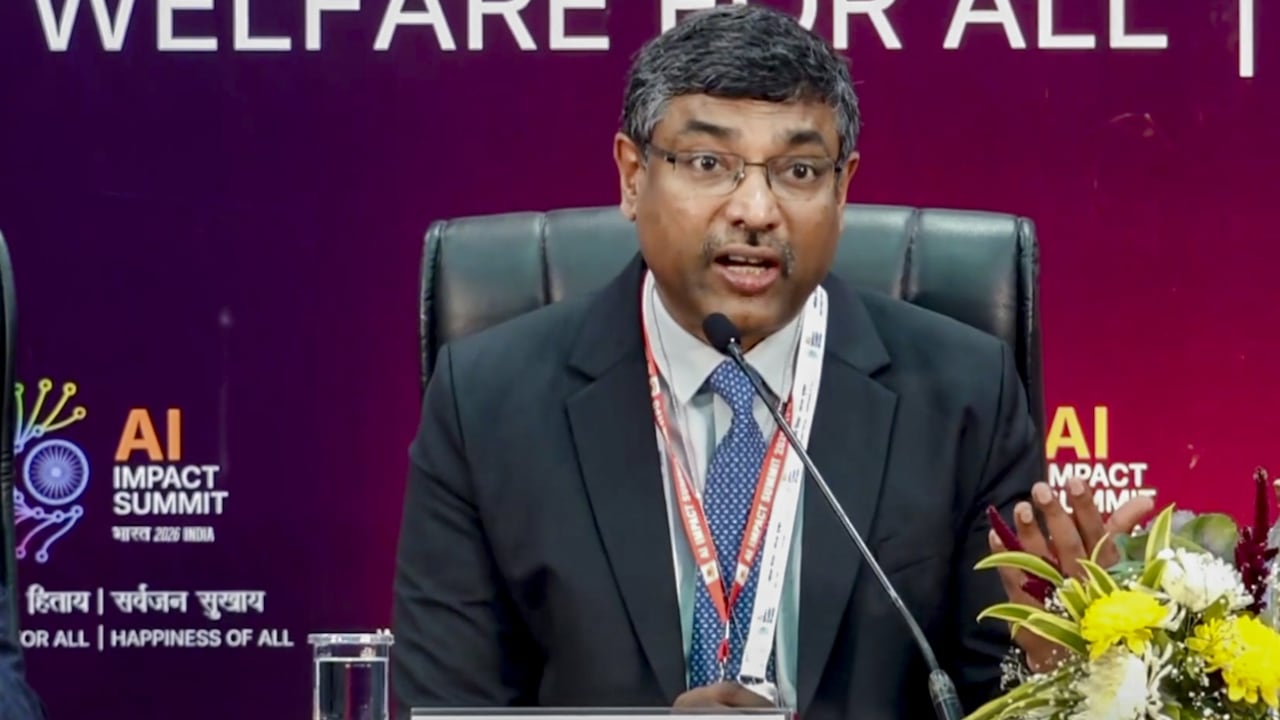
India's IT Secretary S Krishnan asserts that AI is unlikely to replace human labor entirely and insists that humans must remain central to the decision-making process.
Key Takeaways
- AI is unlikely to become a complete replacement for human labor.
- A 'Human-in-the-loop' model is essential for ethical and accurate AI deployment.
- AI is expected to create new, diverse professional opportunities.
In a significant statement regarding the future of work, India's IT Secretary S Krishnan has addressed the growing concerns surrounding Artificial Intelligence (AI). He emphasized that while AI is a transformative force, it is not destined to entirely replace the human workforce.
The Synergy of Human Intelligence and AI
Krishnan highlighted that the integration of AI should be viewed as an augmentation of human capabilities rather than a displacement. He stressed the necessity of keeping humans 'in the loop,' ensuring that critical decision-making processes involve human judgment, ethics, and oversight.
Why This Matters
BozokMedia analysis shows that as industries globally rush to automate, the risk of algorithmic bias and loss of nuanced judgment increases. Maintaining human intervention is not just a safety measure but a strategic necessity to ensure that AI outputs align with complex human values and societal norms.
AI should be viewed as a co-pilot that enhances human potential, not an autopilot that removes human accountability.
Historical Background: Throughout history, technological shifts—from the steam engine to the internet—have initially sparked fears of mass unemployment. However, these shifts have consistently led to the creation of entirely new industries and more sophisticated job roles.
Frequently Asked Questions
1. Will AI lead to mass unemployment in India?
While some routine tasks may be automated, AI is expected to drive growth in new sectors and create jobs that don't exist today.
2. What is the role of humans in an AI-driven workflow?
Humans are required for oversight, ethical verification, handling edge cases, and making high-level strategic decisions.