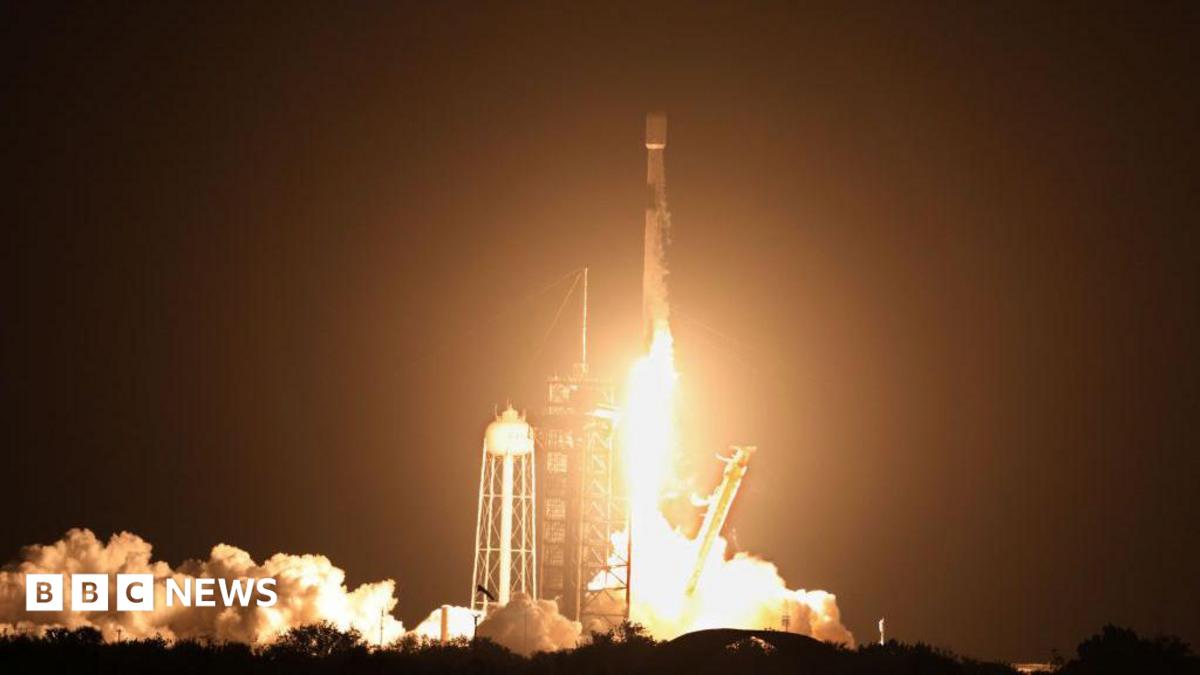
An upper stage of a SpaceX Falcon 9 rocket is on a collision course with the Moon. Astronomers are preparing to turn this accidental crash into a groundbreaking lunar experiment.
Key Takeaways
- A SpaceX Falcon 9 upper stage will impact the Moon on August 5.
- The object is roughly the size of a five-story building and weighs 4,000kg.
- The impact is expected to create a crater over 17 meters in diameter.
- Scientists will use the event to study lunar subsurface material.
The Moon has spent millions of years absorbing hits from asteroids and meteors. Now, it is about to receive a man-made visitor. A drifting upper stage of a SpaceX Falcon 9 rocket is projected to collide with the lunar surface, traveling at a staggering speed of 5,400 mph.
According to NASA's Centre for Near-Earth Object Studies (CNEOS), the collision is imminent. Independent astronomers discovered that a portion of a rocket from a recent launch was on an accidental trajectory toward the Moon. While the impact is significant, NASA officials have reassured the public that there is absolutely no danger to Earth.
Why This Matters
BozokMedia analysis shows that while this is an accidental event, the scientific payoff could be immense. Unlike Earth, the Moon lacks a thick atmosphere to slow down incoming objects, meaning the impact will be exceptionally violent and visual.
It's going to impact and it's going to send up a huge plume of dust, maybe 50km into the air or more.
Astronomers expect a massive plume of dust to erupt, potentially reaching heights of 50km. By observing this plume and the resulting crater near the Einstein Crater, researchers can refine their models of lunar impacts and gain insights into the chemical composition of the lunar subsurface.
Historical Background
Human-made impacts on the Moon are not entirely new. In 2022, a Chinese Long March 3C rocket stage struck the far side of the Moon. Decades ago, NASA intentionally crashed objects into the Moon during the Apollo era to collect seismic data. However, the growing problem of 'space junk'—estimated by the ESA to include 54,000 objects larger than 10cm—remains a critical concern for future space travel.
Frequently Asked Questions
Question 1: Will the impact be visible from Earth?
Answer: It won't be visible to the naked eye, but professional telescopes may capture a bright flash on the Moon's surface.
Question 2: How big will the new crater be?
Answer: Astronomers predict the impact will create a crater more than 17 meters (56 feet) in diameter.